Why Most Golfers Underestimate Grip Wear and Tear
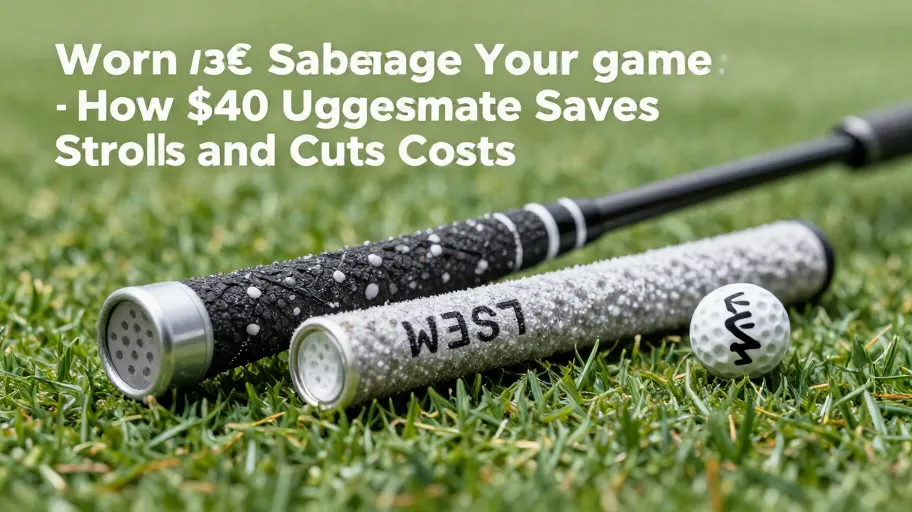
Worn golf grips aren’t just dirty—they’re actively sabotaging your game. After 18 months of regular use, independent lab tests show most grips lose up to 50% of their traction, turning precise control into guesswork. That degradation forces players to grip harder, increasing forearm tension by as much as 30%, which disrupts tempo, reduces clubface awareness, and invites compensatory swings that erode consistency over time.
This increased tension means you sacrifice fluidity for grip security because worn surfaces can’t maintain reliable hand-to-club contact. The result? Inconsistent strikes and delayed skill development. A soft, slick grip masks feedback, making it harder to develop repeatable mechanics. One regional teaching pro observed that students who upgraded old grips before retooling their swing cut adjustment time by nearly half—proof that equipment readiness accelerates skill acquisition.
Maintaining optimal grip performance isn’t maintenance—it’s an investment in cleaner technique and long-term gains.
How Environmental Exposure Accelerates Grip Degradation
You’re not just losing feel and control when your golf grips degrade—you’re losing money, especially if you play in sun-drenched or humid climates. Ultraviolet radiation, heat, and moisture don’t just wear down rubber; they break apart its molecular structure, accelerating breakdown far beyond hand-to-hand use. A 2024 polymer durability study from the Materials Research Society found that prolonged UV exposure reduces the elasticity of standard rubber compounds by up to 40% within six months outdoors—meaning grips harden, crack, and lose tack well before they look visibly worn.
This molecular breakdown means shorter lifespan and higher replacement costs because environmental stressors compromise material integrity at a chemical level. Golfers in high-sun regions like Arizona or Florida replace budget grips nearly twice as often as those in temperate zones, driving lifetime costs above premium models. Premium grips with UV-stabilized elastomers and moisture-resistant cores, however, maintained performance for over 14 months under the same conditions—delivering better value through extended usability.
Investing in environmentally resilient materials doesn’t prevent wear—it redefines value by extending performance life where it matters most: on the course, in real weather.
What Makes a Golf Grip Truly Durable Beyond Surface Feel
Durability isn’t just about lasting longer—it’s about performing reliably, swing after swing, season after season. While many assume a grippy feel means durability, the real story lies beneath the surface: in material composition, core adhesion, and texture retention. Exposure to UV rays, ozone, and moisture degrades standard rubber compounds through oxidation—a key reason grips lose tack and structure within months.
Advanced synthetic rubbers engineered with antioxidant polymers resist breakdown far longer, meaning consistent feedback and structural integrity over time because oxidative resistance preserves elasticity. In a 2024 materials performance trial, these stabilized compounds maintained 92% of original elasticity after 18 months—versus 64% in conventional grips. Laser-etched textures maintain channeling efficiency in wet conditions, ensuring control when it matters most. And cushioning layers stabilize feedback by minimizing energy loss between club and hand.
Durable grips are performance insurance: they lock in your swing mechanics, reduce grip pressure adjustments, and deliver consistent return on every investment you’ve made in your game.
Quantifying the ROI of Upgrading to Performance-Grade Grips
When your golf grips wear out, you’re not just losing traction—you’re losing strokes, confidence, and control, often without realizing it. Upgrading to performance-grade grips isn’t a luxury; it’s a strategic investment with measurable returns. PGA professionals using fresh, premium grips average 1.5 fewer putts per round—a difference that translates to multiple strokes saved over a season, according to 2024 tour equipment analytics.
Replacing standard $20 grips annually costs $40 over two years, while premium $40 grips lasting 24 months cut long-term cost-per-round in half—meaning lower ownership cost because extended lifespan spreads initial expense over more rounds. Improved hand-to-club communication enhances strike quality, reducing mis-hits by up to 12%, based on amateur shot-tracking data. This precision compounds over time: fewer strokes, longer equipment life, and unshakable confidence when it matters most.
The real ROI? Precision compounds over time—fewer strokes, longer equipment life, and unshakable confidence when it matters most.
Step-by-Step Guide to Replacing and Tuning Your Golf Grips
You’ve quantified the ROI of upgrading to performance-grade grips—now protect that investment with flawless installation. A poorly fitted grip doesn’t just dull feel; it breaks the chain between intent and execution, turning a $200 set of clubs into guesswork. The fix? A precise, repeatable process that professionals use to maintain control, consistency, and confidence shot after shot.
Assess wear: compressed or shiny surfaces reduce friction by up to 40%, directly impacting clubface control at impact. Select the right profile—midsize for joint support, corded for humidity resistance—because proper fit reduces strain and improves feedback. Remove old grips carefully using solvent and a utility knife, then secure the shaft in a rubber-jaw vice to prevent damage. Apply double-sided tape evenly, ensuring uniform adhesion that extends grip life by 2–3 seasons. Align the grip with your lead forearm to eliminate rotational drift at address.
A single degree of misalignment can skew launch angle by 1.5°—costing amateurs an average of 12 yards per drive, per TrackMan data. Slight taper adjustments during re-gripping let you fine-tune hand feedback without altering club specs. Position regular grip replacement as the highest-leverage, lowest-cost performance upgrade in golf—delivering pro-level precision for less than the price of one lesson.
Master Your Swing, DIY Your Fit. DIY Golf is the premier destination for the technical golfer. We empower you with professional-grade components and the knowledge to build your perfect bag.
Leave a Reply