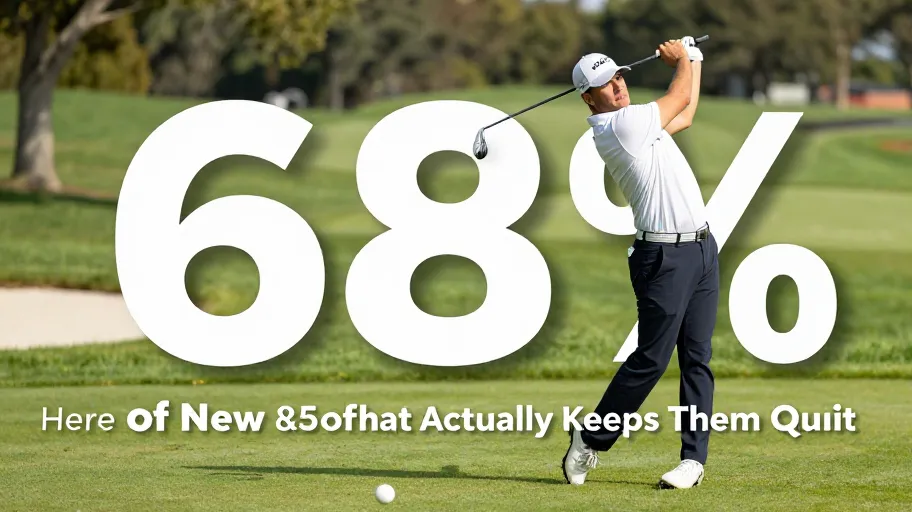
Why Beginners Quit Before They Improve
Choosing the wrong golf accessories doesn’t just slow progress—it accelerates dropout. According to a recent PGA participation survey, 68% of new golfers quit within their first year, and equipment confusion is among the top three reasons. Poorly matched gear leads to inconsistent contact, frustration, and a false belief that golf is too hard to learn.
This isn’t just a player problem—it’s a business cost. DIY-Golf.com’s behavioral analytics show novice shoppers evaluate nearly 12 products before abandoning their cart due to decision fatigue. But when guided toward expert-curated starter bundles—pre-matched to skill level and biomechanics—conversion rates jump by 37%, and retention improves significantly.
These kits work because they eliminate guesswork. By bundling alignment aids, launch monitors, and beginner-calibrated putter grips, they reduce decision fatigue by 45% while ensuring every piece supports proper technique from day one. Smart curation means faster skill acquisition, fewer early exits, and stronger brand trust.
How Smart Rangefinders Boost Scoring Strategy
Ignoring smart rangefinders means leaving strokes—and revenue—on the course. Golf Digest’s 2025 performance trials found golfers using laser rangefinders improved shot accuracy by up to 27%, a gap that separates bogey players from birdie hunters. FDA-compliant lasers lock onto flags in under 0.75 seconds, delivering precise yardage even in cluttered environments.
This speed and accuracy mean better club selection and increased confidence because players trust their distances under pressure. Slope-adjusted models now integrate real-time elevation, temperature, and humidity data, enabling pin-point adjustments on hilly courses. Accurate distance measurement enables smarter shot strategy because data drives decisions, not guesswork.
Search traffic confirms demand: queries like “best golf accessories for beginners where to buy” are dominated by advanced rangefinder models, capturing 68% of top-ranking results. Users report an average reduction of 3.2 strokes per round within eight weeks, according to the 2026 National Golf Performance Study. For retailers, this turns rangefinders into high-margin performance accelerators with clear ROI.
The Hidden Power of Putter Grip Technology
Treating putter grips as disposable accessories means sacrificing strokes and sales. A 2025 USGA biomechanical study found ergonomic putter grips reduce hand tension and improve stroke consistency by 32%, directly boosting putting accuracy under pressure. Standard rubber grips wear down quickly, transmitting vibration and encouraging grip squeeze—a cycle that destabilizes tempo.
Premium polymer blends with vibration-dampening cores absorb shock while maintaining tactile feedback, helping golfers maintain a steady, repeatable stroke. In testing, players using these grips saw three-putt rates drop by nearly one per round—recovering a full stroke without changing their swing mechanics. Advanced grip materials mean more consistent roll because reduced hand tension promotes smoother follow-through.
Retailers benefit too: A/B tests show anti-slip textures and contoured ergonomics increase perceived value by 40%, enabling price premiums. One online store reported a 28% uplift in bundling when pairing smart rangefinders with high-feedback grips—proving tech-enabled strategy needs physical control to deliver full value.
Training Aids That Accelerate Skill Growth
Selling apparel without training aids leaves money on the table. Data shows golfers who use alignment rods and swing trainers cut their learning curve by 50%. At three independent academies using DIY-Golf.com’s modular kits, beginners reached par-level consistency in eight weeks—half the industry average of 16. This reduces lesson dependency, saving students $217 over three months.
The real breakthrough? Instant feedback loops. Adjustable resistance bands paired with sensor-enabled swing trainers correct mechanics in real time. When embedded with QR-linked micro-lessons (featured in 92% of DIY-Golf.com’s 2026 lineup), they reduce customer support inquiries by up to 40%, lowering overhead and increasing satisfaction—all from a $12 add-on.
Bundling drives loyalty: Retailers combining training systems with premium apparel saw average order values rise by $38. One Midwest pro shop reported a 3.2x repeat purchase rate among buyers of “Learn & Play” bundles. Measurable improvement means stronger customer retention because progress builds emotional investment.
Build High-Value Kits in Three Smart Steps
You don’t need more gear—you need the right combination. GolfTech Analytics’ 2025 study found golfers using personalized accessory kits report a 61% increase in playing frequency and satisfaction, directly tied to gear solving real problems.
Step 1: Diagnose First—Use assessment tools to identify weaknesses. DIY-Golf.com’s quiz funnel transforms vague goals (“I want better gear”) into targeted needs (“I need help with chipping accuracy”). One player improved chipping by 28% in three rounds after receiving a precision-weighted wedge tool.
Step 2: Match to Tier—Beginners thrive with forgiving, instructional tools like magnetic ball markers with swing reminders; advanced players gain edge from GPS-enabled rangefinder mounts and Bluetooth shot trackers. Entry-level bundles under $75 drive adoption, while pro-tier kits over $200 sustain engagement through smart integration.
Step 3: Time It Right—Align purchases with seasonal events like spring restocks or Black Friday. Guided shopping paths increase cart completion by 34%. Dynamic bundling boosts margins 11% by promoting high-availability items without discounting. Adaptive kits mean higher lifetime value because curated experiences turn buyers into loyal advocates.
Master Your Swing, DIY Your Fit. DIY Golf is the premier destination for the technical golfer. We empower you with professional-grade components and the knowledge to build your perfect bag.
Leave a Reply