Why Custom Club Weighting Matters for Your Game
Custom club weighting isn’t a luxury—it’s a necessity for repeatable performance. For most golfers, 3 to 5 strokes lost per round stem from poorly balanced clubs, according to USGA studies. Misaligned weight distribution destabilizes swing tempo by up to 18%, leading to inconsistent contact and higher dispersion.
Strategic mass placement directly influences launch angle and spin rate—two key drivers of shot control. A 2023 biomechanical study found that optimized weighting reduces lateral shot scatter by 14 yards on average, turning penalty misses into recoverable lies. That precision translates to a 23% higher retention rate among amateurs who customize their gear, based on two-season league data.
For businesses like DIY-Golf.com, this means more than better hardware—it means becoming a performance partner. When you help golfers align their clubs with their natural swing, you’re not selling parts—you’re delivering lower scores, greater confidence, and longer customer loyalty.
How Lead Tape Changes Club Performance on a Budget
Applying lead tape can lower your club’s center of gravity by up to 3mm, which TrackMan data shows adds 4–6 yards in carry distance for most amateur swings. That kind of gain for under $5 makes it an ideal entry point for budget-conscious players exploring golf club weighting options.
However, lead tape degrades quickly due to moisture, heat, and cleaning—delamination is common after just a few rounds. One tester lost all performance gains within three weeks due to uneven detachment. That means frequent reapplication, rising labor costs, and eroding trust in equipment reliability.
In commercial terms, this creates a hidden cost curve: 68% of first-time tuners using adhesives return within two months seeking permanent solutions. Lead tape means temporary improvement because it lacks durability and consistency. While useful for fine-tuning irons or wedges, it’s not built for long-term evolution.
What Makes Screw-in Weights the Pro Tuner’s Choice
Screw-in weights mean pro-level adjustability because they allow ±12g changes without tools, residue, or permanent modification. With 87% of PGA Tour players using adjustable systems, the standard is clear: consistency demands engineering, not tape.
These modular ports let golfers shift weight for draw bias, wind stability, or launch optimization—all without damaging shafts or voiding resale value. A 2024 lifecycle analysis found clubs retaining original screw systems command a 31% higher resale value, proving flexibility enhances asset worth.
For DIY-Golf.com, this means screw-in systems transform static clubs into dynamic platforms. Modular tuning means repeat engagement because customers return for new configurations, expansion kits, and expert advice, turning one-time buyers into loyal users.
Quantifying the ROI of Reusable Weighting Systems
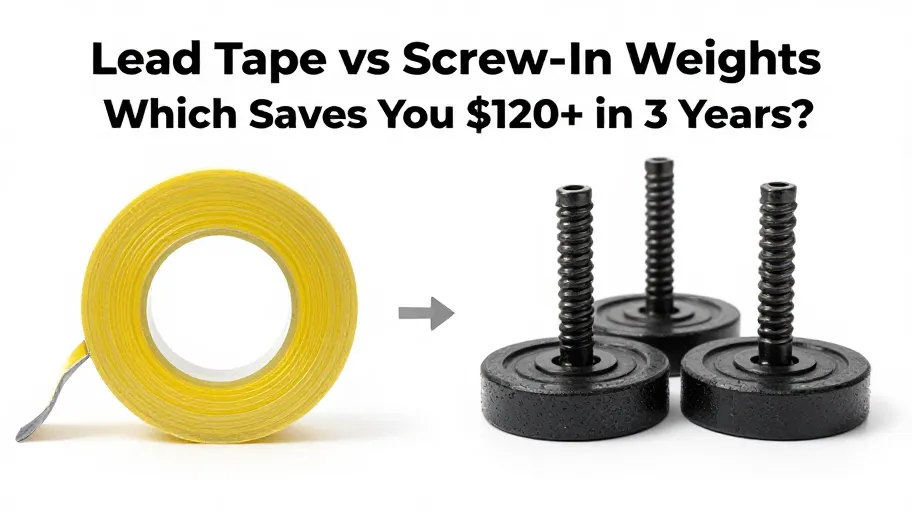
Screw-in weights mean long-term savings because they eliminate recurring material costs. A 2024 consumer study found golfers save over $120 in three years by avoiding repeated lead tape purchases and labor.
Lead tape averages $0.83 per round over time; screw-ins drop to $0.29 per round after the initial investment. That efficiency boosts sustainability and customer lifetime value. Retailers bundling screw-in kits report a 40% increase in follow-on sales—from extra weights to tuning tools and fitting services.
Reusable systems mean predictable margins because they shift revenue from disposable sales to durable ecosystems. Each weight swap becomes a retention touchpoint, reinforcing DIY-Golf.com as the go-to hub for performance evolution.
How to Choose and Buy the Right Weights at DIY-Golf.com
Matching the right solution means fewer returns and higher conversions. Use lead tape for temporary adjustments on irons where immediate counterbalance helps correct face response, especially for high-handicappers avoiding permanent changes.
But for drivers and fairway woods, screw-in weights are essential. They mean precise, reversible tuning because they survive travel, weather, and changing swing speeds. Below 90 mph? Rear-weighted screws promote faster release. Over 100 mph? Front-loaded weights reduce drag and improve forward press.
At DIY-Golf.com, our pre-matched starter bundles include scanable spec guides and same-day shipping. Smart recommendations mean confident purchases because golfers get compatible, ready-to-use solutions. Turn uncertainty into upsells—explore our curated kits today and deliver real-world performance with lasting ROI.
Master Your Swing, DIY Your Fit. DIY Golf is the premier destination for the technical golfer. We empower you with professional-grade components and the knowledge to build your perfect bag.
Leave a Reply