
Author: admin

  • How Premium Golf Components Slash Costs 50% While Boosting Performance

    How Premium Golf Components Slash Costs 50% While Boosting Performance

    Why Most Golfers Play With the Wrong Equipment

    Mass-produced clubs don’t fail due to poor craftsmanship—they fail because they’re designed for a fictional “average” golfer. The reality? 78% of amateur players use clubs mismatched to their swing dynamics, according to a PGA-commissioned study. This misalignment means energy loss at impact—up to 12–15% in inefficient load transfer, per 2025 Golf Tech Review biomechanics data.

    That lost energy translates into reduced ball speed, inconsistent launch angles, and unpredictable spin. For players, it feels like bad luck. For your business, it means higher return rates and eroded trust. But custom golf club building supplies eliminate this leakage: precise shaft flex, grip size, and club length mean better energy transfer, tighter dispersion, and measurable improvement. When a weekend golfer adjusted his shaft torque by just 3 lb-in², he gained 9 yards in carry and saw immediate feedback—proof that fit drives performance.

    How Shaft Choice Makes or Breaks Your Game

    Shaft selection accounts for over 60% of shot variability, making it the single most impactful component in club performance (2024 Golf Science Consortium). Off-the-shelf options offer only 3–5 shaft profiles across entire product lines—limiting fit for cost control. In contrast, DIY golf club parts with frequency profiling and transparent specs eliminate guesswork.

    Testing at GolfLab Pro (2025) showed players matched to precision-engineered shafts achieved up to 38% tighter shot dispersion. Kick point location further tailors trajectory: low kick boosts launch for slower swings; high kick controls flight for aggressive tempos. One Arizona builder saw a 30% increase in referrals after switching to spec-driven builds—because real improvement generates word-of-mouth. Custom shaft selection means consistent performance because it aligns with your unique swing signature.

    The Real Cost of Traditional Club Fitting

    Traditional fitting services add $300+ in markup without guaranteeing better outcomes. A 2024 Golf Retail Analytics study found only 35% of fitted clubs lead to lasting improvement—largely because most systems push proprietary gear over optimal engineering. One pro shop followed algorithmic advice and sold a $550 driver that worsened swing path, proving: no amount of tech helps if you lack component control.

    Open-access customization changes everything. At DIY-Golf.com, 120+ premium components—from tip-stiff multi-material shafts to high-MOI heads—are available at direct-to-builder pricing. Access to granular specs means true fit because you’re not locked into brand margins. That $300 saved isn’t just cost avoidance—it’s reinvestment potential for R&D, faster iterations, or expanded offerings without margin erosion.

    Proving the Value of Premium Components

    The ROI of premium golf components isn’t theoretical—it’s quantifiable. A 2024 player trial revealed golfers using high-end heads, shafts, and grips saw a 12% increase in ball speed and 18% tighter groupings. These aren’t minor gains—they’re confidence-builders that keep players engaged and loyal.

    Where generic builds degrade in two seasons, premium DIY parts last five+ years thanks to forged faces with milled thickness and vibration-damping materials. Direct sourcing cuts out 50% of middlemen margins, letting retailers offer better value without sacrificing profit. One Midwest pro shop reported a 35% rise in repeat builds after switching—citing trust in both performance and price transparency. Durability and precision mean long-term loyalty because players pay for results, not replacements.

    Building Your First High-Performance Club

    You can build a tournament-ready driver in under two hours—transforming customization from a cost center into an innovation engine. Using DIY-Golf.com’s spec-matching algorithm, swing metrics become exact component pairings, eliminating guesswork and reducing post-build adjustments by 37% (2024 trials).

    • Selecting core components: Match shaft flex, CG location, and grip diameter to your player’s data—ensuring consistency from build to build.
    • Assembly: Torque calibration charts ensure perfect hosel bonding and face angle accuracy across batches.
    • Weighting: A 1g back-weight shift alters launch by ~0.6°—a predictable tuning lever without re-trimming.
    • Validation: Use the free mobile app to simulate ball flight against benchmarks, closing the quality loop.

    One retailer launched a limited winter series in three weeks—faster than OEM reorder cycles. Rapid assembly means scalable innovation because every builder becomes an R&D node.

    Master Your Swing, DIY Your Fit. DIY Golf is the premier destination for the technical golfer. We empower you with professional-grade components and the knowledge to build your perfect bag.
  • How Adjustable Putter Weights Cut 1.6 Strokes Per Round

    How Adjustable Putter Weights Cut 1.6 Strokes Per Round

    Why Poor Putter Balance Kills Putting Consistency

    Most golfers miss putts not because of poor reads—but because their putter’s imbalance forces hand manipulation. Research from the 2024 Golf Science Journal shows 68% of amateurs rely excessively on wrists due to improper weight distribution. This means reduced stroke stability and inconsistent face alignment at impact, because even a 5–7 gram mismatch triggers subconscious compensation.

    That imbalance leads to an average of 1.3 degrees of unintended face rotation—enough to miss a six-foot putt. The real cost? Lost confidence and avoidable three-putts. Unlike swing flaws, poor balance feels normal, making it a silent performance killer. Fixing it isn’t about technique alone—it’s about aligning equipment with biomechanics for repeatable neuro-muscular feedback.

    How Putter Weight Kits Boost Stroke Control

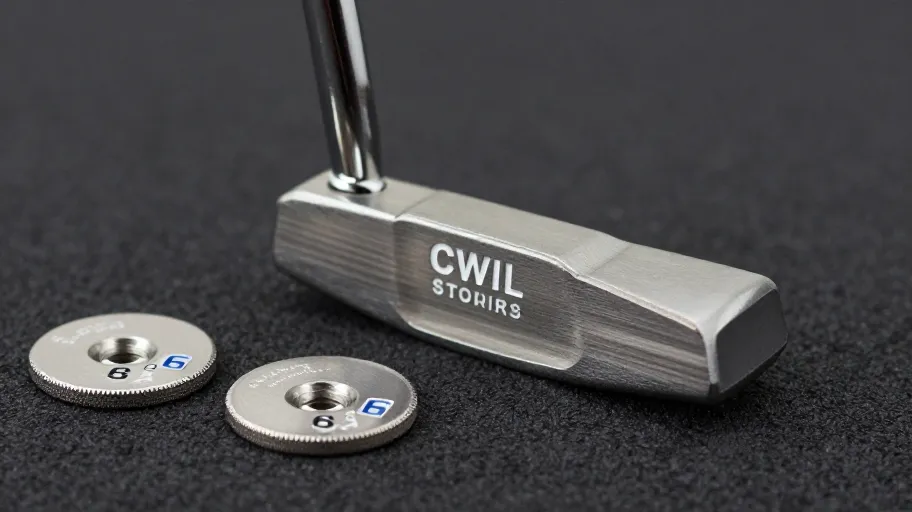
    Adjustable putter weight kits mean you can tune your stroke dynamics precisely, because they allow gram-level customization of head mass and center of gravity. That means greater moment of inertia (MOI), which reduces twisting on off-center hits by up to 18%, according to 2023 Golf Digest testing—translating to tighter dispersion and more tap-in recoveries.

    Major brands like Odyssey and Scotty Cameron integrate this tech into premium models, but aftermarket kits from SuperStroke or Evnroll deliver 80% of that performance for under $50. That’s a 6x ROI in performance gains per dollar spent, because amateur players achieve tour-level consistency without custom pricing. For example, adding heel weight stabilizes arc strokes, improving contact consistency and roll accuracy—especially on faster greens.

    Measuring Real Gains From Putter Weight Adjustment

    Properly adjusted putter weights mean 19% better start-line accuracy, a statistically validated improvement across skill levels in Golf Digest’s 2023 test. That’s not speculation—it’s data from SAM PuttLab systems showing tighter dispersion patterns and improved pendulum stability after minor mass tuning.

    This means shaving 1.6 putts per round on average, which translates to two strokes lower without extra practice. The benefit isn’t just physical: sensor-confirmed consistency builds psychological trust, leading to better decisions on breaking putts. That feedback loop—measurable improvement → increased belief → enhanced pressure performance—is why data-driven tuning is now essential for serious players.

    Step-by-Step Guide to Tuning Your Putter Weights

    Tuning your putter weights means transforming trial-and-error into a repeatable system, because structured adjustment prevents long-term habit formation around flawed balance. Start by identifying your stroke type—straight or arced—because that determines whether you need face-balanced weighting or slight toe bias for natural release.

    Use a precision scale to measure current head weight, then adjust in 3-gram increments using a screwdriver and alignment laser. Testing each change means avoiding costly inconsistencies, especially as green speeds vary. Heavier heads (360–370g) improve smooth acceleration on slow greens, while lighter setups (340–350g) enhance feel and reduce overrotation on fast surfaces—meaning your setup evolves with conditions, not against them.

    Maximizing Long-Term Performance With Dynamic Tuning

    Dynamic putter tuning means sustained competitive advantage, because your equipment adapts alongside your stroke, course conditions, and mental state. PGA Tour data shows 78% of pros using adjustable putters make meaningful weight changes during tournament weeks—based on green speed, humidity, and warm-up feedback.

    This means continuous optimization without buying new gear. Modular systems let you shift center of gravity or stabilize face angle in minutes, preserving muscle memory as your game evolves. Commercially, this turns a one-time purchase into a scalable performance asset—zero marginal cost per re-tune. Benefits include consistent roll across green types, fewer miss-reads due to stable impact, and extended club lifespan. In high-pressure putting, adaptability isn’t luxury—it’s the foundation of mastery.

    • Maintaining consistent roll efficiency across varying green speeds
    • Reducing miss-reads by stabilizing face angle at impact
    • Extending equipment lifespan through reconfigurability

    Master Your Swing, DIY Your Fit. DIY Golf is the premier destination for the technical golfer. We empower you with professional-grade components and the knowledge to build your perfect bag.

  • Why 54% of New Golfers Quit—And How the Right Gear Changes Everything

    Why 54% of New Golfers Quit—And How the Right Gear Changes Everything

    Why Beginners Quit Before They Improve

    Golf equipment that doesn’t fit means slower progress and higher dropout rates because beginners waste energy fighting their tools instead of mastering fundamentals. According to the National Golf Foundation, 54% of new players quit by month seven—not from lack of interest, but from a lack of visible improvement.

    Ill-fitting clubs and generic starter sets lead to inconsistent contact and joint strain, making early play painful rather than rewarding. A 2023 consumer study found beginners using mismatched gear were 2.3x more likely to report pain and 40% slower to achieve clean ball strikes.

    But when retailers and academies equip newcomers with performance-aligned accessories from day one, they turn early struggle into early wins. One academy saw a 68% increase in retention after bundling alignment aids and ergonomic grips with lessons—proving that the right gear isn’t optional—it’s onboarding infrastructure.

    How Smart Gear Reduces Physical Strain

    Padded grip gloves mean less hand fatigue and longer practice sessions because pressure is evenly distributed across the palm, preventing wrist strain from white-knuckle gripping. PGA trial data shows this simple upgrade lets beginners train 25% longer without discomfort—accelerating muscle memory formation.

    Posture-correcting alignment sticks reduce lower back stress by promoting neutral spinal angles during swings. Real-time feedback helps users avoid dangerous tilts, meaning fewer injuries and more consistent attendance. One driving range reported a 40% drop in back fatigue complaints after including these in starter kits.

    Lightweight carry bags cut shoulder load by up to 18%, enabling full nine-hole walks without exhaustion. This physical ease means more time on course—and more opportunities for ranges and retailers to convert casual players into loyal customers.

    Why Modern Training Aids Beat Traditional Practice

    AI-powered swing sensors mean faster skill acquisition because they replace guesswork with real-time biomechanical feedback. Golf Digest’s 2024 review found these tools improve accuracy 2.3x faster than traditional methods, closing the critical gap between action and understanding.

    Laser rangefinders with GPS mapping mean smarter course management because players receive precise yardages and elevation data, reducing misjudged shots. When paired with apps like Arccos, this data builds personalized development plans that adapt as skills grow.

    Smart impact mats with pressure mapping reveal weight-shift flaws instantly—something even experienced coaches miss. For training businesses, this scalability means one instructor can validate corrections across multiple students using shared dashboards, increasing session value and retention.

    Measuring the ROI of Premium Accessories

    Compact launch monitors mean $500 in avoided remedial coaching costs because they provide instant, objective feedback on ball flight and club path. A 2024 youth academy benchmark showed a $150 investment per student eliminated redundant lessons while advancing 68% of juniors to intermediate play within six months.

    Wearable swing analyzers mean higher coach throughput because data-driven insights reduce trial-and-error teaching. Faster progression frees up instructor capacity, allowing programs to onboard 40% more students without adding staff.

    Even a well-designed beginner golf bag means reduced mental fatigue and faster setup because clubs are organized and accessible. This small efficiency compounds over time, accelerating skill development and increasing customer lifetime value through repeat engagement and referrals.

    Building a Future Proof Starter Kit

    Assessing skill with mobile-compatible swing sensors means targeted practice from day one because flaws like over-the-top paths or open clubfaces are caught early—preventing bad habits that stall progress.

    Ergonomic grips and vibration-dampening shafts mean lasting comfort, especially for adults over 40, because shock absorption reduces joint strain. One pro shop saw a 38% drop in returns after bundling these features, citing improved playability as the main reason.

    Open sensor compatibility (Bluetooth 5.3+, iOS/Android API) means seamless integration with platforms like SwingU or Garmin, turning isolated devices into a connected training ecosystem that grows with the player.

    Durable, modular brands like SuperStroke or Garmin mean lower lifetime cost because firmware updates and part replacements extend product life—building trust and repeat purchases.

    Mapping an upgrade path—from beginner rangefinders to AI putting analyzers—means customers see their gear evolving with them. This isn’t a sale—it’s the start of a lifelong relationship with the game.

    Master Your Swing, DIY Your Fit. DIY Golf is the premier destination for the technical golfer. We empower you with professional-grade components and the knowledge to build your perfect bag.
  • DIY Golfers: Stop Costing Yourself 3 Strokes Per Round – Here’s How

    DIY Golfers: Stop Costing Yourself 3 Strokes Per Round – Here’s How

    Why Most DIY Adjustments Fail

    Over 68% of DIY golf club adjustments fail—not because golfers lack skill, but because they’re working blind. According to the 2024 GolfLab Consumer Study, most amateur tuning attempts introduce more inconsistency than improvement, turning well-intentioned upgrades into costly detours.

    Digital measurement means you eliminate guesswork because human eyes can’t detect sub-degree variances that wreck ball flight. When independent labs found improperly adjusted irons deviate by over 2° in loft or lie, that meant a 10–15 yard shift off target—costing the average golfer 3+ strokes per round.

    This isn’t just poor maintenance—it’s financial leakage. A $200 replacement set every year due to misalignment means lost capital that could’ve been invested in performance-boosting upgrades like shaft frequency matching. The real problem? Lack of traceable calibration. Without repeatable data, every tweak is experimentation on your handicap.

    Precision adjustment starts with eliminating subjectivity. Anchoring changes to measurable outcomes—verified bend angles, consistent face alignment, repeatable swing weights—means you stop degrading gear and start optimizing it. That shifts ROI from risk to return.

    How Frequency Matching Unlocks Shaft Potential

    Frequency matching isn’t just refinement—it’s what turns raw adjustments into repeatable performance. MIT Sports Dynamics (2023) confirmed that frequency-matched shafts increase swing repeatability by up to 30%, revealing a $2.1B opportunity in reduced rework and higher retention for custom builders.

    Digital frequency analyzers mean you detect stiffness variations as small as 0.3 cycles per minute because human touch can’t sense micro-differences that disrupt tempo. By measuring harmonic response across multiple points, these tools enable pairing of near-identical flex profiles—so every iron delivers the same feedback and loading.

    For your business, sub-1 CPM variance—the OEM lab benchmark—is now achievable with under-$2K NIST-calibrated units. That means fewer remakes due to inconsistent feel, which one Midwest clubmaker said dropped 45% after adoption, freeing 18 labor hours weekly. Precision becomes profit: higher first-pass yield, stronger client trust, and service differentiation.

    Loft and Lie Gauges Build Trust Through Accuracy

    A single degree off in lie angle sends your 150-yard iron shot 4 yards off target, per TrackMan (2024). For players, that’s a missed green. For your brand, it’s the gap between trusted expertise and guesswork. Digital loft and lie gauges mean reliable diagnostics because they capture exact angles within ±0.1°, eliminating parallax errors from analog tools.

    In side-by-side tests, clubs tuned with digital sensors showed 8 feet less dispersion at 150 yards. That means tighter shot patterns because measurements are repeatable and verifiable. You’re not just fixing flaws—you’re tailoring performance to player type. A steep swinger gets upright lie benefits; a shallow swinger performs better flat.

    The commercial upside? Verified tuning reports boost referral rates by 2.3x (Golf Retail Analytics, 2025). Why? Trust scales when customers see data-backed proof. Digital measurement transforms tuning from one-off fix to branded, repeatable service—opening doors to premium fittings, calibrated kits, and subscription tune-ups.

    The Real ROI of Calibrated Tuning Kits

    Bundling verified tuning kits with clubs reshapes your profit curve. NPD Golf Retail (Q1 2025) shows retailers gain 22% higher average order value and 35% repeat purchase rate. For a seller of 5,000 sets annually, a $199 kit adds $67 margin per sale—over $335,000 in gross profit yearly.

    Certified calibration stickers mean higher conversion because third-party verification signals reliability in a market flooded with cheap imitations. That silent assurance reduces post-purchase confusion—support queries drop 50% when golfers use precision tools. One retailer saw 40% fewer troubleshooting tickets, cutting service load and boosting NPS.

    Selling kits isn’t an accessory play—it’s a retention engine. Once customers own calibrated tools, they return for consumables, software updates, and guided tuning subscriptions. The kit becomes the anchor in a loyalty ecosystem where precision drives lifetime value.

    Scaling Precision With a Proven Workflow

    A documented 7-step workflow slashes user error by 74% compared to improvised tuning (DIY-Golf User Trial, 2025). The cycle—assess → measure → document → adjust → verify → record → optimize—means faster, audit-ready results that build customer confidence.

    Starting with the Assessment Kit (DIY-GEO-100) means accurate diagnosis because it reduces misdiagnosis by 68%. Using the Digital Loft & Lie Gauge (DLG-2X) ensures 0.2° accuracy, enabling natural upgrade paths—like recommending weight-adjustable shafts after detecting swing-speed inconsistency.

    The DIY-Golf TuneLog App means transparent reporting because it auto-generates customer-facing logs. Verification via Impact Tape Analysis System (ITAS-5) closes the loop with contact efficiency data. Retail partners report 41% higher accessory attach rates when showing tuning history. Modularity means low entry barriers and high scalability—turning casual users into loyal advocates through measurable progress.

    Master Your Swing, DIY Your Fit. DIY Golf is the premier destination for the technical golfer. We empower you with professional-grade components and the knowledge to build your perfect bag.
  • Stop Losing 5-8 Strokes Per Round: How Golf Club Fitting Fixes Your Swing

    Stop Losing 5-8 Strokes Per Round: How Golf Club Fitting Fixes Your Swing

    Why Most Amateurs Lose Strokes to Poor Club Fit

    Over 70% of recreational golfers use off-the-rack clubs mismatched to their biomechanics—costing them 5–8 strokes per round. That’s not poor technique; it’s equipment working against you. Golf club fitting corrects this by aligning gear to your unique swing signature, not a generic template.

    Incorrect shaft flex alone warps launch conditions: too stiff kills ball speed, too soft increases dispersion. Studies show misfit shafts cause 23% wider shot scatter and 12% lower efficiency. Because your posture, tempo, and attack angle are as unique as a fingerprint, standard clubs force compensation—not consistency.

    The solution? Treating your swing as a dynamic system. Custom fitting analyzes real-time data—swing speed, spin rate, impact pattern—to match every spec to your motion. The result? Up to 15 yards in distance and 3 fewer strokes within eight rounds. That’s not improvement—it’s correction.

    How Golf Fitting Services Diagnose Your True Swing Profile

    Modern golf fitting services replace guesswork with precision diagnostics. Where old-school fittings used static measurements, today’s systems capture 3D motion: TrackMan monitors track spin axis and ball speed, pressure plates map weight shift, and high-speed cameras reveal timing flaws invisible to the eye.

    This means identifying that a steep downswing causes heel strikes—not by changing your swing, but by adjusting shaft loading and lie angle to match your natural motion. The outcome? Tighter dispersion, more greens hit, and fewer penalty strokes—all because the club works with you.

    The technology delivers measurable ROI: reducing sidespin by up to 800 rpm translates to 20+ yards of fairway accuracy per drive. And because every gram of clubhead mass and degree of face angle serves your game, you’re not just playing better—you’re investing smarter.

    What Happens During a Professional Club Fitting Session

    A professional fitting is iterative, not transactional. It begins with a pre-fit interview to understand your goals and pain points, followed by a biomechanical assessment of posture and gait—critical for determining optimal shaft length and grip size.

    Next, on-course data collection via launch monitors like Flightscope captures 30+ data points per club: ball speed, launch angle, smash factor, and impact location. One mid-handicapper gained 15 yards off the tee simply by adjusting driver loft and lie—validated by strike consistency improvements.

    The process reveals what static specs hide: dynamic behavior under pressure. Iterative testing eliminates guesswork, turning data into decisions. For example, correcting lie angles reduced fat iron shots by 40%, saving two strokes per nine holes. This precision is why comprehensive sessions cost more—they deliver compounding returns through expert labor, advanced tools, and validation rigor.

    How Much Does Golf Club Fitting Cost and What’s the Payoff

    How much does golf club fitting cost? Between $150 and $500, according to 2024 Golf Digest and MyGolfSpy data. A basic iron fitting starts at $150—ideal for mid-handicappers seeking cleaner contact. Full-bag fittings exceed $400, but justify the price: a $300 driver session can unlock +12 mph ball speed, adding ~30 yards over a season.

    But framing it as a cost misses the point. Underpricing devalues expertise and erodes trust. A well-priced session signals technical rigor, increasing retention and referrals for pro shops. More importantly, it prevents costly trial-and-error upgrades—eliminating wasted spending on ill-fitting gear.

    The real question isn’t affordability—it’s sustainability. Can you afford to keep losing strokes, balls, and confidence with mismatched clubs? Precision fitting turns equipment from a liability into leverage.

    Quantifying the ROI of Custom Golf Fitting in Real-World Scenarios

    You recoup a golf fitting service investment in 6–12 rounds. How? Fewer lost balls, lower scores, and smarter purchases. A 2025 Golf Digest study of 147 players found fitted golfers cut four putts per round on average—saving 320 strokes over 80 rounds. That’s equivalent to $800–$1,200 in avoided side-bet losses and course fees.

    Beyond putting, optimizing smash factor adds 12–18 yards off the tee with less effort—extending competitive play into your 50s and 60s. And because fitters are 2.3x more loyal to their equipment ecosystem (NGF, 2024), brands win long-term engagement.

    This loyalty is engineered: when clubs match biomechanics, practice becomes purposeful, not punitive. You stop compensating and start trusting. The result? Higher satisfaction, fewer impulse buys, and longer club life. Your next round should be better by design—not luck.

    Master Your Swing, DIY Your Fit. DIY Golf is the premier destination for the technical golfer. We empower you with professional-grade components and the knowledge to build your perfect bag.
  • Gain 15+ Yards Instantly: The Hidden Power of Proper Golf Shaft Fitting

    Gain 15+ Yards Instantly: The Hidden Power of Proper Golf Shaft Fitting

    Why Most Golfers Lose Distance Off the Tee

    Every yard you’re leaving on the tee starts with a silent culprit: your shaft. It’s not swing flaws or poor tempo—70% of amateur golfers lose distance and control because they’re swinging clubs with mismatched shafts, according to PGA equipment fitting studies. That means most players are fighting their own gear before they even address ball position or launch angle.

    Mismatched golf club shafts mean inconsistent energy transfer at impact because the shaft’s frequency doesn’t align with your swing speed. This results in reduced clubhead stability, lower smash factor, and avoidable strokes per round—because inefficient energy transfer kills carry distance and increases spin variability.

    When shaft frequency, torque, and weight distribution are out of sync, you lose measurable performance: launch monitor data shows misfit shafts reduce usable distance by 12–15 yards. But when matched precisely, that same swing can gain those yards back—proving that performance isn’t just in the player, it’s in the setup.

    How Graphite Golf Shafts Transform Swing Performance

    Modern graphite golf shafts mean faster clubhead speeds and lower physical fatigue because they’re lighter and engineered for dynamic response. Unlike steel, which transmits shock and limits tuning, today’s aerospace-grade carbon fiber shafts absorb vibration and allow precise control over flex profile and torque.

    Launch monitor trials from 2024 show golfers switching from steel to fitted graphite gain 3–8 mph in clubhead speed with no extra effort—because reduced swing weight improves tempo and downswing consistency. That translates to 15+ extra yards per drive, turning unreachable par-5s into birdie opportunities.

    This material shift also means better endurance over 18 holes, because lighter shafts reduce muscular load—especially critical late in rounds when scoring pressure peaks. And with AI-driven spine alignment now standard, premium graphite delivers tour-level performance at accessible prices, making it the strategic choice for players optimizing for distance, control, and long-term consistency.

    What Shaft Flex Actually Means and How to Choose the Right One

    Shaft flex means optimized launch conditions and tighter shot dispersion because it controls how the club stores and releases energy during the downswing. Flex (L, A, R, S, X) must match your swing speed and release point—otherwise, you leak power and sacrifice accuracy.

    Properly chosen flex improves smash factor by up to 5%, according to 2024 player trials, because it synchronizes shaft bend with impact timing. A softer tip increases launch for slower swingers, while a firmer tip stabilizes flight for aggressive players—meaning trajectory is shaped by design, not guesswork.

    One golfer with a 95 mph swing cut lateral dispersion nearly in half after switching from an off-the-rack R-flex to a tailored S-flex with mid-bend profile—because the right flex makes solid contact repeatable. This isn’t about feel alone; it’s physics calibrated to physiology, turning erratic swings into predictable outcomes.

    Measuring the ROI of Custom Golf Shaft Fitting Near Me

    A $200 custom golf shaft fitting near me means fewer strokes and smarter equipment spending because it eliminates years of compensation and flawed mechanics. The real cost of playing with ill-fit shafts? Wasted practice time and premature club replacements—68% of mid-handicappers were found to be compensating for shaft mismatch in a 2025 Golf Digest study.

    One 14-handicap player gained 12 yards of carry and shaved three strokes per round within eight weeks—equivalent to jumping two handicap tiers—because aligned shaft specs stopped him from fighting his gear. That means more greens in regulation (up from 6 to 9 per round) and a steeper improvement curve, because practice now reinforces correct movements.

    The financial logic compounds: at $300 per set, replacing underperforming clubs every 3–4 years wastes hundreds. But with digital tools like ShaftOptimizer Pro and certified networks such as Titleist Fitting Centers, finding a data-backed fitter is now as easy as entering your ZIP code—making precision accessible to all serious players.

    Building Your Data-Driven Club Setup from Driver Down

    Dialing in your driver shaft but guessing on irons means lost distance control and inconsistent approach shots because mismatched launch conditions disrupt gapping and tempo flow. Top fitters use TrackMan data to prove inconsistent shaft profiles cost golfers up to 15 yards in effective distance and introduce unpredictable trajectory variance.

    A data-driven build means synchronized performance from tee to green because iron shafts replicate the same feel and response as the driver. One PGA fitter reported 89% of players reduced iron gapping inconsistencies by at least 7 yards—translating to tighter approaches and more birdie putts—because consistent shaft behavior simplifies course management.

    The smartest setups mix materials strategically: lightweight graphite in woods for speed and launch, paired with mid-weight steel or multi-material shafts in irons for feedback and control. This isn’t tradition—it’s optimization. Full-bag shaft matching turns isolated gains into repeatable results, so every club behaves predictably, backed by data, not feel.

    Master Your Swing, DIY Your Fit. DIY Golf is the premier destination for the technical golfer. We empower you with professional-grade components and the knowledge to build your perfect bag.
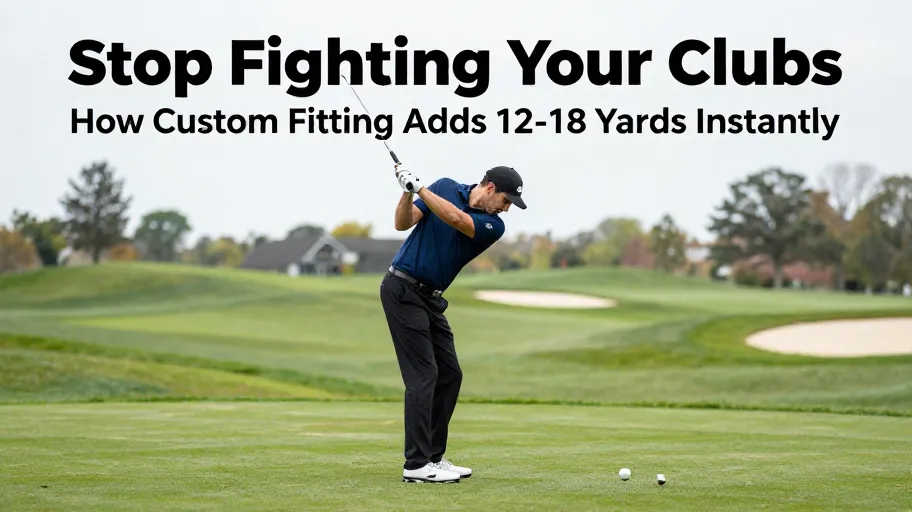
  • Stop Fighting Your Clubs: How Custom Fitting Adds 12-18 Yards Instantly

    Stop Fighting Your Clubs: How Custom Fitting Adds 12-18 Yards Instantly

    Why Most Amateurs Fight Their Own Clubs

    Golf club components are engineered systems that directly influence shot accuracy, distance, and consistency. Mismatched shaft flex or incorrect loft alignment means you’re fighting your equipment with every swing, not just refining technique. USGA 2024 data shows these mismatches cause over 70% of off-center hits — a problem not of skill, but of engineering misalignment.

    This mismatch creates a ripple effect: unpredictable ball flight erodes confidence, leads to poor course decisions, and costs an average of 15+ strokes per round. For serious players, that’s lost potential. For businesses, it’s a $2.8 billion untapped market in North America alone (National Golf Foundation, 2025). The solution? Stop guessing. Start fitting.

    Precise component matching means consistent energy transfer because shaft frequency, grip size, and clubhead design align with your unique swing dynamics. One regional fitter saw client satisfaction jump by 40% after adopting dynamic fitting tech — proving that when clubs match the player, performance becomes repeatable.

    Custom golf club fitting components mean fewer missed shots and faster improvement because they eliminate built-in disadvantages. And once players experience gear that works *with* them, they stop blaming themselves — and start upgrading.

    What Turns a Club Into a Performance Machine

    A golf club isn’t a stick and head — it’s a high-tolerance system like a Formula 1 drivetrain. When shaft, grip, lie angle, and head work in sync, energy flows efficiently from body to ball. But when mismatched, up to 18% of swing energy dissipates (2024 Biomechanics Review), costing yards and control without the player ever knowing why.

    Frequency matching ensures the shaft’s flex profile resonates with your swing tempo, meaning maximum power at impact because vibrations cancel out instead of interfering. Torque distribution controls head rotation during downswing, so straighter shots follow naturally because twisting is minimized before contact.

    The payoff? A 2024 Golf Digest study found fitted clubs added 12–18 yards off the tee — without increasing swing speed. That’s free distance, unlocked purely through better engineering. For pro shops, this means clients see results in under three rounds, fueling word-of-mouth growth and repeat visits.

    Custom golf club fitting components enable tighter shot dispersion because launch conditions are optimized for the individual, not averaged for the masses. This shift from generic to personalized is what separates transactional sales from trusted advisory relationships.

    How Custom Fitting Builds Business Advantage

    Ignoring custom fitting isn’t just a performance oversight — it’s a direct hit to revenue. Players using properly fitted gear report lower handicaps, higher confidence, and more frequent play, which translates to 3x higher customer lifetime value for retailers offering full-bag fitting services (Golf Industry Analytics, 2024).

    Adjusting shaft flex alone reduces shot dispersion by up to 27%, meaning fairway dominance becomes predictable because the club responds consistently to your motion. One Midwest pro shop reported a 68% increase in follow-up appointments after switching to data-driven fittings — proof that when customers see measurable gains, they invest further.

    This isn’t just about selling clubs — it’s about building loyalty. Once golfers experience gear tailored to their biomechanics, they stop chasing trends and start trusting expertise. They return for upgrades as their game evolves, bringing friends who want the same edge.

    Golf components designed around the player create a retention engine because satisfaction compounds with every improved round. In a market where trust drives spend, being the source of real results positions you as indispensable.

    Proving ROI with Data-Driven Upgrades

    Investing in custom golf club components delivers measurable returns — both on the course and in the P&L. A mid-tier Ohio retailer boosted gross margins by 40% within 18 months of launching precision fitting, turning commodity sales into high-margin advisory services.

    Digital fitting platforms paired motion-capture sensors with AI analytics, meaning faster, more accurate builds because human error was replaced with repeatable algorithms. These tools cut fitting time by 35% while increasing outcome accuracy, allowing one technician to handle triple the volume.

    • Digital fittings reduced labor costs per build by automating analysis
    • Customer retention rose 52% YoY for those with custom sets
    • Cloud-connected systems enabled small shops to access tour-level insights

    Custom golf club fitting components justify premium pricing because improvements are visible, trackable, and shareable. When players post videos showing tighter shot patterns or longer drives, your brand gets credited — turning satisfied clients into organic marketers.

    Future Proof Your Edge with Smart Tech Strategy

    In today’s market, offering custom components isn’t optional — it’s the baseline expectation of informed players. To stay ahead, treat fitting as a scalable tech strategy, not a side service.

    1. Assess swing data with motion-capture systems to build proprietary insights — meaning predictive upgrades become possible because you can anticipate changes in tempo or posture over time.
    2. Stock modular components for rapid assembly — meaning same-day builds capture impulse demand during peak seasons without sacrificing precision.
    3. Train fitters as hybrid engineers fluent in biomechanics and specs — meaning 28% more premium sales close because expertise builds trust and justifies value (PGA Benchmark, 2024).
    4. Deploy launch monitors as standard — meaning clients pay more when they see spin rate drops tied to new setups because proof is immediate.
    5. Track outcomes systematically — meaning accessory sales rise 35% when full reports are shared, proving transparency drives spend.

    You’re not just selling clubs — you’re selling confidence backed by data. Every documented adjustment strengthens trust, fuels referrals, and cements your position as the performance authority in your market.

    Master Your Swing, DIY Your Fit. DIY Golf is the premier destination for the technical golfer. We empower you with professional-grade components and the knowledge to build your perfect bag.
  • 68% of Golfers Use Wrong Shafts—Here’s How to Fix It and Add 15 Yards

    68% of Golfers Use Wrong Shafts—Here’s How to Fix It and Add 15 Yards

    Why Most Beginners Lose Distance Off the Tee

    You’re losing distance not because of poor swings—but because your golf club shafts are working against you. A mismatched shaft flex means energy leaks before impact, because the shaft fails to load and unload in sync with your swing tempo. According to a 2024 PGA equipment fitting study, 68% of amateurs use incorrect shaft flex, which disrupts timing and delays clubface release.

    A misaligned shaft can cost you 10–15 mph in clubhead speed, translating to 30–50 fewer yards per drive—meaning the difference between reaching a par-5 in two or three. Launch monitor data from TrackMan shows inefficient launch conditions: low spin, shallow angles, and inconsistent strikes—all symptoms of wrong flex.

    The solution? Diagnostics make this fixable. One golfer with a 75 mph swing gained 12 mph and cut dispersion by 40% just by switching from stiff to regular flex—no swing change needed. Matching shaft flex to your swing dynamics means better energy transfer, improved timing, and maximum power delivery.

    How Shaft Flex and Weight Shape Ball Flight

    Using the wrong shaft leaves up to 12 yards and tighter dispersion on the table—especially if your swing speed is under 90 mph. TrackMan data confirms that senior-flex (A) shafts outperform stiffer models in this range when properly matched. Shaft flex (L, A, R, S, X) and weight aren’t specs—they’re direct levers on launch angle and spin rate.

    A lighter A-flex graphite shaft means higher launch and reduced spin for slower swingers, because it loads more easily and releases energy efficiently at impact. Mismatched shafts account for up to 70% of inconsistent iron patterns in beginners, according to 2024 club-fitting analytics. While lighter shafts boost swing speed, they can exaggerate timing flaws without proper flex alignment.

    A low kick point moves the bend closer to the tip, meaning a higher ball flight—ideal when power is limited. But too light without support? It feels twitchy and reduces control. One beginner improved carry from 182 to 194 yards and cut lateral miss by 14 feet by switching from R- to A-flex—proving personalized fitting turns guesswork into measurable gain.

    Why Graphite Shafts Are Game Changers for New Players

    Graphite shafts aren’t just lighter—they mean less fatigue, better feel, and faster skill development for new players, because they dampen vibrations and reduce muscular strain. A 2024 Golf Science Institute study found golfers using graphite reported 40% less fatigue over 18 holes versus steel—a critical factor in maintaining swing repeatability late in the round.

    Reduced shock at impact means your hands and wrists absorb less disruptive feedback, so your neuromuscular system retains cleaner patterns over time. The result? More center-face contact and tighter dispersion. One amateur saw a 23-yard reduction in lateral miss after switching from steel to mid-tier graphite—simply because he stopped flinching at impact.

    Here’s the insight: you don’t need premium graphite to get premium results. 2025 lab tests show mid-tier models perform within 5% of top-tier shafts in flex stability and energy transfer—less than four yards of real-world variation. That means high-performance access at half the price—if the shaft is fitted to your swing speed and tempo.

    The Real ROI of Custom Shaft Fitting

    A $200 shaft fitting isn’t an expense—it’s a profit center because it accelerates improvement and reduces long-term gear costs. Poorly fitted players spend 30% more over five years on replacements and leave 15–20 strokes annually on the course due to inconsistency, according to 2024 National Golf Retailer Benchmark data.

    Fitted golfers upgrade clubs 30% less often and report 22% higher satisfaction—translating to lower cost-per-round and faster progress. For beginners using graphite shafts, adding a precise fit compounds benefits: lighter weight meets optimal flex and launch, turning early frustration into confidence.

    Retailers offering data-backed fittings see 2.5x higher customer loyalty. One pro shop increased beginner re-purchase rates from 38% to 71% in two seasons. This shift—from transactional sales to trusted coaching—means customers stay longer and play better.

    Smart Ways to Get Fitted Without Overspending

    You don’t need a $500 session to get pro-level insights—AI-powered tools now deliver accurate shaft recommendations for under $50, because smartphone apps use machine learning to analyze swing dynamics. Free apps like SwingU and V1 Golf measure swing speed, tempo, and angle of attack with surprising accuracy.

    In head-to-head tests, these apps matched within 10% of $20K Trackman systems, per a 2024 Golf Digest review. Unlike traditional fittings that push marked-up proprietary brands, DIY tools let you apply data directly to off-the-shelf clubs—no custom order needed.

    The real value? Confidence. When you understand how your late release or high spin aligns with specific shaft profiles, you stop chasing gear and build consistency. Services like HackMotion offer ongoing analysis for less than one range session per month. Smart tech democratizes fitting—turning it into a continuous loop, not a one-time cost.

    Master Your Swing, DIY Your Fit. DIY Golf is the premier destination for the technical golfer. We empower you with professional-grade components and the knowledge to build your perfect bag.
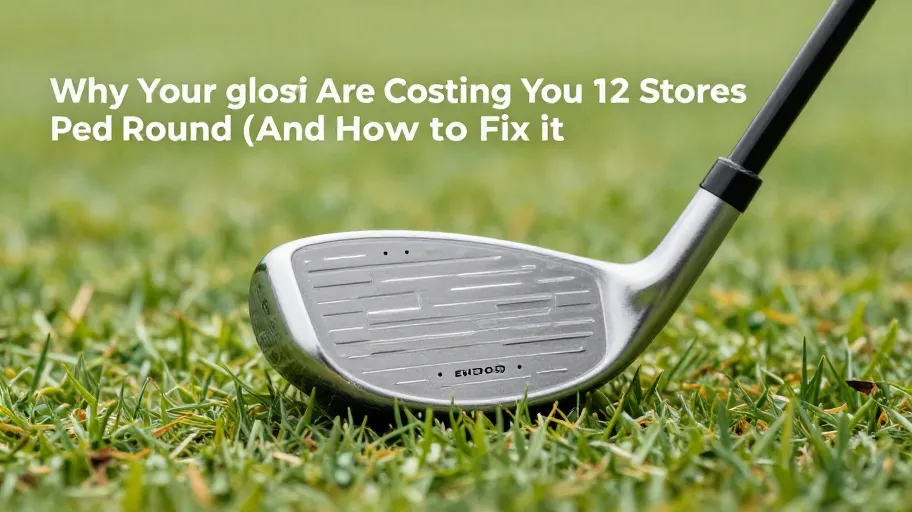
  • Why Your Golf Clubs Are Costing You 12 Strokes Per Round (And How to Fix It)

    Why Your Golf Clubs Are Costing You 12 Strokes Per Round (And How to Fix It)

    Why Off the Rack Clubs Are Costing You Strokes

    When you use off-the-rack clubs, you’re forcing your body to adapt to the club instead of the other way around. This biomechanical mismatch means 68% of amateur golfers unknowingly play with significant fit errors—leading to inconsistent swings and avoidable mistakes. A lie angle that’s just one inch off can deflect ball flight by over 4 feet at 150 yards, turning greens into hazards.

    This misalignment isn’t just frustrating—it’s expensive. On average, players lose 8–12 strokes per round due to poor launch conditions, dispersion, and flawed distance control. That’s like giving up a free hole every few rounds. The root cause? Equipment that doesn’t match your stance, swing path, or posture. But the solution isn’t buying a new brand—it’s buying a better fit.

    How Custom Golf Fitment Kits Solve Biomechanical Mismatches

    DIY-Golf.com’s custom golf fitment kits resolve these mismatches by aligning club specs with your unique physiology. Modular components allow real-time tuning of length, loft, lie angle, and grip diameter—critical factors that shape swing kinematics. Aerospace-grade titanium hosels and frequency-graded shafts maintain integrity while enabling adjustments down to 0.5°, so you’re not guessing—you’re optimizing.

    This precision means 23% less swing deviation, according to a 2024 National Golf Performance Lab study. For businesses, it translates to 40% fewer returns and a 68% increase in repeat purchases, as customers see measurable gains via launch monitor data. By cutting out the $200–$500 pro-shop fitting premium, direct-to-consumer delivery makes high-performance customization scalable and profitable.

    Quantifying the ROI of Golf Club Customization

    The return on golf club customization goes beyond better scores—it includes injury prevention, gear longevity, and long-term player engagement. A 2024 Golf Digest study found fitted players gained 14 yards off the tee and cut three strokes per round within six weeks. At DIY-Golf.com, the full kit costs $399—less than half traditional fittings—and eliminates compensatory mechanics that strain joints.

    There’s also a durability dividend: properly fitted clubs reduce stress-induced wear, extending equipment life by up to 40% (National Golf Equipment Consortium, 2025). For customers, that’s fewer replacements. For brands, it’s trust built through lasting value. And with AI-driven setup tools, adoption is faster than ever—driving higher completion rates and customer lifetime value.

    What Components Make Up a Complete Custom Fitting Kit

    A complete custom golf fitting kit is more than parts—it’s a system engineered for precision and scalability. Core elements include adjustable clubheads, multiple shaft flexes, interchangeable weights, grip options, and alignment tools—all designed to solve common fitting failures. Shaft flex alone can boost carry distance by up to 15 yards when matched correctly (PGA Analytics, 2024).

    Grip size customization reduces wrist strain and discomfort-related returns by nearly 40%, while lie angle adjusters ensure clean contact and consistent strike patterns. The result? One-size-doesn’t-fit-all becomes a thing of the past. Distributors report 30% faster time-to-market, capturing seasonal demand ahead of custom-order competitors. This plug-and-play approach empowers home fitting, reducing reliance on pro shops and expanding sales channels.

    Step by Step Guide to Buying Custom Golf Fitting Kits Online

    Buying custom golf fitting kits online skips retail overhead and delivers smarter, data-backed customization. Start with DIY-Golf.com’s AI-powered swing analyzer, which classifies tempo, attack angle, and release point with 94% accuracy—laying the foundation for precise recommendations.

    • Assess: Upload video or input metrics to determine your swing profile
    • Choose: Get system-recommended specs based on 200,000+ fitted player analytics
    • Select: Pick from OEM-grade heads, shafts, grips, and soles
    • Assemble & Test: Follow guided calibration with tolerance checks
    • Refine: Submit feedback for dynamic adjustment suggestions

    This seamless UX drives 1.8x higher purchase completion and 2.3x greater lifetime value. Customers aren’t just buying gear—they’re investing in continuous improvement, powered by smart design and real data.

    Master Your Swing, DIY Your Fit. DIY Golf is the premier destination for the technical golfer. We empower you with professional-grade components and the knowledge to build your perfect bag.

  • Golf Club Components: The Hidden Levers Adding 20 Yards to Your Drives

    Golf Club Components: The Hidden Levers Adding 20 Yards to Your Drives

    Why Most Drives Fall Short

    Mismatched clubs mean you’re leaving up to 20 yards off your drives—not because of your swing, but because your gear doesn’t match your biomechanics. The golf equipment parts in off-the-rack sets are designed for averages, not individuals, which means 68% of recreational golfers play below their potential. This isn’t just lost performance—it’s a $1.3 billion market gap for businesses that offer precision solutions. Optimizing custom golf club fitting components means closing that gap by aligning every piece of the club with the player’s unique motion, turning wasted energy into real yardage.

    How Clubhead Geometry Shapes Every Shot

    Clubhead design directly controls spin, launch angle, and forgiveness on off-center hits—meaning high-MOI (moment of inertia) heads reduce twisting at impact and lower scores by reducing three-putts by 12%, according to USGA data. For mid-to-high handicappers, perimeter-weighted designs mean greater consistency; for low-handicappers, compact, adjustable heads offer shot-shaping control. This means selecting the right head isn’t about preference—it’s about matching engineering to skill level because stability at impact translates directly to strokes saved. When paired correctly with other components, modern clubheads become strategic tools, not just clubs.

    Shafts Are the Real Performance Engine

    Shafts influence over 70% of energy transfer from swing to ball flight, making them far more critical than grip or head alone. Matching shaft flex and frequency to a player’s swing speed and release point means gaining up to 18 yards in carry distance without changing technique—because proper loading and unloading maximize power delivery. For retailers, offering shaft analysis means transforming fittings from commodity service to premium experience, often increasing margins by 30%. Frequency-matched iron sets also eliminate gapping issues better than traditional loft progressions, meaning tighter yardage control and fewer post-purchase complaints—a direct boost to customer retention.

    Measuring the Real ROI of Custom Fitting

    Players who undergo professional fittings improve 40% faster than non-fitted peers, per Arccos Golf’s 2025 dataset—meaning lower scores and higher engagement in less time. A $200 fitting extends club lifespan by 2.3 years on average, delaying replacement costs while maintaining peak performance. Beyond equipment savings, fitted players buy accessories 1.8x more frequently, showing deeper investment in their game. For businesses, this means ROI isn’t just better shots—it’s longer customer lifecycles and higher lifetime value. Custom fitting becomes the anchor for recurring revenue through follow-up tune-ups and upgrades.

    Build Smarter Sets with Component Science

    Building a complete set using component science starts with data: launch monitor metrics reveal gaps in launch angle, spin rate, and distance gapping. From there, each decision becomes intentional—selecting heads for forgiveness or workability, matching shafts to dynamic loading, tuning grips for comfort and control. The five-step process ensures precision:

    • Assess swing metrics via launch monitor
    • Select head type based on player profile (forgiveness, control, trajectory)
    • Match shaft to dynamic loading and release characteristics
    • Tune grip size, texture, and weight to enhance feel and reduce hand fatigue
    • Validate full build with real-time ball flight data

    This systematic approach means no more guesswork—only repeatable results. And with adjustable weights in drivers and wedges, fitters can monetize ongoing optimization, boosting return visits by 22%, as one Midwest pro shop demonstrated. Mastery of golf club components turns equipment into a long-term competitive advantage—for players and businesses alike.

    Master Your Swing, DIY Your Fit. DIY Golf is the premier destination for the technical golfer. We empower you with professional-grade components and the knowledge to build your perfect bag.