Why most bulk adapter orders fail at quality control
Golf shaft adapter bulk production fails not because of bad intent—but because material tolerances slip through unchecked. One mid-sized OEM lost a full shipment when torque tests revealed inconsistencies across batches. The root cause? A Tier-2 supplier skipping ISO 9001 process controls, leading to undetected changes in heat treatment and alloy mix.
Material Yield Variance—how consistently an alloy resists permanent deformation—is the hidden flaw. When it exceeds 8%, as seen in non-certified suppliers (per 2024 Global Golf Materials Benchmark), performance becomes unpredictable. That means shaft slippage under swing load isn’t just possible—it’s likely.
Keeping yield variance below 5% means players trust your clubs shot after shot, because consistency is built into the metal. Enforcing this spec with documented audits means fewer rejects, faster approvals, and stronger distributor relationships grounded in reliability—not hope.
The specs that make or break adapter performance
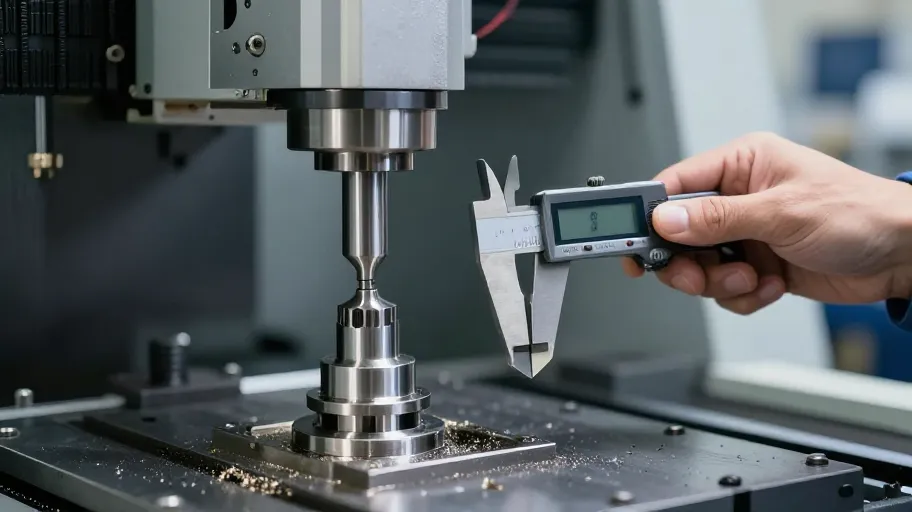
Dimensional tolerance (±0.005mm), thread pitch accuracy, and concentricity aren’t negotiable—they’re what keep club heads aligned and shots straight. We saw a design collapse during overseas production because local teams used standard CNC settings, assuming minor deviations wouldn’t matter. They did.
When concentricity drift exceeds 0.01mm runout, final assembly failure rates jump to 22%. That tiny misalignment is invisible to the eye but destroys flight stability. Custom calibration isn’t optional; it’s required for precision.
One OEM cut QC rejections by 68% just by enforcing these specs upfront. That means faster time-to-market and higher margins—because every remake avoided is pure profit saved. Precision isn’t overhead. It’s protection.
How purchasing strategy shapes product quality
Choosing a supplier based only on bid price leads to brittle polymers, failed stress tests, and 42% rejection rates—exactly what happened to one OEM relying on sample rounds alone. The fix cost 30% more in rework, but total costs rose 50% when delays killed seasonal sales.
The solution? A Supplier Qualification Matrix that evaluates process capability, failure history, and scalability—not just price. Top brands use dual sourcing even at 500K+ units annually. This creates competition that lifts first-pass yield by up to 28%.
Dual sourcing backed by technical vetting turns procurement into a quality lever. You’re not just buying parts—you’re building resilience into your supply chain.
Why pre-production sampling pays for itself
Pre-production sampling cuts field failure risk by 70%. One premium brand delayed launch two weeks after catching inconsistent heat treatment early. That pause saved them from a recall that would’ve cost 14x more than the initial NRE investment (2024 OEM benchmark).
First Article Inspection (FAI) verifies every dimension, material property, and thermal profile before tooling release. It’s not just compliance—it’s leverage. One client used FAI data to reset tolerances with their supplier, cutting long-term rejection rates by 41%.
Validating each sampled adapter means delivering consistent performance at scale. That consistency becomes your brand’s fastest path to market—and player loyalty.
The approval checklist that prevents costly mistakes
Skipping dynamic validation before bulk sign-off exposes you to real-world failures. A six-phase checklist de-risks production for engineering, procurement, and QA teams.
Phase one: torque retention testing under simulated play ensures shafts won’t loosen mid-round—protecting both player confidence and brand reputation. Phase two: dimensional certification traceable to ISO 17025 eliminates fitment issues and keeps assembly lines moving.
Late-stage environmental aging tests caught a $380K rework risk caused by humidity-induced warping—one flaw missed because Phase 5 was skipped. Teams using the full checklist achieve 30% faster time-to-market, not by rushing, but by preventing backtracking.
Master Your Swing, DIY Your Fit. DIY Golf is the premier destination for the technical golfer. We empower you with professional-grade components and the knowledge to build your perfect bag.