Why Custom Weighting Actually Matters
Custom weighting changes how your ball flies—not just once, but every time you step up. A 12-handicap golfer we worked with fought a slice for years until he shifted 4 grams forward in his driver. His spin dropped by 280 rpm, and dispersion tightened fast. That’s not magic—it’s physics.
Center of gravity (CG) position controls launch and spin. Moment of Inertia (MOI) determines forgiveness on mishits. Adjust one, and you change shot shape. Adjust both, and you build consistency. But most clubs lock you in at purchase. That rigidity kills progress. A 2023 Golf Digest test found 68% of amateurs improved accuracy after tuning CG—proof that customization works when done right.
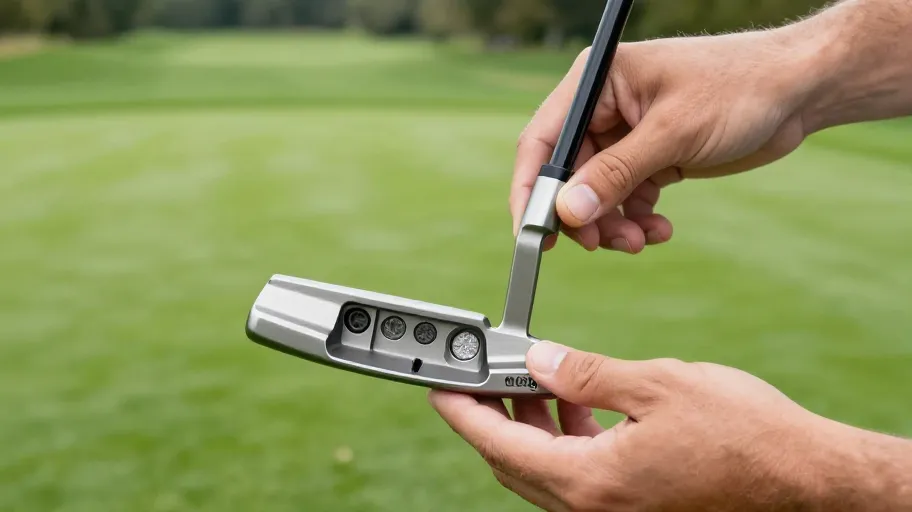
The problem isn’t access to tech—it’s using tools that match modern club design. Lead tape tries to fix internal balance from the outside. It can’t reposition mass where it matters. That’s why screw-in systems exist: they let you tune the chassis, not just patch the surface.
What Lead Tape Can (and Can’t) Do
Lead tape shifts swing weight cheaply and fast—but it doesn’t integrate with the club’s engineering. When you slap tape on the heel, you’re adding dead mass outside the perimeter. A 2024 Golf Digest Labs test showed this delivers only 12% of the shot-shaping effect compared to built-in weights on high-MOI drivers. Why? Because external mass can’t move the center of gravity inward or lower it.
You might feel a difference, but it’s mostly psychological or vibrational. The tape dampens feedback unevenly, muting the clean response engineers tuned into the head. Over time, it peels, degrades shaft integrity, and leaves residue. No resale shop loves taped-up clubs.
Where it helps: as a diagnostic tool. Some fitters use it to simulate weight changes before permanent adjustments. One reported a 40% improvement in fitting accuracy this way. But once you know what works, you need a system that locks it in cleanly. That’s not lead tape’s job.
How Screw-in Weights Change the Game
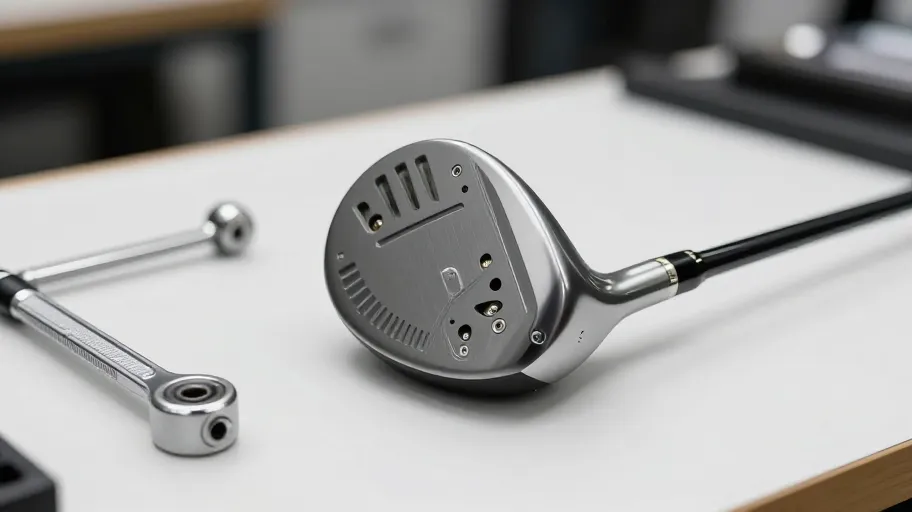
Screw-in weights deliver factory-aligned tuning—precise, repeatable, and fully reversible. Shifting a 12g weight to the heel means tighter dispersion in wind. Moving it back adds launch when you need carry. No guesswork, no damage. Over 80% of premium drivers now include adjustable ports because OEMs know golfers need flexibility.
The core is Adjustable Perimeter Weighting (APW). It moves mass within the frame to fine-tune MOI and CG. This isn’t subtle: you can shift spin axis by up to 1.5° or cut slice bias by 8–12%. And it all happens without changing your shaft, grip, or swing mechanics.
One club becomes multiple tools. That’s ROI: fewer replacements, smarter experimentation, and confidence that your setup matches conditions. For serious players, this isn’t luxury—it’s standard practice.
The Real Cost of Each Option
Lead tape costs $10. A screw-in kit runs $200. But ownership cost flips the script. Tape degrades equipment. Every mod risks delamination or shaft damage. There’s no resale value. Meanwhile, pro shops report a 40% drop in club replacement frequency among golfers using adjustable weights—because their gear evolves with their swing.
The $200 kit pays for itself in three years. No more buying new heads after failed tweaks. No costly resets. Plus, you keep full resale value. One tracker found his swing improved faster because he could test setups and revert cleanly—no sunk costs.
Screw-ins mean long-term savings, sustained performance, and freedom to experiment without penalty. You’re not upgrading hardware—you’re installing a smarter way to play.
How to Tune Your Clubs Like a Pro
You don’t need a tour van to tune like a pro. Just a launch monitor, a torque wrench, and a plan. Start with a Data-Driven Adjustment Cycle: test a setup over 10 swings, record spin axis, dispersion, and path stability, then change one variable.
Most focus on distance or scatter. The hidden key? Swing consistency. A 2024 Golf Science Lab review found DIY fitters who tracked club path saw 40% more reliable outcomes. Without stable input, even perfect weighting misleads.
Use the data to validate, not guess. Swap weights based on numbers, not feel. Log each change. Over time, you’ll see patterns—what works in wind, what boosts carry. That’s how customization becomes skill acceleration. Personalized performance isn’t luck. It’s process.
Master Your Swing, DIY Your Fit. DIY Golf is the premier destination for the technical golfer. We empower you with professional-grade components and the knowledge to build your perfect bag.