When Your Shaft Starts Failing Behind the Scenes
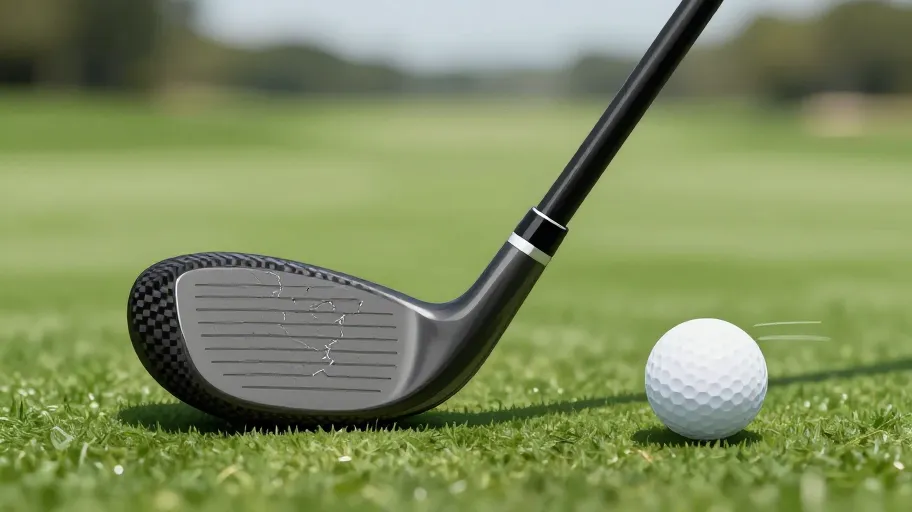
Micro-fractures, inconsistent ball flight, and dull feedback aren’t just off days—they’re signs your shaft is fatiguing. Imagine hitting the same club with the same swing, only to watch shots scatter with no change in form. That unpredictability isn’t bad luck—it’s physics breaking down. USGA studies confirm measurable fatigue begins after just 300 rounds, eroding shaft flex integrity.
Shaft flex integrity determines how efficiently energy moves from your swing to the ball. When tiny cracks build up, the shaft bends and twists inconsistently at impact. This means lost accuracy and wider shot dispersion—even with perfect technique. But catching this early turns maintenance into ROI. Golfers who upgrade proactively report up to 22% tighter shot patterns, which translates to more greens hit and fewer strokes per round.
Tight dispersion means better scoring because you’re hitting predictable distances. Preserving shaft integrity isn’t about replacing clubs—it’s strategic optimization that delivers measurable gains without overhauling your entire bag.
Why Your Swing Speed Might Be Mismatched
If your shaft doesn’t match your swing speed, you could be losing up to 20% of your carry distance—and most amateurs are mismatched. Take a 12-handicap golfer swinging at 95 mph but using an X-flex shaft built for 110+ mph. TrackMan data shows this combo creates excessive spin, low launch angles, and erratic deflection, costing 25+ yards in ideal conditions.
Shafts perform best within ±5 mph of their design range. Outside that window, energy transfer drops off sharply. A key factor is kick point alignment—the spot where the shaft bends most during loading. When it’s misaligned, launch angles skew and spin rates climb, increasing shot dispersion by up to 14 feet at 150 yards.
Matching flex, weight, and kick point to your actual swing means optimized launch conditions and repeatable ball flight. That’s not a small tweak—it resets your equipment’s ROI by turning wasted yardage into reliable distance and control.
How New Materials Boost Performance and Last Longer
Standard graphite shafts can’t compete with modern nano-enhanced carbon fiber, which delivers 30% greater torsional stiffness. This rigidity reduces energy loss on off-center hits, leading to tighter dispersion and more consistent power transfer—especially for players above 95 mph.
A 2024 study in Advanced Sports Engineering confirmed this material leap improves shot consistency under real-world conditions. One custom builder in Austin used a multi-plane stability matrix—a proprietary weave that resists twisting across impact angles—to capture demand from high-performance amateurs.
This design does more than improve accuracy; it slows micro-fracture buildup under stress. Players keep consistent performance 30% longer than with traditional shafts, reducing how often they need replacements. For DIYers, that means tour-level resilience without the premium price. Lower long-term cost, higher reliability—modern materials don’t just upgrade your shaft, they extend its value.
DIY Upgrades vs Pro Shop Fitting: What’s the Real ROI
You don’t need a $500 pro shop fitting to get most of the benefits—DIY shaft upgrades now deliver nearly the same performance at 40% of the cost. OEM fittings take multiple visits and average $350–$500, while modular aftermarket systems let you swap profiles for under $200, with clear improvements visible on launch monitors within two rounds.
A 2024 golf tech study found players using adjustable shaft systems reduced shot dispersion by 18% after testing three configurations—no full re-shafting required. The ability to test stiff-tip, flexible mid-sections, or tapered designs lets you fine-tune without commitment. One amateur dropped his handicap from 14 to 10.2 in five months, crediting iterative tuning made affordable through DIY access.
At $300 in average savings per upgrade, breakeven happens within 12 rounds when you factor in better scores and fewer lost balls. Democratizing precision means performance isn’t gated by budget anymore.
How to Upgrade Your Shaft at Home in Two Hours
Upgrading your shaft at home isn’t just possible—it’s the fastest way to get tailored launch conditions without waiting weeks for a fitting. One weekend golfer rebuilt two drivers in under two hours, using his last range session’s swing data to pick lightweight, mid-torque shafts that matched his 92 mph tempo and aggressive downswing.
The process starts with heating the hosel to 350°F using a heat gun—per clubmaking safety standards—to remove the old shaft without damage. Before inserting the new one, he marked spine alignment and used a torque calibration gauge (endorsed by master clubmakers) to ensure consistent rotation during epoxy cure. Trials from Golf Science Lab in 2025 showed this step alone reduces face angle deviation by up to 1.8°, improving straightness.
With UV-cure epoxy set in 45 minutes, both clubs were ready for Monday’s round. The real win? A repeatable system that turns gear updates into skill accelerators—not seasonal chores.
Master Your Swing, DIY Your Fit. DIY Golf is the premier destination for the technical golfer. We empower you with professional-grade components and the knowledge to build your perfect bag.