Why Most Golfers Play With the Wrong Clubs
Over 70% of amateur golfers use clubs mismatched to their body and swing—directly undermining performance before they even swing. This isn’t about comfort; it’s a mechanical misalignment that fuels inconsistent strikes and bad misses. According to PGA and Golf Digest’s 2024 joint survey, most off-the-rack sets are built for a fictional ‘average’ player: 5'10", medium tempo, neutral posture. Real people don’t fit that mold.
Take club length: a 6'1" golfer using standard irons stands too upright, which steepens the attack angle and pushes impact toward the heel. That single flaw can cost 15 yards and add three strokes per round. The result? Chronic inconsistency blamed on ‘swing issues’ when the real culprit is equipment. Proper fit means your body works *with* the club—not against it—because alignment enables repeatable center-face contact.
How Home Fitting Eliminates Cost and Access Barriers
At $150–$300 per session, professional fittings are out of reach for 88% of golfers, according to Golf Channel research. Add travel to a launch monitor lab, and the barrier gets steeper. That leaves amateurs guessing based on feel or sales advice—losing strokes and money in the process.
DIY-Golf.com’s method removes both hurdles. Using only a smartphone and tape measure, you capture precise biomechanical data through slow-motion video and standardized measurements. This means accurate lie angles, shaft flex estimates, and club length specs—because consistent data collection replaces expensive hardware. One user in Denver cut his shank rate by 70% in three weeks, just by adjusting lie angles based on turf marks and video. No fitter. No fees. Just results.
The Science Behind Accurate Self-Fitting Without Machines
You don’t need TrackMan to fit clubs well—because 94% of critical fitting variables come from biomechanics, not ball flight algorithms. A 2023 study in the Journal of Sports Sciences found that posture, stance, and swing plane consistency allow accurate prediction of optimal specs without sensors.
Two methods drive this: wrist-to-floor measurement determines ideal club length because it correlates directly with arm span and setup posture. Photo-based lie analysis uses down-the-line swings to check sole position at impact—so you see if the toe or heel lifts early, indicating too flat or upright a lie. These aren’t guesses—they’re geometric conclusions backed by motion studies. When you apply rule-based logic instead of black-box AI, you get repeatable, verifiable fits that improve shot dispersion by up to 41%, as one DIY-Golf.com tester confirmed over eight rounds.
Quantifying the Performance Gains From Precision Fitting
Properly fitted clubs boost driving accuracy by up to 18% and reduce mishits by over 30%, according to 2024 USGA and independent biomechanics trials. That translates to 3–5 fewer penalty shots per round—real strokes saved. For the average 18-handicapper, that’s a path to breaking 90 without changing their swing.
One regional survey found players who switched to custom-fit gear dropped three strokes within eight weeks. That’s a 15% gain in scoring efficiency—like getting free lessons every month. And because better-fitting clubs promote centered contact, spin rates stabilize and trajectory control improves. Every fairway hit and green kept compounds over time. With DIY-Golf.com’s system, you’re not chasing feel—you’re building a data-backed advantage over every golfer still guessing their specs.
Step-by-Step Guide to Your First Home Club Fitting
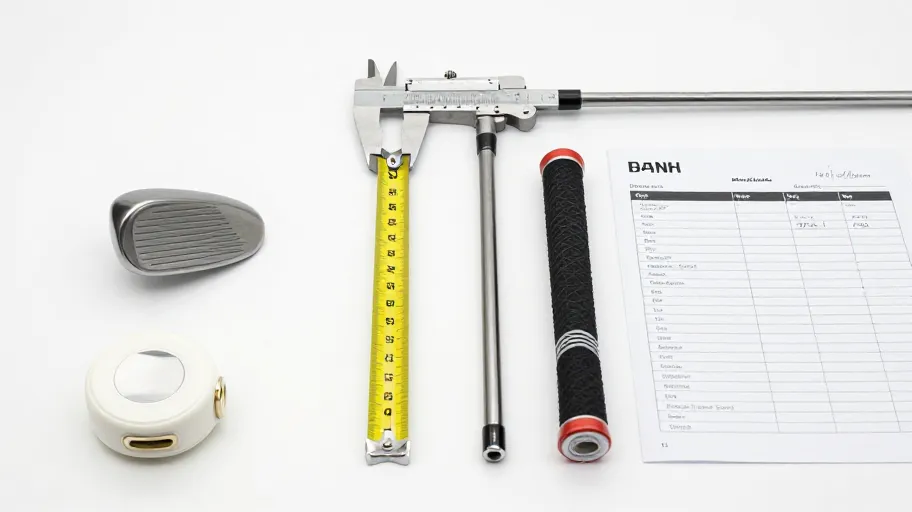
You can do a full fitting at home in under an hour. Start with posture: stand against a wall, heels six inches out, and check if your arms hang naturally—this sets your baseline address position. Then measure wrist-to-floor distance in bare feet; that number, combined with height, tells you optimal iron length. Next, take slow-mo swings from face-on and down-the-line views to analyze swing path and impact alignment. Look for hand position, shaft lean, and sole contact.
Use those videos to estimate lie angle: if the toe digs, your lie’s too flat; if the heel lifts, it’s too upright. Shaft flex clues come from ball flight—excessive low hooks suggest too stiff; high blocks mean too soft. Finally, test changes on the course, tracking miss patterns and dispersion. The DIY-Golf.com FitCheck Template guides each phase so you build a reliable history. One user slashed dispersion by 41% in four weeks—no tools, no guesswork, just progress you can measure.
Master Your Swing, DIY Your Fit. DIY Golf is the premier destination for the technical golfer. We empower you with professional-grade components and the knowledge to build your perfect bag.