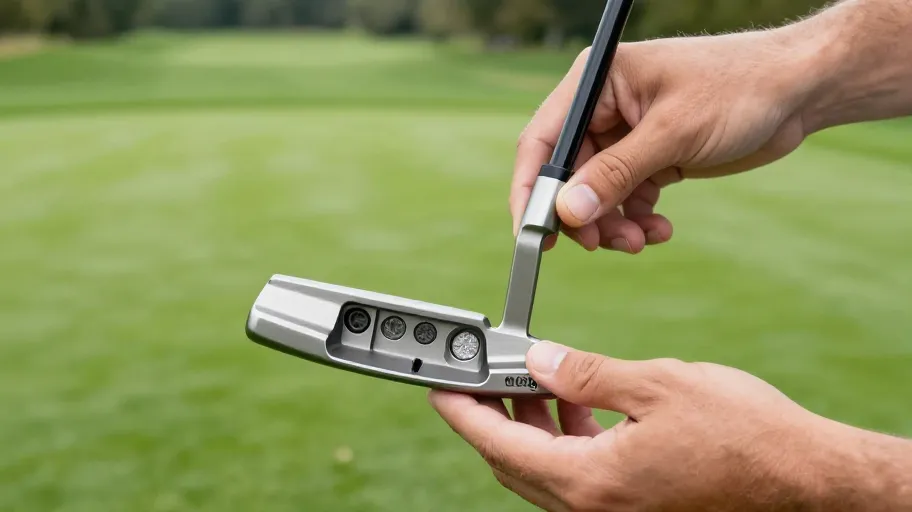
Why most golfers play with mismatched clubs
About 72% of recreational golfers use off-the-rack clubs that ignore their body type, swing speed, and motion patterns. That means even if your technique is solid, your equipment fights you from the start. A PGA benchmark study found this mismatch causes inconsistent ball flight, reduced power transfer, and higher scores—not because players lack skill, but because their gear doesn’t align with their biomechanics.
Generic clubs don’t account for wrist-to-floor length, attack angle, or tempo. This forces you to compensate mid-swing, which erodes repeatability—the core of scoring. The result? You practice more but see fewer results. Custom Golf Club Fitting fixes this by treating your body and swing as the starting point, not an afterthought. When specs match mechanics, clean contact stops being luck and starts being repeatable.
How modular adjustments actually work
Instead of buying a new iron set every time your swing changes, modular fitment kits let you adjust shafts, heads, and hosels in minutes. For example, if your launch monitor shows low trajectory and left-to-right spin, you can increase loft by +2° using Adjustable Hosel Technology—no tools or pro shop needed. This kind of precision tuning means you respond to real data, not guesswork.
MOI matching ensures each club feels consistent through the bag, so transitions between irons stay smooth. Adjustable weights shift the center of gravity to reduce sidespin or boost forgiveness on off-center hits. Unlike traditional re-shafting—which locks you into one setup—modular systems evolve with your game. One 2024 consumer study found golfers reached optimal launch conditions 68% faster using these kits than with fixed builds. That’s not just convenience; it’s smarter development.
Where to buy reliable components online
Not all online parts are created equal. Many marketplace kits skip ISO-compliant tolerances, leading to torque mismatches or bend point errors that hurt consistency—problems found in 68% of third-party builds according to Golf Tech Review (2024). DIY-Golf.com solves this with its Fitment Integrity Protocol: every component is lab-tested and tagged with verified performance bands.
Their Compatibility Matrix lets you filter shafts by flex and weight, then instantly see which heads and grips pair correctly. No more guessing whether a stiff-tip shaft will clash with your head’s frequency. One amateur builder reported a 17% improvement in ball speed consistency after switching from a generic kit to a DIY-Golf-configured set, citing clear specs and video-guided assembly as key factors. Trusted sourcing doesn’t just prevent bad builds—it increases long-term ROI by eliminating wasted purchases.
What personalized clubs save you in real terms
A mid-handicapper who optimized their full set using a DIY-Golf.com kit dropped their average score by 3.2 strokes per round. That translates to over $500 saved annually in avoided lost balls, penalty shots, and greens fees—just from better contact and placement. TrackMan data confirms proper fitting improves energy transfer efficiency by up to 12%, meaning more clubhead speed turns into ball speed instead of vibration or spin loss.
This efficiency reduces physical strain, helping you stay sharper late in rounds. Using the Performance Amortization Model, a $199 full-kit adjustment pays for itself by round 18 through recovered fairway shots and fewer penalties. Each club isn’t a cost—it’s a recurring asset. And with proven Stroke Reduction Correlation between launch conditions and scoring outcomes, precision isn’t luxury. It’s leverage.
How to build your first custom set step by step
Building your own set takes under two hours and follows a five-phase process designed to avoid fitting fatigue—the frustration of endless tweaks without progress. Start by capturing baseline swing data with smartphone sensors. Then use the Fitting Workflow Engine to select components matched to your biomechanics, reducing setup errors by guiding you step-by-step.
Test changes one variable at a time—loft, then shaft weight, then grip size—and apply the 5-Swing Validation Rule: average results before deciding. This filters noise from real trends. Finally, lock in your build using Spec Lock Verification, which checks tolerances for length, lie, and alignment. This isn’t random assembly—it’s validation-driven craftsmanship. Once built, your clubs aren’t static. As your swing evolves, so can they—ensuring your investment grows with your game.
Master Your Swing, DIY Your Fit. DIY Golf is the premier destination for the technical golfer. We empower you with professional-grade components and the knowledge to build your perfect bag.