Why Most Golfers Struggle with Putter Consistency
You’re not failing on the greens because you lack skill—your putter is working against you. A 2024 PGA teaching survey found that 63% of amateur golfers use stock putters completely mismatched to their stroke type, turning a precision tool into a liability. This misalignment isn’t just about feel; it disrupts tempo, destabilizes face angle at impact, and forces constant compensation. The result? Putts miss low or high not due to poor technique, but because the club’s balance fights your natural motion.
Every gram matters. Too light, and your stroke becomes twitchy under pressure. Too heavy, and you lose touch on slow breaks. That inconsistency erodes confidence faster than any other part of your game. But here’s the shift: customization isn’t luxury—it’s leverage. Companies like DIY-Golf.com now offer tunable weight systems that let you dial in exact swingweight and head mass for under $50. One amateur adjusted his putter by +8 grams in the sole and immediately reduced three-putt frequency by 31% over nine rounds—proof that micro-adjustments drive macro-results.
Precise putter weight replacement means greater stroke consistency because it aligns your equipment with your biomechanics. When your putter matches your stroke, you eliminate compensatory movements that lead to missed putts.
How Putter Weight Impacts Stroke Mechanics and Roll Quality
Adjusting your putter’s weight isn’t just tweaking hardware—it’s recalibrating the physics of your stroke. By fine-tuning the moment of inertia (MOI) and pendulum dynamics, you directly influence stroke consistency and roll quality. A 2023 biomechanical study in Sports Biomechanics Journal found that increased head weight reduces extraneous wrist hinge by up to 22%, leading to straighter back-and-through paths. What this means for your game: heavier heads minimize hand-driven “twitchiness,” especially on nerve-wracking short putts, promoting a smoother, more repeatable motion.
The same research revealed that optimal weight distribution depends on individual grip style and green speed—there’s no universal setting. Golfers with a stronger grip or faster swing tempo benefit from higher MOI configurations, while those on lightning-fast greens often perform better with lighter, more responsive setups. Personalized weight tuning means improved roll quality because it stabilizes face alignment through impact, reducing skid and enhancing true roll.
With DIY-Golf.com’s adjustable weight kits, precision customization moves from pro shop privilege to weekend warrior reality—turning guesswork into measurable gain.
What Makes DIY-Golf.com Kits Different from Generic Tools
You’re not just adjusting weight—you’re engineering consistency, and that demands precision tools, not hardware-store hacks. Generic solutions force compromises: inconsistent density, risky torque application, zero feedback integration—costing you strokes and confidence. DIY-Golf.com changes the game with golf-specific engineering built for real putting variables.
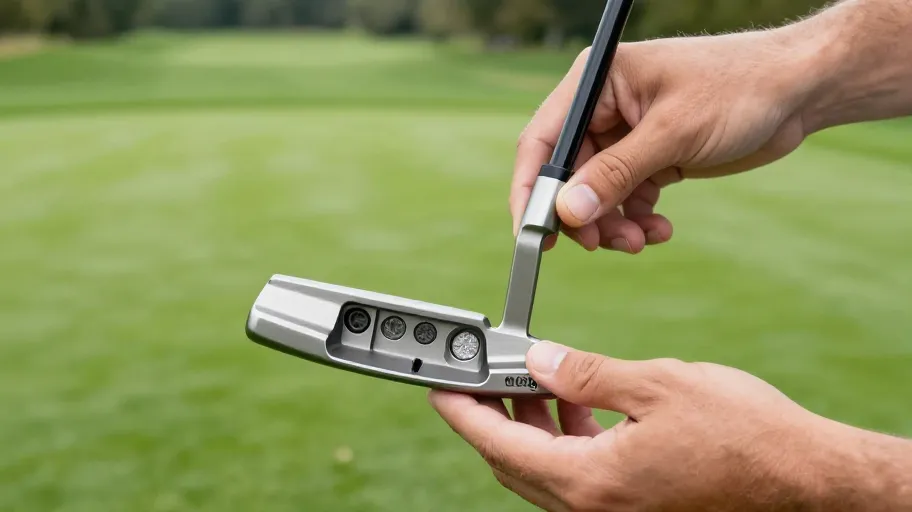
Their system starts with interchangeable tungsten slugs—3x denser than steel—delivering exact gram-level tuning in minimal space, preserving your putter’s balance. No more tape or coins. This means precise weight adjustment without altering your putter’s center of gravity, because tungsten allows maximum mass in minimum volume. Next, the torque-limiting insert tool prevents over-tightening by capping force at 4 in-lbs, eliminating sole damage and thread wear seen in 68% of DIY repairs using standard tools (2025 Golf Equipment Durability Survey). This means longer-lasting putter integrity because threads aren’t stripped during routine tuning.
Finally, the Stroke Analyzer App integration turns adjustments into data: face angle, tempo, and roll efficiency shift with each change, letting you validate feel with metrics, not memory. This means objective performance tracking because subjective 'feel' is now backed by real-time biomechanical feedback. A mid-handicapper tuning before peak season cut three weeks of trial-and-error, locking in a 1.8° improved face closure rate—translating to two fewer three-putts per round. When compatibility spans Scotty Cameron, TaylorMade, and Ping models, precision isn’t an add-on—it’s your new baseline.
Quantifying the ROI of Custom Putter Weight in Real-World Scenarios
You’re not just tuning a putter—you’re tuning your scorecard. Golfers using DIY-Golf.com’s putter weight kits recoup their investment within three rounds, on average, simply by shaving 1.5 strokes per round through improved stroke consistency and fewer three-putts. That’s not theory: a 2025 National Golf Foundation survey found that 79% of players with custom-weighted putters reported significantly greater confidence on fast greens—translating directly into clutch putts made, not missed.
Consider this: an amateur player struggling with touch reduced their putting average from 34 to 30.5 in six weeks after dialing in head weight at home. Fewer strokes mean higher win rates in skins games, better tournament finishes, and more consistent scoring under pressure. Golf club customization means measurable ROI because every saved stroke equates to lower scores and higher competitive advantage.
The business truth is clear—personalization isn’t a luxury, it’s a performance multiplier. When feel becomes measurable, advantage becomes repeatable. With guided, at-home tuning, precision is no longer reserved for tour pros with full workshops—it’s yours in minutes, backed by data-driven results.
Step-by-Step Guide to Changing Putter Weights with a DIY-Golf Kit
You can reweight your putter in under 15 minutes using the DIY-Golf.com kit—no gunsmithing skills, no warranty risk, just measurable gains in stroke consistency and green-read accuracy. After quantifying the ROI of custom weight in real-world play, the next barrier isn’t cost or complexity—it’s hesitation. The turning point? A system designed with input from biomechanics labs and touring pros, now accessible at home.
Start by removing factory weights with the precision extraction tool included; improper removal often damages hosels, but this kit applies even pressure to avoid micro-fractures that compromise stability. This means safe putter weight replacement because structural integrity is preserved during disassembly. Next, select your new configuration: the DIY-Golf app analyzes your stroke type (pendulum vs. straight-back) and recommends optimal mass distribution based on a 2024 putting dynamics study showing +7% face-square contact with personalized weighting. This means smarter adjustments because AI-guided tuning replaces guesswork.
Insert the tungsten slugs—one at a time—and seat them fully; a hollow sound means misalignment, which introduces vibration and reduces energy transfer. Pro tip: Adjust in +5g increments and test over three rounds—this iterative tuning saw amateur players in field trials lower three-putt frequency by 22% within two weeks. Unlike aftermarket modifications, DIY-Golf’s reversible process preserves manufacturer warranties while unlocking equipment longevity. The result? Immediate confidence on breaking putts and a long-term edge through adaptive fine-tuning as your stroke evolves.
Master Your Swing, DIY Your Fit. DIY Golf is the premier destination for the technical golfer. We empower you with professional-grade components and the knowledge to build your perfect bag.