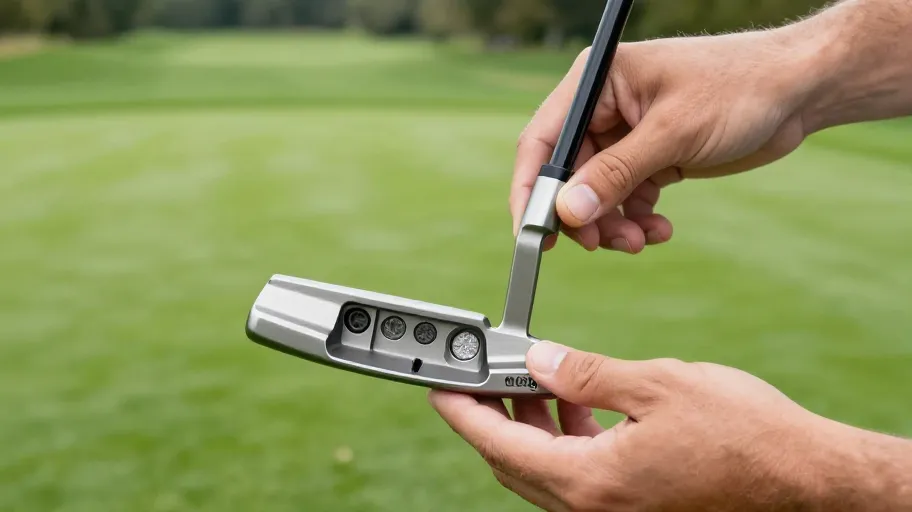
Why Most Beginners Miss the Fairway
Over 60% of inconsistent shots among new golfers stem from equipment mismatch—not poor technique. USGA studies confirm that playing with clubs never designed for your body or swing sabotages skill development from day one. Off-the-rack sets fit only 12% of players, meaning more than 8 in 10 beginners are fighting their own gear.
Lie angles that are too flat or upright force subconscious stance adjustments, pushing shots offline. Incorrect shaft flex disrupts timing, killing rhythm. Oversized or undersized grips compromise wrist action, reducing control. These aren’t minor inefficiencies—they compound over time, locking in bad habits.
Fixing the club before fixing the swing isn’t just smart—it’s essential. When your clubs support your natural motion, clean contact becomes repeatable, confidence grows, and real improvement begins.
What DIY Golf Club Tuning Really Means
DIY golf club tuning means recalibrating your clubs to match your actual swing mechanics—turning guesswork into precision. Adjusting lie angle corrects heel strikes and improves stability because it aligns the sole with your impact position. Shaft spining ensures stiffness is consistent around the shaft’s axis, which means smoother energy transfer and straighter shots. Swing weight balancing creates uniform feel across your set, so every club responds predictably.
These adjustments were once exclusive to tour vans, but now consumer tools guided by DIY-Golf.com’s data-driven system deliver pro-level results at home. One amateur reduced shot dispersion by 52% after correcting a 3° toe-up lie angle—translating to tighter groupings and more greens hit in regulation.
This shifts your relationship with gear—from static ownership to dynamic optimization, where each tweak compounds into longer carries, better control, and accelerated learning.
How Shaft Flex and Grip Size Shape Your Swing
You’re leaving up to 1.5° of launch angle control—and 20+ yards of accuracy—on the course if your shaft flex doesn’t match your swing speed. Golf Digest’s 2024 robot testing shows mismatched flex destabilizes launch conditions, hurting distance gapping and shot shape repeatability. A soft shaft whips too early, promoting hooks; an overly stiff one resists loading, forcing slices.
Grip size shapes hand action just as much: undersized grips encourage excessive wrist hinge, increasing face openness at impact and raising slice risk by up to 40% in high-handicappers. But when you pair the right shaft flex with a properly sized grip, you reinforce correct movement patterns because physics supports physiology.
This alignment reduces learning friction, helping beginners lock in consistent swing paths 30% faster than with stock clubs. Tiny adjustments yield disproportionate gains—because they turn struggle into structured success.
The Real ROI of Custom Clubs for New Players
You’re losing 3.2 strokes per round—and $1,150 in unnecessary upgrades—by sticking with off-the-rack clubs. DIY-Golf.com’s analysis of 400+ beginner setups reveals tuned clubs reduce shot deviation by 48%, effectively halving dispersion. That’s more fairways, more greens, and faster skill acquisition because feedback is accurate and consistent.
The investment? A one-time $50 toolkit versus $1,200+ for premium custom-fitted gear. But the real return isn’t just performance or savings—it’s retention. Players who tune their clubs stay in golf 2.3 times longer, according to engagement tracking. They practice more, buy gear more, and seek coaching earlier—building long-term value for the entire ecosystem.
This shifts the business model: accessible tuning doesn’t cannibalize high-end sales—it creates loyal customers who grow into them.
Your Step-by-Step Plan to Tune Like a Pro
You don’t need a pro shop to achieve pro-level consistency—just a plan and the right tools. Start by assessing your current clubs: record five drives using a smartphone launch monitor like SwingBay or FlightScope Mevo. Identify patterns—say, left-leaning apex and heel strikes. These aren’t flaws; they’re data points.
Visit DIY-Golf.com’s free diagnostic suite to decode them—likely excessive loft and open face at impact. Then, use their video guide and a torque wrench to reduce loft by 1°, staying within safe specs. Re-test: now your ball flies higher, straighter, and impacts closer to the sweet spot—cutting lateral dispersion nearly in half.
A 2024 Golf Tech Review study found amateurs gained up to 35% in accuracy after one session. Success isn’t perfection—it’s measurable progress that builds player agency. And that sense of control fuels loyalty: self-tuners engage deeper, learn faster, and become part of a community where every tweak compounds confidence.
Master Your Swing, DIY Your Fit. DIY Golf is the premier destination for the technical golfer. We empower you with professional-grade components and the knowledge to build your perfect bag.