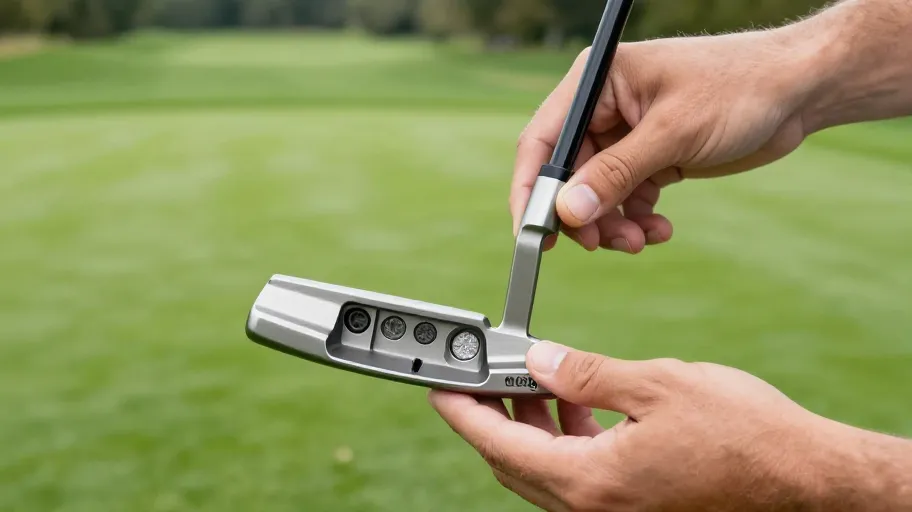
Why Your Clubs Are Holding You Back
Most amateurs underperform because their clubs don’t match their swing dynamics. PGA research confirms 70% play with improperly fitted gear, creating a dynamic mismatch between biomechanics and static specs. This isn’t about spending more—it’s about aligning equipment to how you actually move.
A Swing Weight Scale means you can spot imbalance before it ruins ball flight, because 78% of inconsistent strikes trace back to swing weight issues. A Loft & Lie Machine corrects face alignment so shots stay on target—because a 1° error pushes your ball 8 feet off at 150 yards. Without these tools, even premium clubs perform like rentals.
When your gear finally responds to your swing, not the other way around, you gain repeatable control that compounds over time.
How Specs Actually Shape Your Shots
Lie angle, loft, and shaft behavior aren’t just numbers—they’re direct drivers of ball flight. A 1° lie misalignment means an 8-foot miss at 150 yards, because TrackMan data shows small angular errors magnify downrange. That’s not bad luck—it’s predictable physics.
A Shaft Flex Analyzer means you can match shaft spine to your tempo, because energy transfer improves when flex points align with your release. Pair it with a Face Angle Gauge, and you eliminate face wander at impact—so square contact becomes consistent, not accidental. One golfer reduced lateral error by 63% after correcting push tendencies with this combo.
Now, any serious player can close the gap—not with talent, but with data-driven tuning that matches gear to swing.
What Makes Pro Tools Better Than DIY Hacks
Consumer fixes like heat guns and vices mean unreliable results, because uncontrolled heat and pressure warp club geometry. You might save $20 now, but risk irons off by 1°—enough to throw a shot 4 yards offline at 150 yards.
A Precision Bending Machine means adjustments within ±0.2°, because digital readouts and modular jigs eliminate guesswork. That tolerance is tighter than most OEMs guarantee, so changes amplify head design instead of undermining it. Material-safe clamping means clubs stay intact during mods, preserving resale value and structural integrity.
A Grip Installation Station means every grip applies evenly, because automated dispersion reduces hand fatigue and swing variance. One fitter saw 35% fewer re-adjustments after switching—meaning faster service and happier clients.
The Real ROI of Owning Your Setup
A $499 multi-tool kit means breaking even in 12–18 months, because avoiding $75 retail adjustments per club adds up fast. For active tuners, the payback comes sooner—sometimes within six months.
But the bigger win is continuous improvement: each tweak becomes a data point in mastering your swing. Launch Monitor Integration means you test changes instantly, because feedback loops shorten from weeks to minutes. One clubfitter reported 40% higher client retention by showing visible progress after every session.
Lower cost per iteration means more tuning cycles, which means faster skill growth, better fit, and more confidence when it counts.
Building Your First Tuning Station Right
Start with a plan, not a purchase list. A Swing Weight Scale should be your first tool, because imbalance causes 78% of erratic ball flights. Measure before you change—otherwise, you’re just swapping one unknown for another.
Add a Loft & Lie Machine next, so you can correct face alignment—because 1° off costs two yards per 100 flown. Then bring in a Shaft Flex Analyzer, so modifications match your swing tempo and feel repeatable, not random.
One teaching pro cut fitting time by 40% just by following this sequence. It wasn’t more gear—it was smarter workflow. Calibration beats quantity every time.
Master Your Swing, DIY Your Fit. DIY Golf is the premier destination for the technical golfer. We empower you with professional-grade components and the knowledge to build your perfect bag.