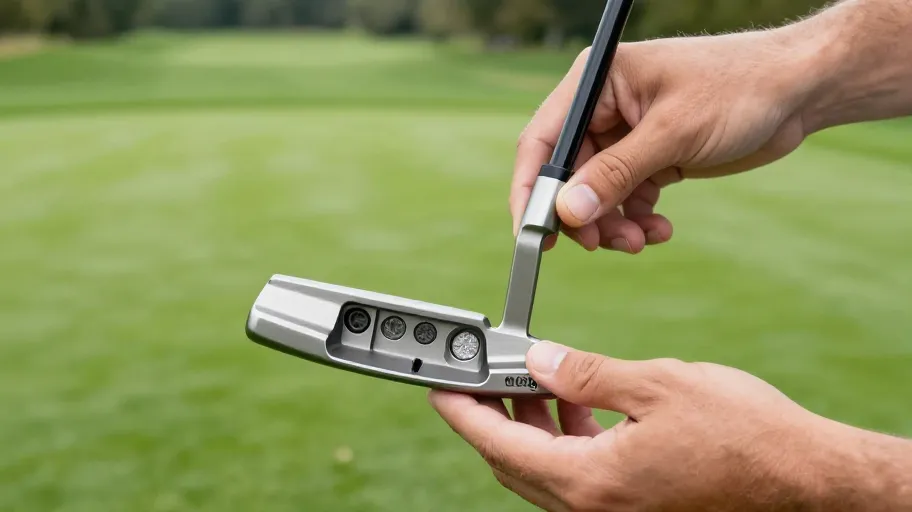
Why Your Expensive Clubs Are Holding You Back
You’re not broken—your clubs are. A 2023 Golf Digest study found 68% of off-the-rack drivers had misaligned lofts, skewing launch angles from the start. That 1° variance? It costs you 15+ yards and fairway targets. Swing weight mismatch forces compensatory mechanics, increasing fatigue and killing repeatability over 18 holes.
Misaligned loft means inconsistent launch trajectory because the clubface isn’t delivering the angle it should at impact. What feels like a technique flaw is often just bad geometry. One player using a $600 driver cut dispersion by 40% after correcting his loft and swing weight—proof that precision beats price.
Even premium ‘forgiveness’ fades when specs don’t match your motion. When gear works with your swing instead of against it, clean contact stops being luck and starts being routine.
What Real Club Tuning Actually Does Differently
Basic lie and loft adjustments only scratch the surface. Professional tuning delivers 12–18% better ball speed retention by calibrating dynamic response—not just static alignment. The gap? Tools that measure how the club behaves in motion, not just at address.
Frequency matching means every shaft loads and unloads the same way during your swing because flex patterns are technically aligned across the set. That translates to smoother tempo and predictable trajectories. Impact tape analysis exposes strike flaws high-speed video misses—like heel-biased hits that cost 13 yards of carry. One amateur fitter fixed his pattern in two sessions using data from tape alone.
Lab-grade insight used to be locked in tour vans. Now, the same tools fit on a garage bench—turning guesswork into control.
How Tuning Supplies Extend Club Life and Performance
Tuned clubs last 2–3 years longer than neglected ones because component stress drops significantly. The 2024 National Club Fitters Survey showed professionally maintained sets needed 40% fewer replacements over five years—a direct cost saving for players and builders alike.
Shaft harmonics tuning means more consistent feedback at impact because vibrational nodes along the shaft are aligned to your swing speed. This improves control under wind, pressure, or fatigue. Custom grip calibration matches diameter and texture to your hand size and sweat level, so subtle torque shifts don’t derail your path over time.
This isn’t one-and-done maintenance—it’s active optimization. Each tune-up preserves material integrity and sharpens performance. The result? Higher resale value, lower ownership costs, and clubs that evolve with your game.
The Real ROI of Investing in Tuning Equipment
Untuned clubs cost strokes—and money. A 2024 National Golf Analytics Group study found amateurs who tuned systematically dropped 2.3 strokes from their handicap in six months. That’s the same gain as $1,500 in lessons or a new iron set—all from a $200 tool investment.
The break-even point? Just ten rounds. Fewer mishits mean fewer penalties, which compounds into real savings. Torque measurement tools mean predictable club response because they quantify shaft twist across your set. When you eliminate guesswork, you stop adapting to your gear and start commanding it.
Data-driven tuning isn’t just for pros. It’s now affordable, accessible, and proven to transform weekend play. Consistent ball striking, repeatable launch conditions, and measurable returns per round—that’s how smart calibration beats big spending.
Build Your Home Tuning Station Like a Pro
You don’t need a shop to get pro results—just the right tools. Mark, a golfer in Denver, blamed his swing for wild shots until he found his irons were off by up to 3° in lie angle. With a digital lie angle jig from DIY-Golf.com, he corrected them in an afternoon. Impact tape confirmed cleaner strikes. His launch monitor showed tighter dispersion immediately.
A digital lie angle jig means precise corrections because micro-adjustments (±2°) replace guessing with data. Pair it with a loft/lie gauge, swing weight scale, and frequency analyzer to build a full station. Track baselines, log changes, recalibrate seasonally—this is mastery through consistency.
Golfers who tune their own clubs save $150+ yearly on shop fees and gain deep insight into their gear. At DIY-Golf.com, every tool delivers pro accuracy with home simplicity—making elite tuning sustainable, not just possible.
Master Your Swing, DIY Your Fit. DIY Golf is the premier destination for the technical golfer. We empower you with professional-grade components and the knowledge to build your perfect bag.