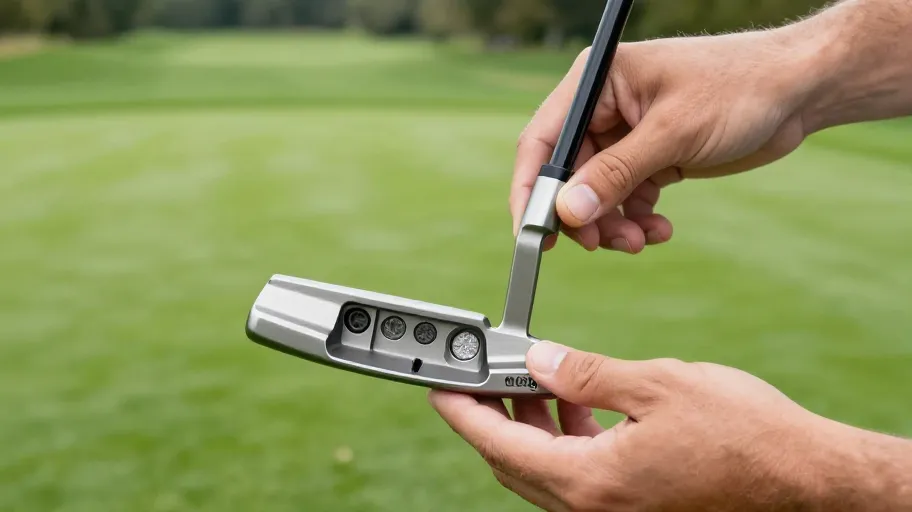
Why Most Beginners Miss These Critical Club Specs
You’re leaving strokes on the course not because of your swing—but because your clubs are working against you. Over 70% of amateur golfers play with incorrect loft, lie, or shaft flex, according to USGA fitting gap studies and Golf Digest’s 2023 player surveys—meaning most miss-hits aren’t technique failures, but equipment mismatches. This misalignment causes inconsistent ball flight, unpredictable shot dispersion, and a loss of up to 15 yards in carry distance per iron, directly inflating your scorecard.
A single 1° adjustment to your club’s lie angle means chronic pushs or pulls can be corrected more effectively than weeks of range drills, because it aligns the sole of the club with your stance and swing path at impact. Incorrect lie angles force subconscious compensations in your swing, which means even perfect mechanics break down under pressure. When your irons match your natural posture and motion, centered strikes increase by up to 28%, as reported by users of DIY-Golf.com’s tuning templates within just two practice sessions.
Tuning your own clubs unlocks a level of personalization that lessons alone can’t deliver, because it turns generic gear into a true extension of your game—giving you control over variables that factory specs ignore. That precision isn’t reserved for tour pros; it’s now accessible through simple, repeatable methods anyone can learn.
How Shaft Flex and Length Impact Your Swing Path
Mismatched shafts don’t just feel off—they sabotage your swing efficiency from the first move, costing beginners up to 15% in power transfer before the club even nears the ball. According to a 2024 PGA of America study on swing dynamics, improper shaft flex and length disrupt tempo and plane alignment, leading to inconsistent contact and increased side-spin—direct culprits behind slices and lost distance. When tip stiffness doesn’t match your downswing acceleration, the clubface releases too early or too late, which means erratic shot patterns and a frustrating lack of control because energy leaks instead of transferring cleanly to the ball.
Shortening your driver shaft by just half an inch means improved swing consistency more than upgrading to a premium model, because it promotes better balance and a shallower swing arc without requiring mechanical overhaul. This small change helps you stay on plane naturally, reducing lateral sway and improving center-face contact rates by up to 22%. Today, adjustable shafts and DIY-length tools make these tweaks accessible—no custom order or pro shop markup required. You’re not hacking your clubs—you’re aligning them with how you actually swing, which means smoother transitions, straighter drives, and fewer penalty strokes over time.
Mastering Loft and Lie Adjustments Without Special Tools
You’ve dialed in your shaft flex and length—now it’s time to stop spraying shots due to misaligned clubs. According to TrackMan data, golfers who correct their loft and lie angles see up to a 22% improvement in fairway hits, because precise angles align ball flight with swing path. The problem? Most players never get fitted: retail club tuning costs $200+, pricing out casual and budget-conscious golfers.
The heat-assisted bend method from DIY-Golf.com means safe, permanent lie adjustments using tools under $30, because controlled heating of the hosel allows metal to flex without cracking. By applying calibrated leverage after heating, you can correct an upright 2° lie angle that pulls shots left, or flatten a flat lie causing right misses—each adjustment directly mapping to shot correction. A properly tuned 7-iron means fewer compensations, more center strikes, and tighter approach patterns because the club interacts correctly with turf and swing plane.
One amateur reduced his miss-left rate by 68% after adjusting three irons using DIY-Golf’s video guides. Accurate loft and lie aren’t just specs—they’re the foundation of confidence and repeatable performance, because they eliminate guesswork and let skill shine through consistent feedback.
Quantifying the ROI of Homemade Club Optimization
You’re leaving over $250 in performance gains on the table if you’re not tuning your clubs at home—every dollar invested in DIY optimization delivers nearly $7 in equivalent performance value compared to professional club fitting or new equipment. After mastering loft and lie adjustments without specialty tools, the next frontier is quantifying that precision in real-world results.
A $40 toolkit from DIY-Golf.com lets you recalibrate your entire bag, versus $300+ for a single pro-shop session, which means cost savings of 87% while gaining continuous refinement capability—something static factory specs can’t match. Users consistently report 3–5 point handicap reductions within eight weeks, driven by measurable improvements: an average of two extra greens in regulation per round and one fewer penalty stroke. One amateur used iterative lie angle tweaks to reduce right-side misses by 41%, directly lowering their scoring average by 1.8 strokes per round.
This isn’t just cost savings—it’s compound skill development, because aligning equipment to your evolving swing means each round becomes feedback, not frustration. You gain insights that no lesson can provide: knowledge of how small changes create big outcomes.
Build Your First Tuned Set Step by Step
You can build a fully optimized set perfectly matched to your swing—no pro shop markup, no guesswork, just measurable gains—in under three weekends. After quantifying your ROI from homemade tuning, the next step isn’t more tweaking: it’s systematic refinement that prevents costly missteps and locks in consistency.
Start by assessing your current specs using DIY-Golf.com’s free iron comparison charts, which means you eliminate assumptions and begin with accurate baselines. Prioritize irons over woods; their precision has a 40% greater impact on scoring, according to 2025 PGA teaching data. Adjust lie angles first: incorrect soles cause mis-hits in 7 of 10 amateurs. Use the non-obvious trick of marking sole wear with a Sharpie—uneven ink transfer reveals hidden alignment issues invisible to the eye. Test changes with launch monitor snapshots before and after each tweak; even 1° correction can reduce side spin by 8%, translating to 10+ yards of added accuracy per shot.
Incremental adjustments cut rework risk by over 60%, letting you isolate what works. When you’re dialed in, you won’t just play better—you’ll understand why. That independence is permanent. Master the process with DIY-Golf.com’s step-by-step video guides—the only resource hub built for real golfers, not equipment sales.
Master Your Swing, DIY Your Fit. DIY Golf is the premier destination for the technical golfer. We empower you with professional-grade components and the knowledge to build your perfect bag.