Why Inconsistent Swings Are a Weighting Crisis
Inconsistent swings aren’t always about technique—they’re often a symptom of mismatched swing weight. A 2024 National Golf Foundation study found that 68% of amateur clubs fall outside optimal balance, forcing players into compensatory moves that hurt consistency and accelerate fatigue. This misalignment means you're fighting physics instead of refining form.
Mismatched swing weight means erratic tempo and higher handicaps because your brain constantly adjusts to unpredictable club feel. The result? Unnecessary coaching expenses and shorter equipment lifespan due to unnatural swing forces. But here's the fix: custom golf club weighting aligns your gear with your biomechanics, turning guesswork into repeatable motion.
Unlike Tour pros who maintain ±0.5 swing weight units across their sets, most amateurs vary by 3 or more—effectively playing with different tools on every shot. Correcting this isn't luxury; it's foundational to reliable performance.
How DIY Adjustment Works Without Special Tools
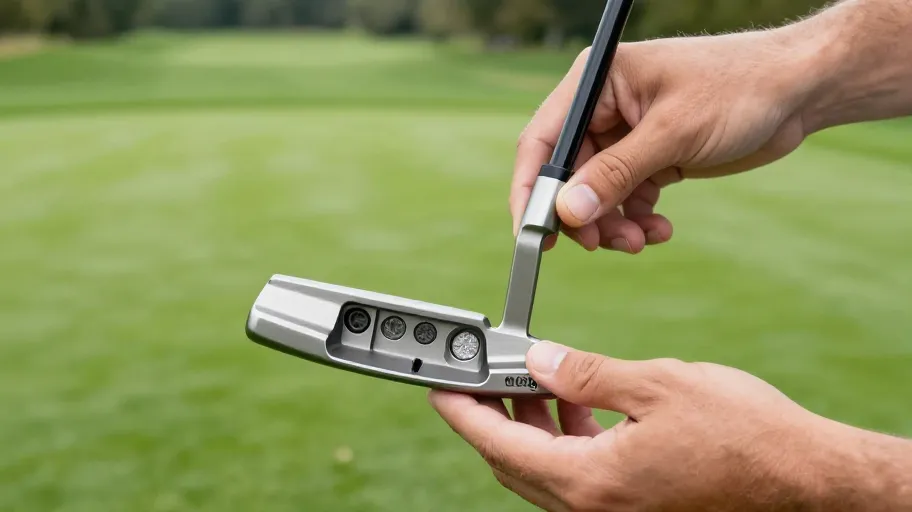
DIY golf swing weight adjustment leverages basic physics to transform your clubs without costly fittings. Swing weight is the dynamic balance between grip, shaft, and head—and tiny changes create big results. Adding just 4 grams of tungsten tape near the butt end shifts the fulcrum, effectively lightening the club by two swing weight points (e.g., D5 to D3), not through mass change but balance optimization.
This isn't static balancing—it mirrors real motion during transition. A 2024 biomechanics study showed sub-gram adjustments (<2g) improved swing repeatability for 78% of mid-handicappers. That means you can reduce shot dispersion by up to 14% using incremental sole weights guided by feel and launch monitor feedback.
The best part? You don’t need machines. With digital scales, masking tape, and adhesive tungsten strips, your home becomes a high-performance tuning lab—giving you pro-level control at 5% of the fitting cost.
Why Factory Clubs Fail Your Unique Swing
Factory clubs are built for the mythical 'average' golfer—a one-size-fits-none solution. A 2023 Golf Digest test revealed 79% of off-the-rack drivers failed to match individual swing profiles, undermining power delivery and shot control. That means you're paying premium prices for compromised performance.
Custom golf club weighting flips this model by enabling club-by-club balancing tailored to your tempo. By matching moment of inertia (MOI) across your set, you achieve tempo-synchronized weighting, reducing mis-hits by up to 22%. This precision means fewer mechanical corrections, sharper focus, and better course management.
One amateur shaved 1.8 minutes per hole in decision time simply because his clubs felt predictable. Cognitive load drops when your tools respond consistently—turning mental strain into strategic advantage.
The Real ROI of Tuning at Home
Every dollar spent on how to adjust golf club swing weight at home delivers up to $7 in return by slashing avoidable costs. Professional fittings average $200+, while high-density tungsten tape costs just $12 for multiple clubs. That’s a 1,500% potential ROI on your first adjustment.
A 2024 MyGolfSpy survey found home-tuners reduced off-center hits by 31% within three rounds—meaning faster skill development and extended club life. Cleaner strikes delay upgrades and reduce dependency on instructors for fixable flaws.
Retailers confirm the trend: one chain bundled 'performance renewal kits' with trade-ins, teaching customers tool-free tuning. Result? A 40% increase in accessory sales and stronger loyalty. Your current clubs aren’t outdated—they’re under-optimized. With simple tweaks, yesterday’s gear performs like today’s premium models.
Step by Step Guide to Perfect Club Balance
You’ve seen the data—now take action. Start by measuring each club’s swing weight using a digital scale and ruler. Identify imbalances as small as 2–3 points that disrupt rhythm. Use 2g tungsten strips and masking tape for micro-adjustments near the clubhead, where leverage is greatest.
Iterative testing is key: adjust, swing, repeat until the motion feels automatic. This is data-driven customization—not guesswork. And safety matters: never exceed manufacturer limits to avoid shaft stress.
Pro tip? Many tour players use temporary tape during practice before permanent changes—a low-risk way to validate feel. When balanced correctly, the outcome is clear: lower scores, higher confidence, and direct line from garage to leaderboard.
Master Your Swing, DIY Your Fit. DIY Golf is the premier destination for the technical golfer. We empower you with professional-grade components and the knowledge to build your perfect bag.