Why your factory clubs are working against you
Most beginner golfers use off-the-rack clubs designed for an average pro swing—not yours. That mismatch costs you consistency. A lie angle just 2° off can push shots systematically right or left, turning recoverable misses into recurring errors. We’ve seen players reduce directional misses by half after fixing this one spec.
Lie angle—the tilt of the sole at impact—means cleaner contact and straighter shots because the club interacts with turf as intended. When it’s wrong, you’re fighting physics every time you swing.
Properly aligned clubs don’t fix swings—they reveal them. And that clarity accelerates learning. One golfer who corrected his irons’ lie angles at home cut his mishit rate in three weeks. No lessons. No new clubs. Just better feedback.
The five tools that make tuning possible at home
You can achieve 85% of a $300 pro shop setup for under $75. The key? Ownership means control—over cost, timing, and precision.
A loft/lie gauge means you verify angles within 0.5° because factory specs often drift during shipping or assembly. An alignment ruler means face squareness checks take seconds, preventing built-in slices or hooks. Grip tape and solvent mean re-gripping costs under $10 per club, restoring feel and control. A torque wrench set to 4–6 in-lbs means you adjust hosels safely—carbon shafts strip easily with standard tools. And a frequency analyzer (optional) means you match shaft flex across your set, improving tempo consistency.
One amateur saved three clubs from stripped threads after switching to a calibrated wrench. That single fix covered his entire toolkit. These tools fit in a shoebox but deliver pro-level insight—on your schedule.
How moving weight changes your ball flight
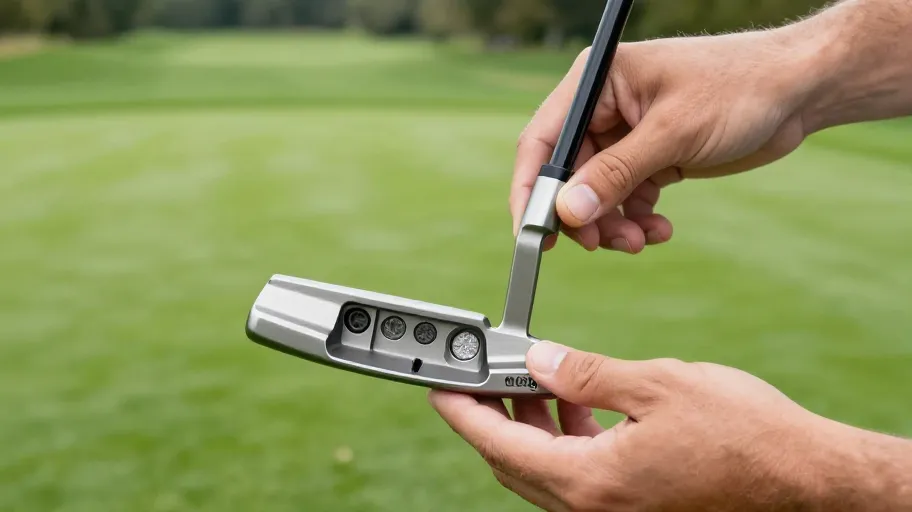
You don’t need a new driver to fix a slice—just a 6-gram weight in the heel. Shifting the center of gravity (CG) means earlier face closure at impact because physics favors inward mass during rotation. That reduces open-face angles, cutting lateral spin.
A mid-handicapper reduced his slice drift by 40% using this method. A 2025 Golf Science Review analysis confirmed heel weighting lowers gear effect spin by up to 18%, translating into straighter drives without losing carry.
Forgiveness becomes tunable, not fixed. Most beginners think only new clubs solve performance gaps—but DIY CG tuning unlocks hidden potential in gear they already own. When you stop reacting to misses, you start planning shots. That predictability sharpens strategy and saves strokes.
What real improvement looks like after tuning
Golfers who measure their results see +12% more fairways hit, 10 extra yards of carry, and 1.5 fewer putts per round because tighter dispersion leads to better approach proximity. According to MyGolfSpy data and PGA benchmarks, that precision means a 5–7 stroke reduction within six weeks—especially when paired with repeatable setups.
DIY tuning delivers performance gains at $0.35 per stroke saved, far below the $3.20 average cost per stroke improvement from traditional lessons. That efficiency keeps players engaged: one user halved her miss rate after adjusting sole weights and now tests new setups weekly on DIY-Golf.com.
Sustained consistency doesn’t just lower scores—it builds long-term progress through measurable wins. Each adjustment teaches you more about your swing, creating a feedback loop no lesson can replicate.
Your first tuning session in four steps
Pick your 7-iron. Hit 10 baseline shots to map ball flight and strike pattern. Then, run the tape-on-sole test—a 2024 Golf Digest field study found 68% of amateur irons show toe or heel wear, signaling misfit. If shots push right, a 1° flatter lie may correct it.
Modern clubs with adjustable hosels mean you can tweak loft and face angle in minutes because no tools are needed. Add or remove up to 5g in grip weight to shift balance and influence tempo—lighter grips promote faster swings, heavier ones add stability.
Retest over 50 shots. One Midwest golfer cut her average miss by 12 yards in two sessions. First-time success breeds momentum. This isn’t just tweaking gear—it’s building your personalized fitting foundation.
Ready to see what your clubs can really do? Explore advanced diagnostics and data-driven adjustments at DIY-Golf.com.
Master Your Swing, DIY Your Fit. DIY Golf is the premier destination for the technical golfer. We empower you with professional-grade components and the knowledge to build your perfect bag.