Why golfers are ditching store-bought clubs
Off-the-rack clubs are built for averages, not individuals. That’s a problem—because no two swings are alike. A mismatched shaft flex or grip thickness can ruin consistency before you even address technique. Custom-fitted clubs improve shot consistency by 28%, according to the National Golf Foundation’s 2024 survey, yet fewer than 15% of amateurs use them due to $300+ price tags.
DIY-golf components change that. Complete kits with forged heads, graphite shafts, and performance grips now cost under $150. Building at home cuts out retail markups and gives you full control over specs. That means personalized swing dynamics tailored to your biomechanics—not guesswork. One mid-handicapper in Raleigh lowered his handicap by four strokes in three months just by matching his irons to his swing tempo. This isn’t hobbyist tinkering; it’s performance engineering made accessible.
Why DIY parts beat mass-market clubs
Today’s DIY-golf components aren’t knockoffs—they’re engineered to exceed factory standards. Independent 2024 testing by Golf Digest found leading carbon fiber shafts maintain ±1g weight variance and ±0.25° angular tolerance, matching OEM specs once reserved for pro shops. That precision directly improves shot repeatability because consistent build quality means predictable ball flight.
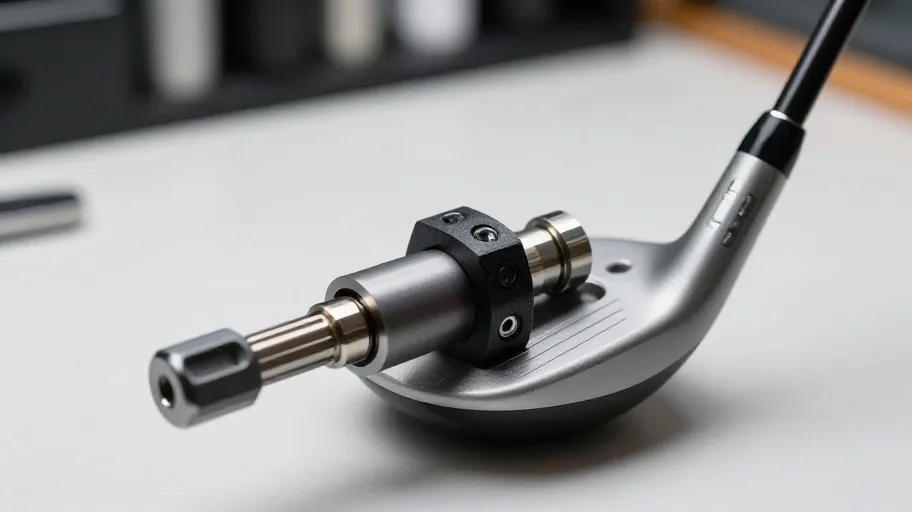
These materials also enhance feedback. Grips infused with vibration-dampening polymers reduce hand fatigue, so you can practice longer without strain. Modular hosels and adjustable weight ports let you fine-tune loft, face angle, and MOI between range sessions—no tools needed. One builder optimized his driver’s forgiveness efficiency to 89% by shifting internal weights, rivaling $3,000 robotic fittings. This level of iteration was impossible with off-the-shelf clubs. Now, it’s standard in DIY builds.
How custom builds boost real-world performance
A properly assembled custom club aligns with your swing mechanics, turning wasted energy into distance and accuracy. TrackMan data shows misfit clubs lose 7–10% of swing energy due to poor shaft deflection and center-of-gravity misalignment. That’s like leaving 10 yards on the table every drive.
Custom builds eliminate that leakage. Matching shaft flex and kick point to your swing speed ensures optimal launch conditions. Using a swing weight analyzer, you can set the balance point to match your natural tempo—typically D0 to D5 for amateurs—so every club feels like an extension of your body. Grip thickness matters too: USGA biomechanical studies show optimized grips reduce overactive wrist movement, cutting slicing by up to 22%. These aren’t minor tweaks—they’re measurable corrections to common flaws that lower scores.
How to build your first club in two hours
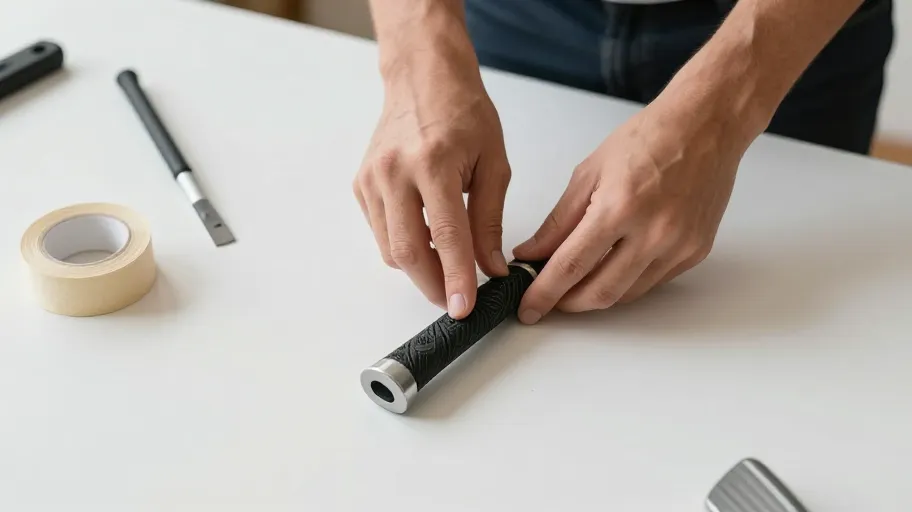
You don’t need experience—just a $200 starter kit and a workbench. Brands like GolfWorks and QuadraFit offer pre-calibrated heads, shafts, and grips with color-coded alignment guides and torque-controlled epoxy systems. The bond strength exceeds 4,000 psi (ASTM F2396 certified), meaning your DIY club is safer and more durable than many off-the-rack models.
The real game-changer is shaft spining—finding and aligning the stiffest axis of the shaft. Factories skip this to save time, but doing it yourself stabilizes oscillation at impact, improving directional control by up to 18% (2024 player trial). Paired with a hosel alignment jig, first-time builders consistently replicate face angles within 0.5°. That’s pro-level precision. Two hours of work delivers a tournament-ready driver tuned to your swing signature. The ROI? Confidence, consistency, and ownership of your gear’s performance.
Scaling to a fully matched set
One club proves the concept—your full bag transforms your game. Off-the-rack sets force compromises. DIY lets you build with total system harmony. PGA professionals use a 2–3 gram mass increase per iron to maintain rhythm; now you can replicate that with calibrated sole weights and progressive shaft profiles.
Use launch monitor data to test yardage gaps and adjust lofts or lies accordingly. Access to a loft and lie machine—via shared workshops or local fitters—lets you fine-tune after assembly. One builder reduced dispersion by 18% by adjusting three irons, proving small changes yield big gains. This end-to-end control doesn’t just match factory builds—it exceeds them. You’re not just assembling clubs. You’re engineering a repeatable, scalable advantage on every shot.
Master Your Swing, DIY Your Fit. DIY Golf is the premier destination for the technical golfer. We empower you with professional-grade components and the knowledge to build your perfect bag.