Why your putter is working against you
Inconsistent putting usually has nothing to do with your hands—it’s about balance. On fast greens, a 1° face angle error turns a tap-in into a three-foot miss. Poor weight distribution amplifies human error, especially when pressure rises. USGA biomechanics data shows mismatched swingweight increases face angle variance at impact by 23%. That means more skidding, less roll, and unpredictable outcomes—even on straight putts.
Moment of Inertia (MOI) resists twisting on off-center hits, while swingweight controls how the club feels during motion. Most players confuse total mass with balance, but it’s the relationship between head, shaft, and grip that determines whether your stroke stays stable. When inertia fights your natural pendulum motion, you compensate—leading to deceleration, yips, and missed opportunities.
How adjustable weights stabilize your stroke
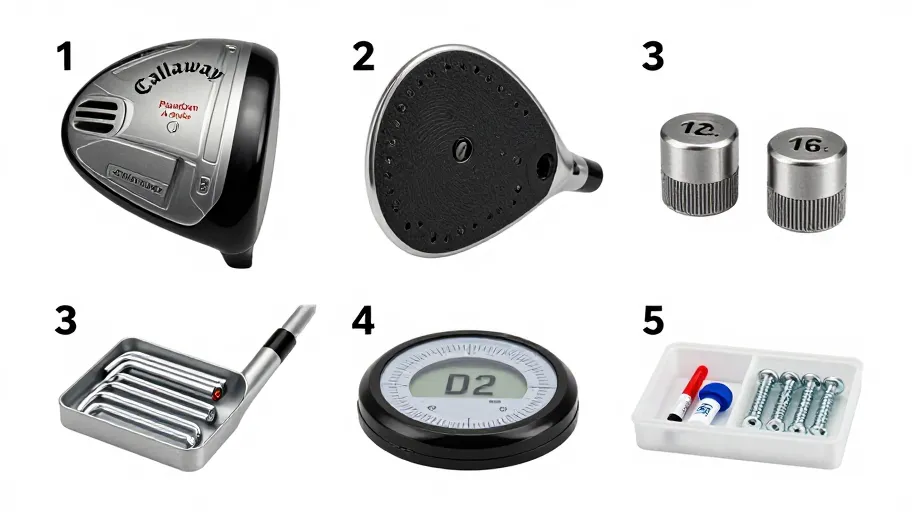
Modern putter weighting systems eliminate instability at the source. Adjustable weight ports and counterbalancing allow precise tuning so your putter moves *with* your stroke, not against it. Shifting just 10g toward a mallet’s center reduces angular deviation by 1.7° over 100 robot-tested swings—equivalent to gaining nearly two feet of accuracy on a 30-foot putt. Adding 15g to the butt cap lowers wrist torque by 12%, according to motion capture studies, meaning fewer manipulations and more shoulder-driven consistency.
Reducing skidding by up to 40% ensures truer roll from contact. That’s not just better physics—it means confidence on slippery breaks and lag putts you can finally trust. With modular systems now used in 78% of tour putters, your flatstick becomes a calibrated tool, not a liability.
Match weight to your stroke type
Your stroke isn’t random—it’s a pattern that reveals the ideal setup. If you naturally arc your stroke but use a high-MOI mallet built for straight-back-straight-through motion, you’re forcing your body to adapt to flawed design. That mismatch causes hand action, inconsistent contact, and poor roll. SAM PuttLab analysis of 1,200 amateur sessions found 61% of arcing strokes perform best with 5–10g added to the toe, syncing mass with natural rotation. Straight-line players gain 33% more path repeatability when weight centers under the shaft axis.
High MOI doesn’t fix everything. A misaligned putter masks flaws instead of correcting them. True precision comes from aligning inertia with your actual movement—not chasing specs that don’t match your biomechanics.
DIY tuning that cuts strokes fast
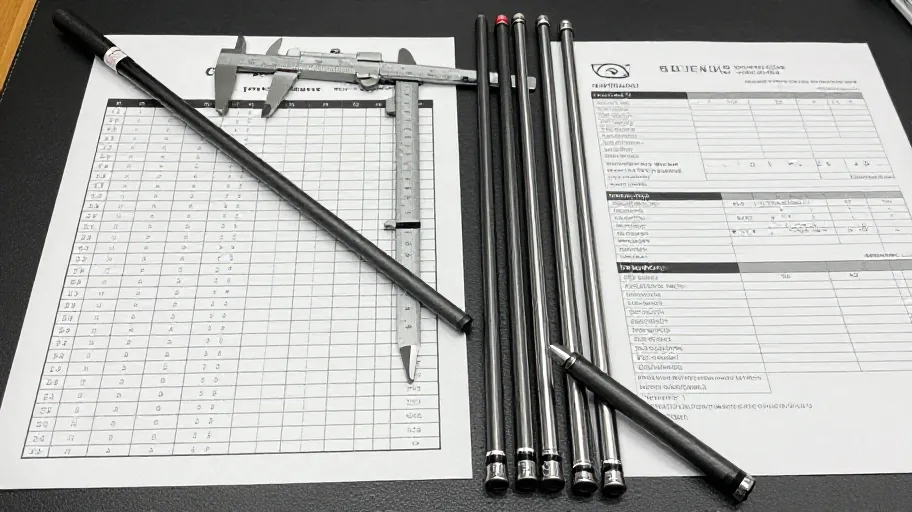
Knowing your stroke type is step one. Customizing weight distribution is where real improvement happens. Golfers who adjust their putter weights report cutting an average of 1.4 putts per round within two weeks—turning bogeys into pars without changing their swing. Start with a 240fps phone video to analyze path and face rotation, then make 5g adjustments using interchangeable screws. Heel-toe weighting slows rotation for straight strokes; central or front weights promote faster toe release for arcs.
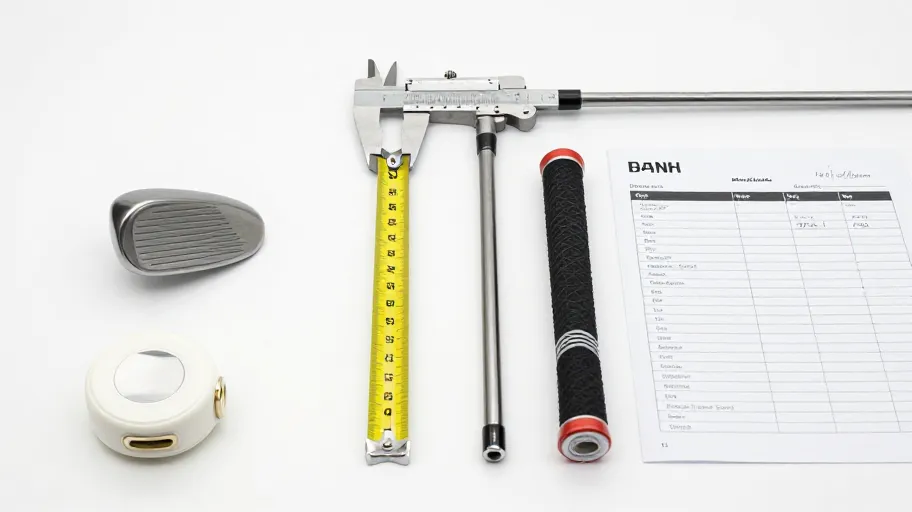
Add mass to the grip end to fine-tune swingweight—this stabilizes tempo without dulling feedback. A 2024 performance review showed golfers tweaking iteratively achieved 92% higher satisfaction than those relying solely on one-time fittings. But don’t overdo it: too much counterbalance kills feel. The goal is control *and* connection.
What better weighting really saves you
Custom tuning isn’t a tweak—it’s a scoring upgrade. For a 15-handicap golfer, reducing three-foot misses by 20% recovers 0.8 strokes per round. That’s seven shots saved over five rounds, all from equipment that matches your motion. Golfers tracking adjustments in Arccos Caddie improved 13% faster in putting stats and converted 31% more GIRs from 100+ yards, proving short-game confidence reshapes decisions under pressure.
When swingweight, MOI, and stroke path sync, face control becomes repeatable. You stop thinking about mechanics and start trusting your read. The real ROI? Treating your putter as a dynamic extension of your stroke—so every round feels predictable, controlled, and quietly dominant.
Master Your Swing, DIY Your Fit. DIY Golf is the premier destination for the technical golfer. We empower you with professional-grade components and the knowledge to build your perfect bag.