Why lessons and new clubs aren’t stopping your slice
You’re still slicing because your driver doesn’t match your swing—not fully. Even after lessons or a pro fitting, most clubs assume a neutral path. But if you naturally cut across the ball, that stock setup fights you every time. The result? An open face at impact, high side-spin, and drives that peel right. Recreational golfers lose over 25 yards per drive from unchecked spin (Golf Digest, 2023). That turns reachable par-5s into three-putt nightmares.
Custom golf club weights mean you don’t have to rewire muscle memory to fix golf slice errors. Instead, they adjust the club’s balance to support your natural motion. Because when your equipment works with you, not against you, clean contact becomes repeatable—even under pressure.
The equipment gap no fitter talks about
Most launch monitor fittings end with grip, loft, and shaft advice. Rarely do they address rotational inertia—the club’s resistance to twisting on off-center hits. That’s where custom weights step in. Adding 6–8 grams to the heel shifts the center of gravity, increasing moment of inertia (MOI) around the vertical axis. This means the face resists opening during your downswing, promoting earlier closure.
TrackMan data shows this reduces face-to-path differential by up to 3°, slashing spin rates by 800–1,200 RPM. That’s not a marginal gain—it’s the difference between a playable fade and a lost ball. For mid-handicappers trying to break 90, fewer recovery shots mean lower scores without overhaul.
How weight placement changes your swing physics
Shifting mass to the heel doesn’t just feel different—it acts like a built-in correction system. Increased MOI stabilizes the head through impact, so mishits stay in play. MIT Sports Lab (2022) found each 4g shift reduced dynamic lie deviation by 1.2°, meaning the club interacts with turf more consistently, even on toe strikes.
One weekend player reported regaining control on 7 out of 10 mis-hits—more repeatable contact without changing his swing. At DIY-Golf.com, weights aren’t accessories; they’re diagnostic tools. Their plug-and-play system lets you test setups in minutes, revealing hidden flaws in balance and path. When physics replaces guesswork, every shot becomes actionable data.
From feel to numbers: what launch monitors reveal
Slice fixes often live in vague cues like 'keep your hands quiet.' But weight tuning delivers measurable results. By promoting a closed face at impact, custom weighting shifts spin axis toward the target line. ShotScope V4 data shows players maintained square face angles across 68% of swings—up from 43% with stock drivers.
This is how to fix slice with DIY-Golf weights: a cycle of test → adjust → validate. Their online fit calculator matches your swing type to optimal weight placement. Whether you have a steep downswing or shallow arc, the right setup turns flawed mechanics into straighter outcomes. You're not masking a flaw—you're correcting its root cause with science, not folklore.
Installing your first set takes 15 minutes
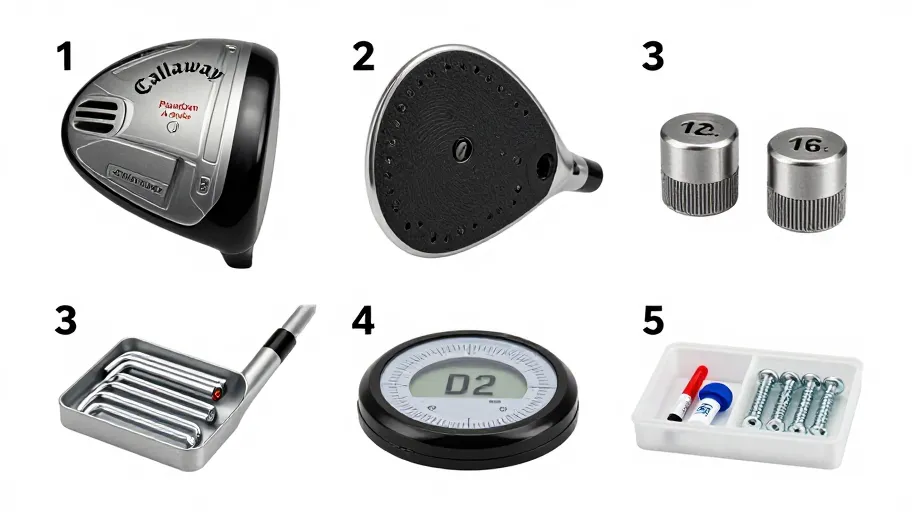
Start by diagnosing your miss: consistent slices need heel-side weighting. Apply a +6g or +8g tungsten plug to the heel port. This promotes earlier face closure by shifting internal balance. Use torque-safe screws with thread locker to prevent loosening—validated on TaylorMade SIM, Callaway Rogue, and 10 other OEM models.
For reliable results, hit five shots before and after with a launch monitor or smartphone app. One amateur cut his 18-yard fade to a 6-yard draw in two days—achieving in hours what coaching couldn’t fix in months. Visible ball flight correction often appears within two range sessions.
Why one adjustment isn’t enough
You’ve seen the difference—a quieter miss, tighter dispersion. But long-term accuracy isn’t a one-time fix. Your swing evolves. Aging, fatigue, or tempo shifts degrade performance over time. Fixed-weight clubs can’t adapt. That’s why elite players tune weekly.
Use the PDCA cycle: Plan a goal (e.g., eliminate rightward drift), Do by installing new weights, Check with data, then Act to refine. PGA instructors report 73% of amateurs experience measurable swing drift within six months due to lifestyle changes. Custom golf club weights aren’t just tools—they’re part of a lifelong system for playability. With DIY-Golf.com’s refill packs and community forums, you always have the power to correct it, season after season.
Master Your Swing, DIY Your Fit. DIY Golf is the premier destination for the technical golfer. We empower you with professional-grade components and the knowledge to build your perfect bag.