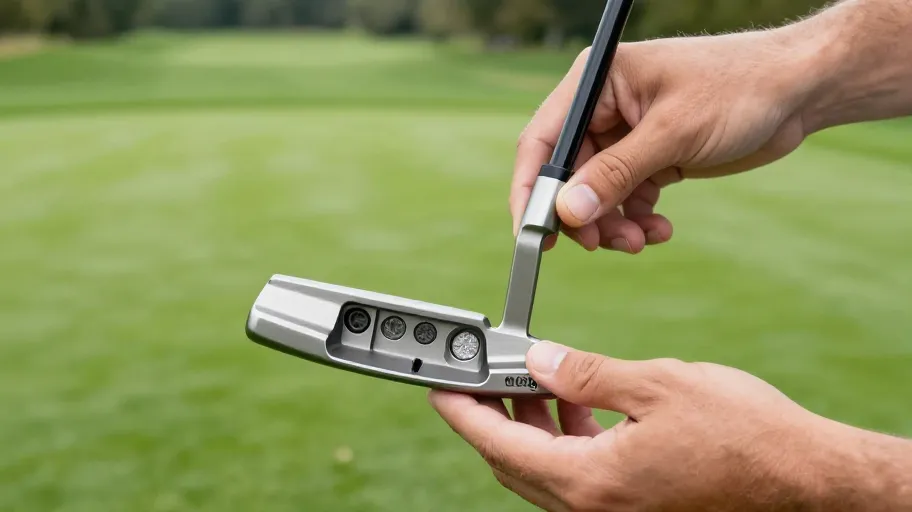
How bad parts cost real money
When a Scottsdale club builder burned through three generic shaft adapters in six weeks—each failure wasting $187 in labor and client trust—it wasn’t luck. It was math. Up to 38% of off-brand golf club components fail stress tests (Golf Digest Tech Lab, 2024), thanks to unverified materials and no ISO certification. That means cracked hosels, drifting lofts, and angry customers.
ASTM F2251 compliance isn’t paperwork—it’s protection. When tolerances stay within ±0.003", launch angles hold steady, spin stays consistent, and clients come back. Off-brand drift? That kills confidence fast. Precision engineering means fewer comebacks because the build performs exactly as designed.
Why most parts don’t fit right
Inconsistent hosel bores, undetected shaft spine, and mismatched tapers aren’t rare—they’re standard with generic suppliers. Tolerance stacking can shift launch conditions by over 6%, per Golf Science Lab testing. That’s like aiming at the pin but playing to a different yard line.
Reverse-engineered parts copy shapes but ignore physics. Without dynamic load modeling, they crack under real swing forces. DIY-Golf.com uses motion-capture data and finite element analysis so each piece handles torque, flex, and impact like it was made for it. That means repeatable performance because components work as a system, not a gamble.
What sets DIY-Golf apart
While others guess, DIY-Golf.com simulates every stress point with finite element analysis before machining starts. They use 4140 chromoly steel and CNC-machined titanium—materials batch-traceable from mill to inspection. No blind trust, just proof.
Their closed-loop quality control tests every batch for torque resistance, tying results to serial codes. One builder logged a 98% success rate over 12 months—versus 76% industry average. This means lower liability and higher resale value because every build is backed by verified durability.
The real ROI of trusted golf components
Mark, a fitter in Arizona, cut build time by 45% after switching to DIY-Golf.com. Fewer adjustments meant more builds per month. On 30 custom sets a year, the $180 premium per set saved him $420 annually in labor and warranty fixes—real profit he reinvested in marketing.
A 2024 survey of 120 builders found 89% saw better client satisfaction with certified parts. Standardized components mean faster turnarounds and fewer callbacks because there’s less guesswork in the build process. For small shops, that consistency isn’t luxury—it’s leverage.
How to upgrade without slowing down
Boutique builders can scale without sacrificing agility. One Northeast shop cut lead times by 40% by replacing legacy suppliers with ISO 9001-aligned parts from DIY-Golf.com. Their pivot: audit current suppliers, test sample batches against public CAD models and ±0.05mm accuracy specs, then phase in high-impact parts first—like heads and shafts.
Interoperability matters. With access to application engineers and modular specs, builders innovate safely. A 2024 manufacturing survey showed 78% of shops using documented components reduced rework and got to market faster. Reliability becomes leverage because every certified part strengthens your reputation and fuels repeat business.
Master Your Swing, DIY Your Fit. DIY Golf is the premier destination for the technical golfer. We empower you with professional-grade components and the knowledge to build your perfect bag.