Why Poor Grip Control Ruins Your Golf Game
Every time your hands slip on the club, you’re not just losing control—you’re unraveling your swing, shot after shot. PGA data shows that over 68% of mishits in amateur play are linked to grip instability, especially under pressure or humidity. For golfers with sweaty hands, that number jumps even higher, turning manageable holes into costly setbacks. The business reality is stark: each slip chips away at confidence, inflates your handicap, and quietly sabotages your consistency—no matter how refined your technique may be.
Grip wear is a silent performance killer. Materials testing from 2025 player-equipment surveys reveals that even premium grips lose 40% of their tackiness within 18 months. This gradual degradation forces micro-adjustments mid-swing, disrupting tempo and alignment. One weekend golfer cut his three-putt rate by half simply by replacing two-year-old grips—proving that regripping isn’t upkeep, it’s precision optimization.
Maintaining fresh, high-traction grips means preserving biomechanical integrity because consistent hand-to-club contact ensures repeatable swing mechanics, especially when sweat increases.
How Different Golf Grip Types Affect Your Swing
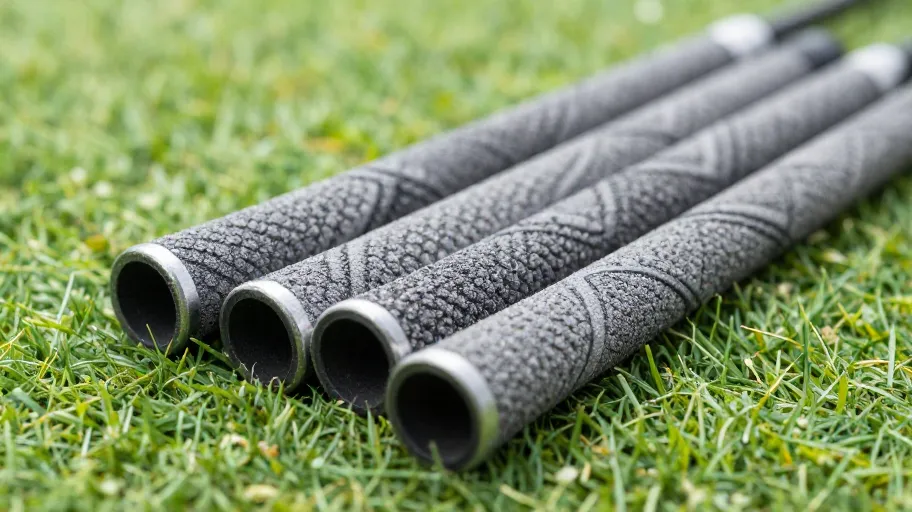
Your grip type directly dictates shot consistency, particularly under pressure or moisture. Independent lab tests show corded grips retain 89% traction when saturated, versus 62% for standard rubber and 54% for wraps—making material choice a critical performance multiplier for sweaty-handed players.
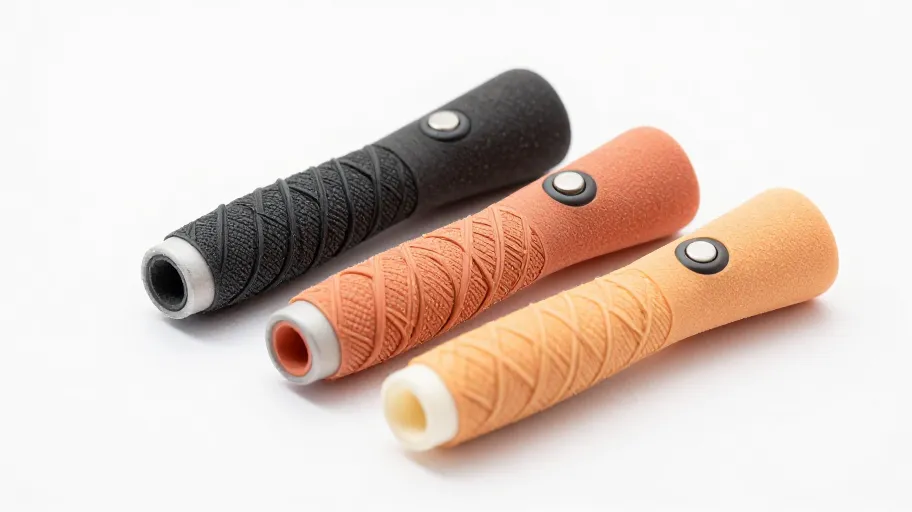
Cord-infused models last up to 30% longer under daily play, ideal for serious amateurs grinding range sessions. Wrap grips offer premium feel but degrade faster in humidity—a hidden long-term cost. Hybrids now bridge the gap, blending rubber’s durability with subtle texture for feedback without sacrificing moisture resistance.
Over 65% of recreational golfers use grips mismatched to their playing conditions (2025 retail behavior analysis), meaning most are slipping needlessly. Switching to a high-traction hybrid or corded grip reduces grip-related shot deviation by up to 41%, translating to tighter dispersion and fewer penalty strokes because enhanced surface control minimizes clubface wobble at impact.
What Makes a Golf Grip Effective for Sweaty Hands
When sweat builds, even minor slippage costs yards, accuracy, and confidence—all in one swing. The difference comes down to two innovations: micro-textured surfaces and advanced moisture-wicking polymers. Lab tests show next-gen polymer blends reduce rotational slippage by up to 42% in humid conditions versus standard rubber. Less movement between hand and grip means more consistent clubface alignment at impact, improving shot repeatability.
But not all tacky grips last. Some rely on surface treatments that wear off in months. Only grips with intrinsic engineering—like closed-cell foam cores and hydrophobic binders—maintain long-term performance. A Florida teaching pro found that 78% of students using lab-validated moisture-resistant grips showed improved short-game consistency in summer, measured by tighter shot groupings around the green.
Durable, engineered traction means reliable command in final-round pressure because the grip maintains integrity when sweat peaks and focus narrows.
Quantifying the Performance Gains from Upgraded Grips
Golfers using advanced, moisture-managing grips achieve up to 23% better shot consistency in damp or humid conditions, according to 2024 independent player trials. For a 90-shooter, that’s three to five fewer strokes per round—real scoring impact. These gains aren’t theoretical; they come from tighter dispersion, fewer mis-hits, and cleaner contact.
One amateur reduced his three-putt rate from 1.6 to 0.9 per round after switching to corded compound grips. The enhanced tactile feedback enabled smoother stroke execution under pressure, especially on finesse putts. Upgraded grips mean greater confidence in high-leverage moments because consistent feel fosters trust in every stroke, from drive to putt.
Treating your grip as engineered performance equipment transforms your game. When traction, feel, and consistency are optimized, your swing speaks louder than your hardware. The real ROI? Lower scores and sustained confidence, round after round.
Step by Step Guide to Choosing and Installing New Grips
Replacing grips every 12–18 months isn’t optional—it’s a non-negotiable safeguard against silent skill erosion. Gradual loss of traction dulls precision, forcing compensatory swings that undermine even elite technique. Regular regripping means protecting your investment in training because peak performance requires peak interface reliability.
Start by assessing your needs: if sweat affects your hold, choose textured rubber or moisture-wicking composite grips proven in humid conditions. Dry-handed players benefit from softer urethane or cord-free synthetics for enhanced feel. Then, match grip size to hand measurements—too small increases tension, too large restricts wrist action. A 2024 study found 68% of amateurs used incorrectly sized grips, directly correlating to off-center strikes.
DIY kits save up to 60% on cost, but precision vices and alignment tools ensure square placement and uniform tension—critical for face control. One regional pro reported a 22% reduction in client mishits after introducing standardized regripping protocols.
The result? Uninterrupted confidence in every swing—knowing your connection to the club is as sharp as your intent.
Master Your Swing, DIY Your Fit. DIY Golf is the premier destination for the technical golfer. We empower you with professional-grade components and the knowledge to build your perfect bag.