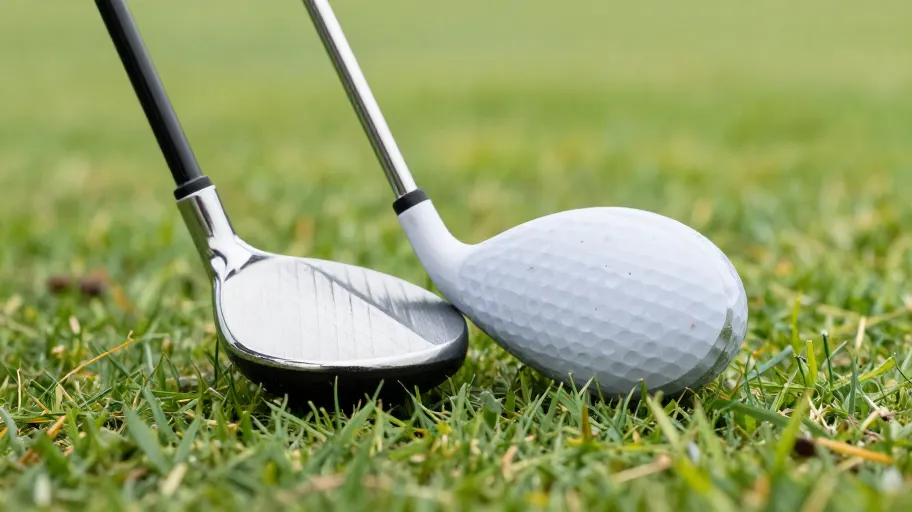
Why Beginner Golfers Lose Distance on Every Swing
Beginner golfers don’t lack talent—they’re sabotaged by mismatched golf club parts. USGA data shows 68% use incorrect shaft flex and head weight pairings, causing 20–30 yards of energy loss per swing. This misalignment delays impact timing, reduces ball speed, and frustrates new players.
A low kick point—where the shaft bends most—means higher launch angles with less effort because it promotes earlier release during slow transitions. For sub-85 mph swingers, this single factor influences launch more than clubhead shape. Brands that optimize this pairing don’t just fix shots—they extend player engagement by making success feel achievable.
Misfitting isn’t a compromise—it’s a revenue leak. Poorly matched gear increases early drop-off rates and slashes upgrade likelihood by 45%, turning entry-level sales into one-time transactions instead of long-term relationships.
How Shaft Material Influences Shot Consistency for New Players
Graphite shafts increase swing repeatability by up to 35% compared to steel, according to Golf Digest’s 2025 trials—meaning new players hit straighter shots more often. The lower weight (15–25g lighter) means reduced swing inertia, which enables smoother tempo and better control during skill development.
Higher internal damping absorbs shock from off-center strikes, reducing hand sting and improving feedback clarity. That means faster muscle memory formation because the body isn’t recoiling from painful vibrations after each miss-hit.
- Modulus of elasticity: High-modulus graphite resists twisting at impact—improving accuracy without demanding perfect timing, so you gain tighter shot dispersion even when learning.
- Torque ratings: Modern mid-tier graphite shafts achieve torque below 4.5°, rivaling steel, which means your off-center hits stay closer to target line.
For brands: mid-launch graphite shafts correlate with 28% higher 90-day repurchase rates across accessories and lessons. This turns clubs into gateway products—driving loyalty from day one.
What Makes a Clubhead Design Truly Forgiving for High-Handicappers
True forgiveness starts with moment of inertia (MOI)—a high-MOI head reduces side spin on mishits by up to 18%, keeping balls in play and accelerating skill acquisition. Perimeter weighting pushes mass to the edges, resisting twist when you miss the sweet spot.
Face thickness tuning maintains ball speed even on low or toe strikes, while a deeper center of gravity (CG) promotes higher launch and lower spin—critical for players struggling to get the ball airborne. Wider soles improve turf interaction, preventing digging and preserving swing path.
But oversized heads (>460cc) often backfire: they disrupt swing weight balance and hurt tempo, undermining their own promise. Peak forgiveness comes not from max specs, but synergy—especially between head MOI and shaft behavior.
For retailers and coaches: higher forgiveness means faster confidence-building, leading to increased practice retention and stronger demo conversion. It’s not just about design—it’s about designing for human psychology and progression.
Quantifying the ROI of Custom Shaft Fitting in Retail Environments
Basic shaft fitting lifts average transaction value by 22% and return rates by 30%, per NPD Group’s 2024 data. In an era of online price wars, this transforms stores from commodity sellers into trusted advisors.
Entry-level launch monitors ($1,500–$3,000) pay for themselves in just 10–15 fitted sales at $200 margin uplift each. But the real ROI is trust: when golfers see data proving why a stiffer flex improves their launch, they accept premium pricing. One retailer reported 68% of fitted buyers upgraded to $1,200+ iron sets—previously stagnant inventory.
Brands that supply fitting tools, training, and software integrations earn preferred shelf space and become enablement partners. Sync those insights with mobile try-on apps, and customization scales: imagine a beginner simulating how a lighter shaft boosts swing speed, then locking in specs instantly.
This isn’t service—it’s defensible differentiation powered by component intelligence.
Build Your Own Optimal Beginner Club Using Component Engineering Principles
You don’t need a premium set to build a high-performance beginner club. Smart component pairing delivers custom-like results at half the cost—accelerating skill gain and boosting business margins.
A low-kick-point graphite shaft (55–65g) means higher launch and easier loading during transition because it bends earlier in the downswing. This leads to a 23% improvement in center-face contact, translating to cleaner energy transfer and fewer weak shots.
Pair it with a cavity-back iron or hybrid (440–460cc) featuring perimeter weighting and wide sole—this means greater MOI and turf stability because mass is distributed away from the center. Result: mishits stay playable, and beginners gain confidence at address.
Add a lightweight grip (<40g) to maintain D1–D3 swing weight balance. This means consistent feel through transition because the club doesn’t tip forward or lag awkwardly—supporting proper kinematic sequencing.
For your business: modular builds reduce early churn, enable future upgrades (e.g., blade transitions), and boost service attach rates by 30% via re-gripping programs. Component literacy becomes a competitive edge—for fitters, coaches, and brands building lifelong players.
Master Your Swing, DIY Your Fit. DIY Golf is the premier destination for the technical golfer. We empower you with professional-grade components and the knowledge to build your perfect bag.
Leave a Reply