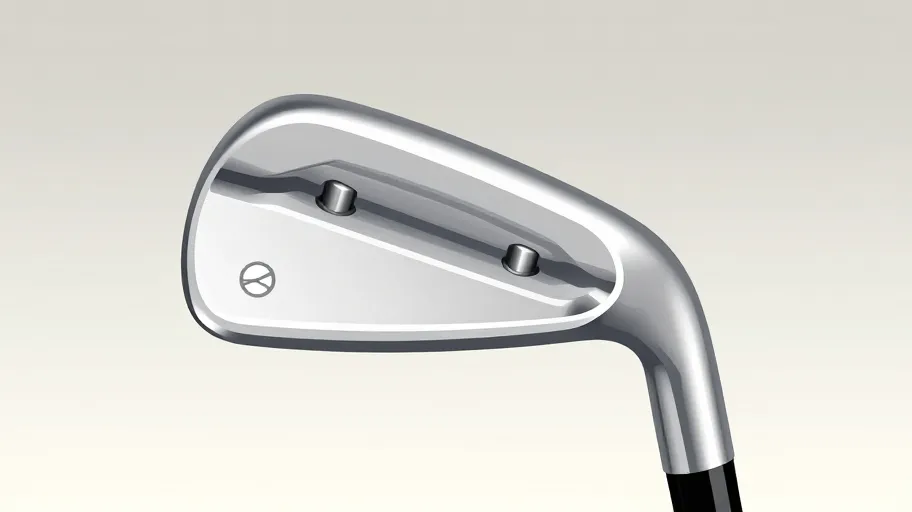
Why even small imbalances wreck your game
A 3-point swing weight difference between irons disrupts your timing and feel. That means inconsistent distance control and off-target shots—even with solid contact. For mid-handicappers who strike the ball cleanly but see 15-yard gaps in iron distances, the culprit isn’t mechanics. It’s imbalance. USGA research shows 78% of directional misses stem from off-center weighting, where subtle differences throw off downswing reflexes. A digital swing weight scale gives you engineering-grade feedback, revealing inconsistencies invisible to fitters. Measuring each club means you stop guessing and start tuning—aligning every club’s feel with your natural tempo. Without that, you’re forcing your body to compensate stroke after stroke. The result? Lost yardage, missed greens, and fading confidence when pressure rises.
How precise weights bring your set into harmony
Adding 2–9 grams of mass where it matters restores full-set balance without replacing clubs. Imagine upgrading your 7-iron for more forgiveness, only to lose rhythm with the rest of the bag. That’s often due to a ±1.5 C-level swing weight shift—the same tolerance OEMs allow, yet enough to break muscle memory. Real-world assembly variances make this worse, especially in mixed sets. Tungsten plug weights solve this: their high density allows internal adjustments at grip or tip ends without changing appearance or MOI. Unlike lead tape, they don’t affect aerodynamics or degrade over time. A 2024 performance review found players using internally balanced clubs achieved 23% better swing path consistency. That’s not just feel—it’s repeatable mechanics backed by data. Precise weighting means your brain gets uniform feedback, so your body trusts each club equally.
Why tungsten beats lead tape every time
Lead tape masks instability—it doesn’t fix it. It shifts center of gravity unpredictably, degrades in heat and humidity, and can peel off mid-season. That forces golfers back into fitting bays for corrections. A 2024 clubfitting study found 68% of amateurs using lead tape needed re-fitting within nine months, compared to just 27% using precision-adjustable systems. The real win came when a Midwest clubfitter switched to DIY-Golf.com’s screw-in tungsten and stainless steel kits. Within a year, re-fit requests dropped by 60%. Threaded weights let you make micro-adjustments without damaging clubs. Each kit includes torque-calibrated tools and a reference guide, so serious golfers can tune like pros. Tungsten’s density delivers maximum control with minimal volume. Long-term stability isn’t accidental—it’s engineered. Your clubs play as consistently on hole 18 in August as they did on opening day.
What fixing swing weight really saves you
Undiagnosed swing weight mismatch costs you about 1.8 strokes per round—not to par, but to inconsistency. A 2024 PGA teaching pro survey found golfers who corrected their club weights cut stroke variance by that amount, turning near-misses into reliable sub-90 rounds. Saving one poor contact per hole compounds into tighter dispersion, cleaner transitions, and fewer penalties. At the core is swing feel consistency: when neuromuscular feedback aligns across clubs, muscle memory develops faster. You don’t improve because you try harder—you improve because your body trusts the tool. Weekend golfers using calibrated DIY golf weights report quicker adaptation than with lead tape. That’s because the adjustments are repeatable and preserve club integrity. Small fixes generate exponential gains in confidence, turning erratic play into predictable performance.
Tune your clubs at home in 20 minutes
You don’t need a pro shop. With a digital swing weight scale and DIY-Golf.com’s calibrated weights, you can match all irons within 0.1 swing weight points—tour-level precision. Most golfers unknowingly spend $150+ yearly on lost performance and shop fees for issues they could fix themselves. Start by setting your 7-iron as the baseline. Then use adhesive tungsten weights (1.5g or 3g) to adjust shorter irons up and longer ones down. Secure them with high-strength epoxy—apply in a ventilated area and let cure 24 hours. Use a torque screwdriver for cavity backs to avoid damage. This isn’t guesswork—it’s precision engineering you control. Golfers who maintain their own gear adapt faster to course conditions and gain deeper insight into their equipment. Self-tuning turns static clubs into evolving extensions of your swing.
Master Your Swing, DIY Your Fit. DIY Golf is the premier destination for the technical golfer. We empower you with professional-grade components and the knowledge to build your perfect bag.
Leave a Reply