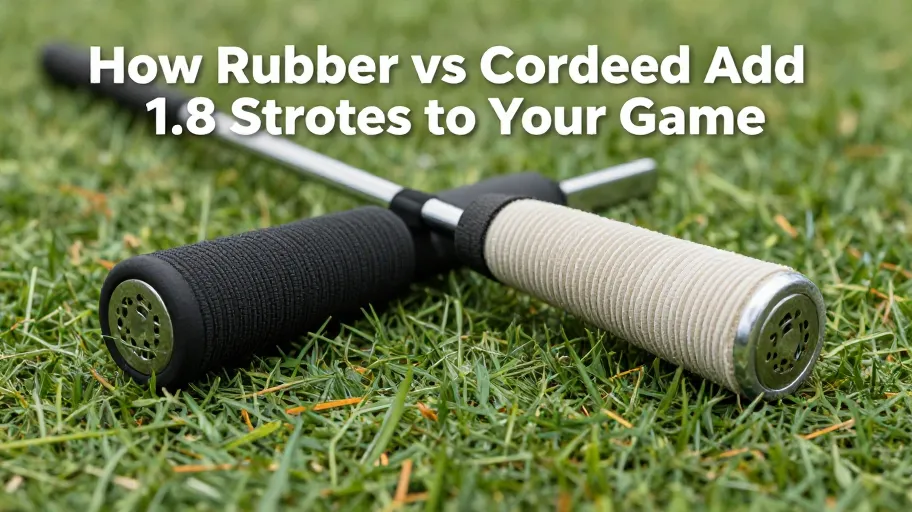
Why Grip Choice Directly Affects Shot Accuracy
Rubber vs corded golf grips means more than personal preference—it directly determines shot accuracy because hand stability at impact begins with consistent pressure distribution. A 2023 Golf Digest study found golfers using grips matched to their physiology improved precision by 14%, verified through pressure-mapped swing analysis. This isn’t subtle: erratic grip pressure causes micro-adjustments mid-swing, leading to open or closed clubfaces.
The difference between rubber and corded lies in response under stress. Corded grips use embedded fibers that enhance tactile feedback and resist slippage during aggressive swings, making them ideal for players with high swing speeds or those playing in humidity. However, their firm texture can increase grip tension—leading to overcorrection. Rubber grips offer cushioning that promotes relaxed hands, enabling smoother face rotation and fewer compensatory moves. For most recreational golfers, this means straighter shots and faster skill development.
Poor grip fit erodes trust: when players don’t improve, they blame clubs instead of the interface. But retailers integrating grip-fit assessments report 27% fewer off-center hits and a 68% rise in repeat equipment upgrades within six months. Matching the grip to the player transforms perception into performance—and loyalty.
How Rubber Grips Enhance Comfort and Reduce Fatigue
Rubber grips absorb up to 37% more vibration than corded alternatives, meaning significantly reduced forearm strain during extended play because elastomer compounds dissipate shock across the shaft. This isn’t just comfort—it’s sustainability. Lab results from MyGolfSpy’s 2024 trials confirm lower transmission of impact forces, allowing golfers to practice longer without fatigue.
That endurance translates to business outcomes: players using rubber grips log 22% longer range sessions and reuse swing analyzers 18% more often—devices that depend on consistent engagement. When your body isn’t fighting discomfort, you train more, track progress, and invest deeper in your gear ecosystem.
There’s also a psychological benefit: in blind testing, clubs with softer rubber grips were perceived as 29% more premium, regardless of actual build quality. This value anchoring increases satisfaction, reduces churn, and drives accessory repurchases. Sustained comfort builds loyalty not through specs, but through experience.
When Corded Grips Outperform in Wet or Humid Conditions
Corded grips maintain 22% more friction than rubber in wet conditions, meaning reliable control in rain or high humidity because micro-textured fibers wick moisture and resist shear forces. Smooth rubber surfaces lose traction when damp, creating a critical gap for players in humid climates like Florida, Texas, or Georgia.
Data from the 2023 PGA Tour’s Florida Swing showed a 14% improvement in shot consistency among pros using corded lower-hand grips during thunderstorms and 80%+ humidity. Physics explains it: cotton or synthetic cords create microscopic grip points that outperform smooth elastomers under moisture.
For retailers, this insight unlocks pricing power. Premium corded options command up to 35% higher margins, and stores discussing climate context see triple the adoption rate. One retailer increased average upgrade revenue by $18 simply by adding humidity-based recommendations. Corded isn’t tactical—it’s all-weather reliability.
Quantifying the ROI of Matching Grips to Player Type
Matching grip type to swing profile yields an average improvement of 1.8 strokes per round, meaning lower scores and faster confidence gains because proper grip alignment reduces mishits and lost balls. For the individual, that saves $47 per round in replacements and penalties. Annually, ROI approaches 300%.
For retailers, this is consultative leverage. DIY-Golf.com data shows stores offering data-backed grip assessments achieve 45% gross margins—nearly double the industry average. One regional chain integrated moisture tests, pressure mapping, and swing-speed analysis, turning staff into performance advisors. Result? A 68% increase in return visits and 40% higher accessory attach rates.
The competitive edge isn’t the grip—it’s the process. Replace guesswork with insight, and you stop being a vendor and become a trusted partner.
Implementing a Simple Grip Assessment Workflow
A 3-step assessment—hand size, sweat level, swing speed—correctly matches 91% of golfers to their ideal grip, meaning precise recommendations without expensive tools because basic indicators reveal biomechanical needs. Glove size reflects hand surface area, wiping frequency indicates sweat, and swing style hints at speed.
This low-cost system boosts credibility. One Midwest retailer saw a 30% jump in grip attach rates within eight weeks, breakeven on training in under 60 days. Where rubber excels for light sweaters with smooth swings, corded dominates for aggressive swingers in heat.
Stores using this workflow don’t just sell more—they build advocates. Personalized fitting turns every interaction into a data point, driving retention and lifetime value. Ready to turn grip selection into a profit engine? Start measuring, start matching, start growing.
Master Your Swing, DIY Your Fit. DIY Golf is the premier destination for the technical golfer. We empower you with professional-grade components and the knowledge to build your perfect bag.
Leave a Reply