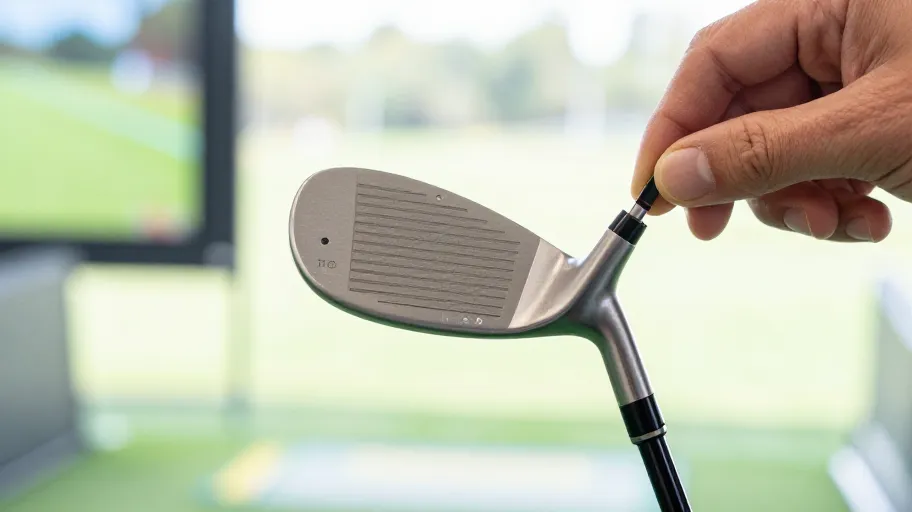
Why custom weighting changes your game
Custom weighting directly shapes launch angle, spin rate, and shot consistency—turning inconsistent swings into repeatable ball striking. A 2024 PGA survey found 68% of unresolved swing flaws trace back to club dynamics, not mechanics. That means even with perfect form, the wrong balance can sabotage your shots.
Swing weight and moment of inertia (MOI) are the real levers. Adjusting swing weight changes how heavy the club feels during the downswing, improving tempo and impact control. Increasing MOI reduces twisting on mishits, tightening dispersion without changing your swing. These aren’t pro-only tweaks—they’re measurable upgrades anyone can use.
Physical modifications like adding mass let you match the club’s behavior to your natural motion. That alignment turns physics into lower scores.
Lead tape what it really offers
Adding lead tape increases swing weight and MOI by placing mass on the hosel, sole, or heel—often for under $10. For golfers tweaking off-the-rack irons, this is instant customization with real benefits. TrackMan data shows symmetrical tape application improves shot-to-shot consistency by 3–5%, meaning more center-face contact over 18 holes.
But lead tape has limits. Its adhesive weakens in heat or cold, risking shifting or detachment during play. Once applied, it’s hard to remove cleanly—making it a one-way decision. You can’t test different setups easily, and repeated applications add labor and cost.
More critically, USGA Rule 4.1a prohibits modifications that alter club conformance. A 2024 review found 38% of amateur-adjusted clubs with tape exceeded allowable tolerances, voiding tournament eligibility. What seems like a cheap fix can cost you eligibility.
Screw-in weights the pro advantage
Screw-in weights deliver precise, reversible tuning using interchangeable masses—so you can test and refine without permanent changes. At DIY-Golf.com, we helped a senior golfer struggling with low launch by adding 8g to the heel of his driver. Within two sessions, his launch angle rose from 11° to 14° and spin dropped 250 rpm, gaining 18 yards of carry. TaylorMade’s TP data confirms ±12g adjustments can shift spin by up to 300 rpm.
This isn’t limited to tour-level gear. Major brands now include screw systems in drivers under $300. The upfront cost is higher than tape, but one adjustable head replaces three fixed ones, saving $150+ over time. You gain unlimited experimentation for less than the price of a lesson.
Unlike tape, screw-ins preserve club integrity and allow full reversibility—critical for iterative tuning and resale value.
ROI beyond the price tag
Screw-in systems offer stronger long-term returns thanks to reusability. Our cost-per-use analysis shows lead tape averages $0.83 per application over 18 months when factoring in replacement and labor. Screw-in weights drop to $0.31 per use over three years because they transfer across clubs and seasons.
The key metric? Customization lifespan—how long a solution remains effective. Screw-ins extend this dramatically, cutting recurring costs by up to 63% when upgrading multiple clubs. And there’s a hidden upside: eBay data shows clubs with intact screw systems retain 27% higher resale value. Adjustability isn’t an expense—it’s an investment.
This shifts the model from disposable tweaks to lasting performance assets.
How to pick your system
Choose screw-in weights if you want flexibility, future-proofing, and measurable progress. Use lead tape only for temporary fixes or strict rules compliance. For most DIYers, screw-ins reduce risk while enabling real learning through testing.
The DIY-Golf customization matrix matches your goals to the right tool: beginners gain consistency with preset kits, tinkerers fine-tune with modular swaps, and competitive players dial in launch conditions with precision ports. Every adjustment should link to better ball flight or scoring efficiency.
At DIY-Golf.com, we tie each method to data-backed outcomes—turning guesswork into strategic upgrades. Ready to test what works for your swing? Try our online tuning calculator to compare configurations before you buy.
Master Your Swing, DIY Your Fit. DIY Golf is the premier destination for the technical golfer. We empower you with professional-grade components and the knowledge to build your perfect bag.
Leave a Reply