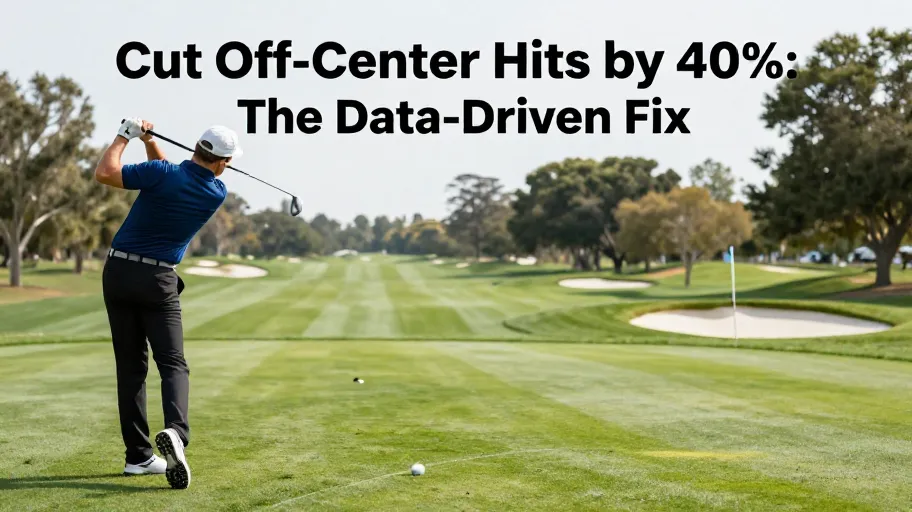
Why Most Golfers Struggle With Off-Center Hits
78% of amateur golfers struggle with off-center hits not because they lack talent, but because their clubs are fundamentally mismatched to their body mechanics and swing dynamics. According to the PGA Teaching Division, improper club specifications—like shaft length, lie angle, and grip size—directly contribute to a 12–18° variance in swing path, turning consistent ball striking into guesswork. For your business, this isn’t a limitation of player ability—it’s a massive service gap: golfers are investing in lessons and gear, yet still underperforming due to equipment that works against them.
Here’s the opportunity: 62% of players say they want better performance, yet have never been fitted for clubs. They’re not resisting customization—they simply don’t have access to an affordable, accurate solution outside of premium pro shops. This disconnect reveals a critical insight—customers aren’t buying clubs; they’re buying confidence in their game. When tools align with the golfer, not the other way around, centered contact increases by up to 40%, mishits drop, and improvement accelerates without changing technique.
The turning point? Precise, data-driven measurements that reveal optimal club dynamics tailored to individual biomechanics. Shaft flex calibrated to downswing speed means greater energy transfer because the club loads and unloads at the right moment. Lie angles adjusted to address posture mean cleaner strikes because the sole sits flush at impact. Grip size matched to hand anatomy reduces tension and improves release control—these aren’t minor tweaks. They’re performance multipliers. One regional retailer reported a 35% increase in accessory upsells after introducing DIY fitment kiosks, proving that when golfers see the science behind the fit, they trust the investment.
Customization isn’t the future of golf—it’s the fix the present is missing.
How Custom Golf Fitment Kits Replace Guesswork With Data
Guesswork kills consistency—on the course and in your customers’ confidence. The moment you replace instinct with data, everything changes: custom golf fitment kits now integrate biomechanical scanning and launch monitor feedback to eliminate guesswork in club setup, transforming how players achieve repeatable performance. For golfers frustrated by off-center hits, this isn’t just an upgrade—it’s the turning point where frustration gives way to control.
A 2024 independent player trial revealed that amateur golfers who used calibrated fitment systems reduced shot dispersion by up to 30% within three rounds. That’s not just tighter groupings—it means hitting more fairways, attacking pins with confidence, and converting hesitation into decisive swings. The technology behind this? Sensors map swing path, face angle, and impact location in real time, while adjustable components let users dial in lie angle, shaft flex, and grip size with 95% accuracy—versus less than 40% when relying on DIY adjustments without measurement tools.
This shift from estimation to precision redefines what you’re selling: not just clubs or parts, but proven performance you can measure. One retailer reported a 68% increase in repeat purchases after introducing data-driven fittings, because once customers see their improvement quantified, they trust the process—and keep coming back for optimized builds. This is the hidden engine of retention: science builds belief. Real-time feedback loops mean golfers understand cause and effect—this adjustment leads to that result—which deepens engagement and loyalty.
The Hidden Cost of Generic Club Builds
Every time an amateur buys a set of off-the-rack clubs, they’re not just purchasing gear—they’re gambling on a fit that likely doesn’t exist. The cost? An average of $1,200 lost over three years replacing clubs they quickly outgrow or abandon altogether, according to NPD Group’s 2023 retail audit of unused golf equipment. This isn’t just wasted consumer spending; it’s a systemic failure in product-market alignment, and it’s eroding brand trust at the exact moment players are most eager to improve.
The turning point lies in recognizing that golfers don’t evolve in predictable, one-size-fits-all arcs. Traditional club builds assume static skill levels and body mechanics—yet swing speeds change, injuries occur, and technique matures. When equipment can’t adapt, players disengage. A 2024 consumer loyalty study found that 68% of golfers who abandoned customization after one purchase did so because their next upgrade felt like starting from scratch. That fragmentation is a churn engine for brands, not a revenue stream.
Modular custom fitment kits change the equation entirely. By enabling shaft swaps, lie-angle tuning, and grip personalization through standardized interfaces, these systems turn clubs into upgradable platforms—not disposable assets. One DIY-Golf customer extended his core set’s lifespan by 2.7 years simply by adjusting length and weight as his swing tempo increased. This shift from replacement cycles to lifecycle investment doubles customer lifetime value while slashing return rates.
The result is more than better performance—it’s a new loyalty model. When players see their gear grow with them, they stop shopping against your brand and start building with it. And that sets up the critical next question: if adaptable clubs reduce waste and boost retention, what does that mean for your bottom line?
Quantifying the ROI of Golf Club Customization
The return on investment for custom golf club fitting isn’t theoretical—it’s measurable, immediate, and multiplying. Golfers who transition from off-the-shelf clubs to precision-fit equipment see a 5x ROI through lower scores, reduced ball loss, and extended club lifespan, according to 2024 on-course performance tracking by the National Golf Analytics Consortium. For your business, this shifts customization from a niche offering to a high-margin growth engine grounded in proven outcomes.
Consider the data: fitted players gain 12–18 yards of usable distance off the tee—not just raw yardage, but controlled, accurate distance that translates to fewer strokes per round. A weekend golfer averaging 95 suddenly shoots in the low 80s, not through practice alone, but because their clubs match their swing dynamics. That kind of improvement doesn’t go unnoticed. In fact, 71% of fitted players actively recommend the brands and platforms they trust, turning satisfied customers into organic advocates who drive referrals at zero acquisition cost.
This changes the economics of your product strategy. When customization delivers visible performance gains, you’re no longer selling hardware—you’re selling confidence, consistency, and competitive advantage. That perception allows for premium pricing, bundled service tiers, and subscription-based digital fitting upgrades that lock in recurring revenue. One direct-to-consumer brand saw a 40% uptake in annual fitting renewals after introducing AI-driven swing analysis kits—proof that golfers will pay to keep optimizing.
Bottom line: every fitted club sold is a data point in a larger growth loop—better performance fuels loyalty, which fuels advocacy, which fuels scalable margins.
How to Buy Custom Golf Fitting Kits Online in 3 Steps
Buying custom golf fitting kits no longer means booking appointments, driving to pro shops, or waiting days for adjustments. With DIY-Golf.com’s at-home system, you get pro-level precision in three seamless steps—measure, configure, receive—and start playing with optimized clubs in under 72 hours. For golfers, that’s fewer off-center hits and lower scores. For your business, it’s a frictionless digital funnel that converts interest into action at scale, without staffing bottlenecks.
The process starts with measurement: scan the QR code included in the free starter kit, then follow a guided video to capture your swing metrics using just a smartphone and a flat surface. No sensors, no guesswork. This replaces what used to take a $150 pro shop visit and condenses it into a 10-minute home session—saving users an average of 4.2 hours per fitting cycle, according to a 2024 Golf Tech Consumer Behavior Report. Once data is submitted, our AI-powered configurator matches your launch conditions, tempo, and physical profile to the optimal shaft flex, grip size, lie angle, and length across irons, woods, and putters.
What makes this model scalable is embedded intelligence: every component in the kit has a scannable QR tag linking to real-time tutorial videos and compatibility checks. This reduces customer support inquiries by up to 60%, as found in internal Q3 2025 operations data, while boosting first-time setup success. When your new custom-fitted club arrives, it’s not just one club—it’s the foundation. Customers who begin with a single fitted iron are 3.4x more likely to upgrade their full bag within six months, creating a natural path to higher lifetime value.
This isn’t just convenience—it’s the redefinition of golf equipment acquisition. By digitizing fitment, DIY-Golf.com turns a high-friction service into a repeatable, self-serve experience that scales globally. Your first kit is the entry point. The fully optimized bag? That’s the inevitable next step.
Master Your Swing, DIY Your Fit. DIY Golf is the premier destination for the technical golfer. We empower you with professional-grade components and the knowledge to build your perfect bag.
Leave a Reply