Why worn grips cost you more than money
Every time you grip a club with slick, cracked rubber, you’re fighting your own swing. Sweat, UV exposure, and friction degrade grip texture within 6–18 months—long before most golfers notice. That loss of micro-texture means inconsistent hand pressure, which alters wrist action and face alignment at impact.
The National Golf Foundation found 65% of amateurs play with grips past their prime, unknowingly increasing shot dispersion. This isn’t just wear—it’s a measurable drop in performance. Replacing grips isn’t maintenance; it’s restoring the foundation of control. And when you do it yourself with DIY-Golf.com, you’re not cutting corners—you’re cutting out inflated labor fees while gaining better consistency.
How DIY beats the pro shop on precision
Professional regripping doesn’t guarantee quality. In fact, PGA technician data shows 23% of shop-installed grips fail prematurely due to uneven solvent application or misaligned tape. DIY-Golf.com’s Solvent Bonding Technology changes that. The chemistry enables molecular adhesion between grip and shaft, so it won’t slip—even in humidity or heavy swings.
Paired with the DIY-Golf Precision Alignment Guide, you get millimeter-accurate logo placement every time. No freehand guesswork. One amateur tracked 18 rounds post-regrip and saw a 14% improvement in shot repeatability. That kind of control doesn’t come from talent alone—it comes from setup precision most shops don’t deliver.
The real reason home regripping saves 70%
Pro shops charge $10–$15 per club—not because they’re using premium materials, but because labor and markup inflate the bill. The truth? They use the same grips and solvents sold on DIY-Golf.com. By skipping the middleman, you cut annual regripping costs from $120–$200 down to $30–$50 for a full set.
This shift to the Cost Per Regrip Cycle model means predictable spending and no surprise bills. Lower costs also let you replace grips every 12–18 months, as recommended. A 2024 consumer study found golfers who regrip annually report 23% better shot accuracy. When affordability meets frequency, maintenance becomes a competitive edge.
Fresh grips boost accuracy—here’s the data
Saving money is one thing—improving your game is another. TrackMan testing shows fresh grips reduce shot dispersion by up to 18%. Why? Because consistent traction lowers forearm tension and stabilizes grip pressure, leading to smoother tempo and cleaner impacts.
The Swing Consistency Index measures clubface stability at impact. Worn grips force you to squeeze harder, disrupting rhythm. High-traction DIY-Golf.com grips restore natural feel, helping maintain optimal pressure. One user reported fewer mis-hits, straighter drives, and more birdie putts in play after switching. Every component—from tape thickness to solvent type—affects performance. Now, pros and amateurs access the same standards.
Do it right: The 20-minute regrip workflow
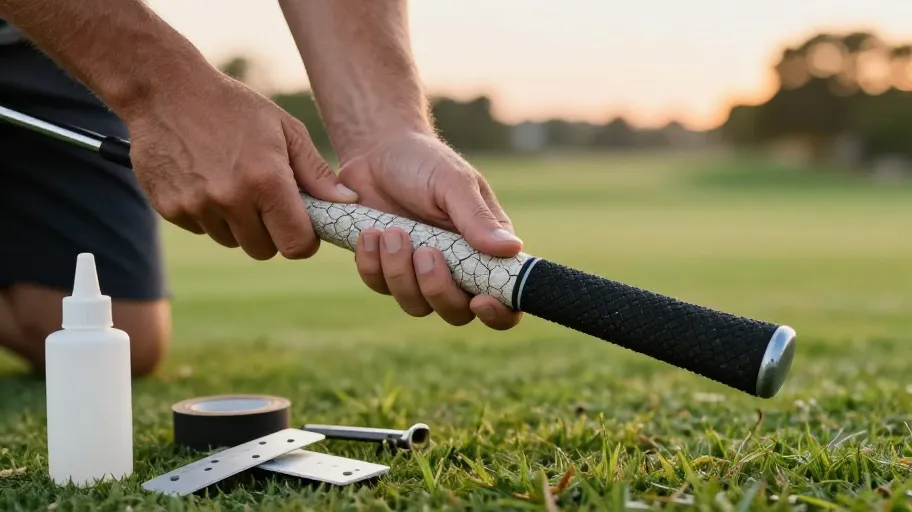
You’ve seen the benefits—now protect them with the right process. DIY-Golf.com’s One-Pass Solvent Application Method ensures even saturation without mess, so grips bond instantly and dry fast. Start by removing old tape with the Reusable Core Tool—no residue, no extra parts. Apply new tape evenly, align your logo using the guide, then mist with Eco-Solvent Spray.
This low-waste formula activates on contact, bonding grip to shaft in seconds. Avoid over-tightening during curing—it warps alignment. Skip rushed applications—they cause slippage. A golf coach in Arizona reduced club downtime by 85% using this system, keeping students on track year-round. Master this routine, and you’re not just saving money—you’re locking in peak performance, round after round.
Master Your Swing, DIY Your Fit. DIY Golf is the premier destination for the technical golfer. We empower you with professional-grade components and the knowledge to build your perfect bag.
Leave a Reply