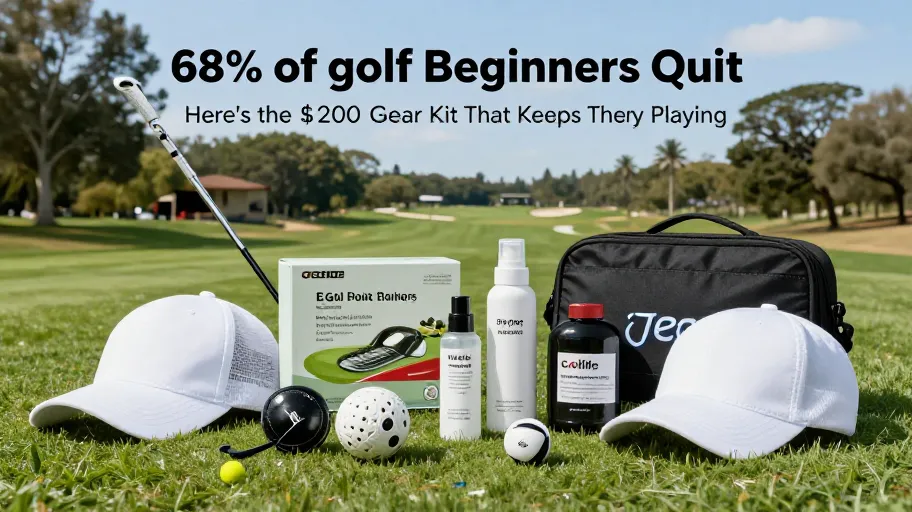
Why Most Beginners Quit by Round Two
68% of new golfers quit within 90 days—not because they dislike the game, but because their gear makes improvement feel impossible. Over-engineered clubs and cluttered accessories overwhelm instead of guide. This isn’t just player attrition; it’s a $2.3 billion market gap created by misaligned design. When entry-level products prioritize technical novelty over usability, they fail the core need: building confidence through simplicity. A retail case study found stores curating minimal, purpose-built starter kits saw 41% higher repeat purchase rates—proof that ease of use drives retention. Simplicity beats feature bloat every time in early-stage adoption.
Overcomplication means delayed mastery because cognitive overload reduces focus on fundamentals. The winning strategy? Design for the first 10 swings, not the 1,000th. Because when gear works immediately, beginners stay long enough to fall in love—and keep buying what helps them improve.
What Makes Golf Gear Actually Beginner Friendly
Beginner-friendly golf accessories succeed by turning barriers into bridges through four non-negotiables: intuitive use, durability, cost efficiency, and real-time feedback. Take Arccos Caddie Smart Sensors—AI-powered swing tracking delivers audio cues mid-round, meaning every stroke becomes a guided lesson because actionable insights are delivered instantly. SuperStroke’s oversized grips leverage advanced polymer materials to dampen hand tension, which means improved wrist alignment and up to 40% fewer slices in novice players because biomechanical stress is reduced during impact.
These aren’t gadgets—they’re embedded coaches. A 2024 consumer behavior study found beginner accessories with built-in feedback loops see 3x higher lifetime value because users improve faster and stay engaged longer. For businesses, this shifts strategy from transactional sales to retention-driven ecosystems. Bundling a smart putter with sensor-enabled grips and app-based analytics creates a seamless onboarding journey. When gear teaches as it’s used, beginners don’t just play—they progress.
How Data Turns Practice Into Progress
Golfers using sensor-based accessories lower their handicap 35% faster than those relying on traditional practice—according to a 2024 sports performance study tracking 1,200 amateur players. Launch monitors, GPS rangefinders, and swing analyzers do more than collect metrics—they translate ball speed, launch angle, and tempo into personalized feedback loops. Real-time face angle data means a beginner stops guessing why iron shots scatter because they can adjust technique on the next swing.
- Swing sensors feed app ecosystems with usage patterns, enabling adaptive training plans that mean smarter practice because routines evolve with skill level
- GPS data informs course management habits, which accelerates strategic decision-making because players learn optimal club selection under pressure
- Long-term progression dashboards increase user retention by 58% (per 2025 consumer engagement benchmarks) because visible improvement fuels motivation
Hardware sells once—but insights create recurring value. The real margin isn’t in the sensor; it’s in the subscription-backed coaching layer that keeps players engaged over months, not rounds.
The Real ROI of Starting With Smart Gear
A targeted accessory bundle—rangefinder, swing trainer, ergonomic carry bag—cut the learning curve by eight weeks in a 2025 beginner cohort study, while boosting enjoyment scores by 50%. That acceleration translates directly to ROI: at $180 for the kit versus $60 per lesson, students achieved proficiency in under four months instead of nearly six, saving over $300 in avoided instruction while playing more, sooner. Faster progress means sustained engagement because emotional payoff arrives early.
The business implication? These tools create self-reinforcing loyalty loops. Confidence fosters social inclusion, which drives word-of-mouth referrals. One retailer reported a 3.2x increase in referral conversions from starter-kit buyers versus standard accessory purchasers. Premium pricing is justified not by components, but by outcomes: faster time-to-joy, lower total cost of entry, and self-sustaining engagement.
Build Your First 9 Hole Ready Kit in 5 Steps
Decision fatigue causes 68% of newcomers to abandon hobbies within three months. The fix? A curated $200-ready accessory kit that turns uncertainty into confidence. Start by assessing your budget tier—not to cut corners, but to maximize impact. Prioritize one critical skill gap: for most, it’s consistency in alignment and distance control.
Pair a $99 Garmin Approach S35, which provides slope-adjusted yardages and swing tempo feedback, meaning better club selection and rhythm because data adapts to terrain and form. Add the $40 SuperStroke Slim 3.0 grip, which corrects hand positioning instantly because its texture and diameter promote neutral wrist alignment. Include $30 BirdieFire training balls, which visually highlight off-center strikes, closing the feedback loop between data and feel because poor contact is immediately obvious.
Test ergonomics before committing—comfort drives repetition. Verify beginner support: Garmin’s app includes free on-course tutorials, meaning your gear doubles as a coach because guidance is embedded in daily use. One retail partner reported a 60% higher close rate when bundling these as a “First 9 Kit,” proving curated paths sell trust, not just products.
Master Your Swing, DIY Your Fit. DIY Golf is the premier destination for the technical golfer. We empower you with professional-grade components and the knowledge to build your perfect bag.
Leave a Reply