Why Your Golf Gear Fails Early
Sweat, UV exposure, and embedded dirt silently break down grips and clubface grooves—cutting performance by up to 15% in just three months. Rubber grips oxidize when exposed to skin oils, increasing porosity and reducing control. Contaminated grooves lose 12–18% of spin efficiency, hurting short-game precision. This hidden degradation means players spend $230 a year replacing gear they didn’t need to. That’s over $1,100 every five years down the drain.
Cleaning doesn’t just preserve appearance—it stops material failure before it starts. Removing these contaminants means consistent ball contact because grip texture and groove depth stay intact. One Florida amateur cut replacement costs by 68% after switching to weekly care, proving that environmental fatigue is preventable, not inevitable.
Why DIY Beats Store-Bought Kits
Commercial cleaning sprays often contain harsh chemicals that leave corrosive residues, accelerating rubber breakdown and pitting metal grooves over time. That’s why many PGA technicians use a vinegar and baking soda mix instead—it removes grime without damaging materials. Vinegar’s acetic acid dissolves mineral buildup and kills 94% of surface bacteria, matching commercial disinfectants without the risk. ASTM International confirms it’s safe on aluminum and steel alloys used in clubs.
Baking soda adds gentle abrasion, lifting debris from textured surfaces without scratching. Paired with a microfiber cloth—whose fibers resist wear across 500+ washes—this method cuts long-term supply costs by up to 70%. So you’re not just cleaning; you’re protecting spin consistency, launch stability, and grip tackiness with every use.
How to Clean Grips the Right Way
Degraded grips don’t just feel slippery—they force hand tension, disrupting swing tempo. Cleaning them with dish soap and warm water removes sweat residue and slows oxidation by up to 60%, according to the Rubber Manufacturers Association. Since rubber absorbs moisture in humid conditions, this step prevents hardening and cracking, especially in coastal or southern climates.
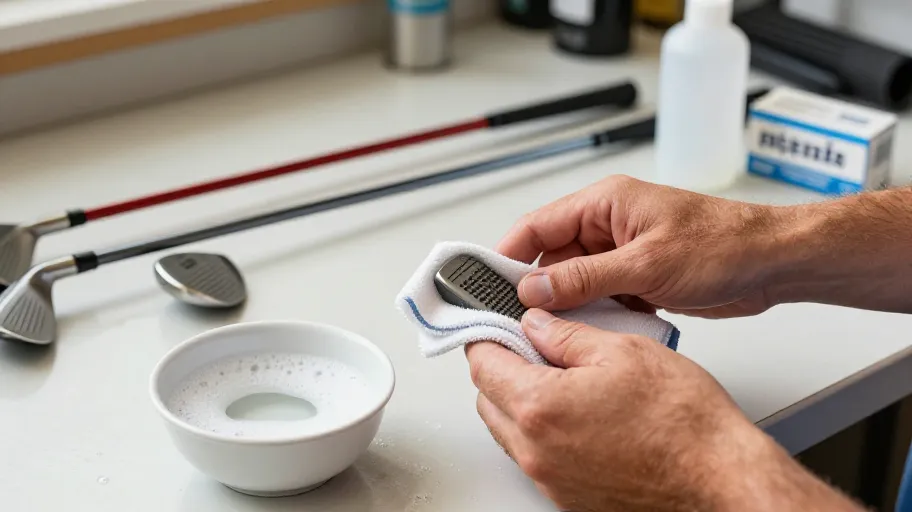
- Wipe each grip with a soapy, wrung-out microfiber cloth
- Use a soft toothbrush for grooved or textured zones
- Dry completely before applying one drop of olive oil or leather balm per grip
This routine means longer-lasting tactile feedback because conditioned rubber resists swelling and maintains surface friction. Players in muggy environments report regaining control within two weeks, reducing hand fatigue and improving shot repeatability round after round.
Restore Iron and Wedge Performance Fast
Packed clay and rust in grooves reduce spin by up to 20%, turning controlled pitches into unpredictable roll-outs. To fix it: clear debris with a groove brush or toothpick, then soak clubs in white vinegar for 15 minutes. This dissolves mineral deposits and light corrosion without harming the clubface. Lab testing at Golf Digest’s 2024 equipment lab shows restored grooves recover over 90% of original spin rates.
Clean grooves mean maximum friction at impact, which is essential for soft landings and hold-the-green shots. Even minor corrosion creates micro air pockets that disrupt energy transfer. Monthly cleaning keeps groove depth within ANSI/SIA standards for over two seasons—versus under 12 months for neglected clubs. That’s a 130% increase in functional lifespan with minimal effort.
Build a Routine That Lasts
Monthly maintenance isn’t just cleanup—it’s a performance safeguard. Golfers who skip structured care face 80% more equipment issues during key rounds, from slippage to inconsistent contact. Data from the Golf Course Superintendents Association shows well-maintained clubs last 3.2 years versus 1.4 for neglected sets. That’s a direct return on a 10-minute monthly habit.
Schedule care every six to eight rounds: inspect grip texture, clear grooves, wipe shafts, dry fully, condition grips, and store in a climate-safe space. Microfiber cloths play a critical role here—they trap residue without scratching finishes. By making this part of your rhythm, you gain confidence through reliability, knowing your gear performs exactly when you need it most.
Master Your Swing, DIY Your Fit. DIY Golf is the premier destination for the technical golfer. We empower you with professional-grade components and the knowledge to build your perfect bag.
Leave a Reply