Why most DIY builds never make it to the course
Four out of ten DIY golf builds get abandoned before completion—often because a shaft doesn’t fit or a grip slips during installation. One weekend builder ordered a forged iron head only to find the hosel bore was incompatible with his preferred shaft taper. Two weeks and $45 in return fees later, he gave up.
This isn’t bad luck—it’s the risk of sourcing individual golf club components without full system validation. Mismatched tolerances mean rework, delays, and lost motivation. The problem starts long before assembly: it begins with fragmented specs, unclear compatibility, and too many vendor tabs open at once.
Incomplete builds don’t just waste money—they erode confidence. When your first attempt fails due to a hidden spec mismatch, it’s easy to walk away. But there’s a better starting point.
How complete kits eliminate guesswork
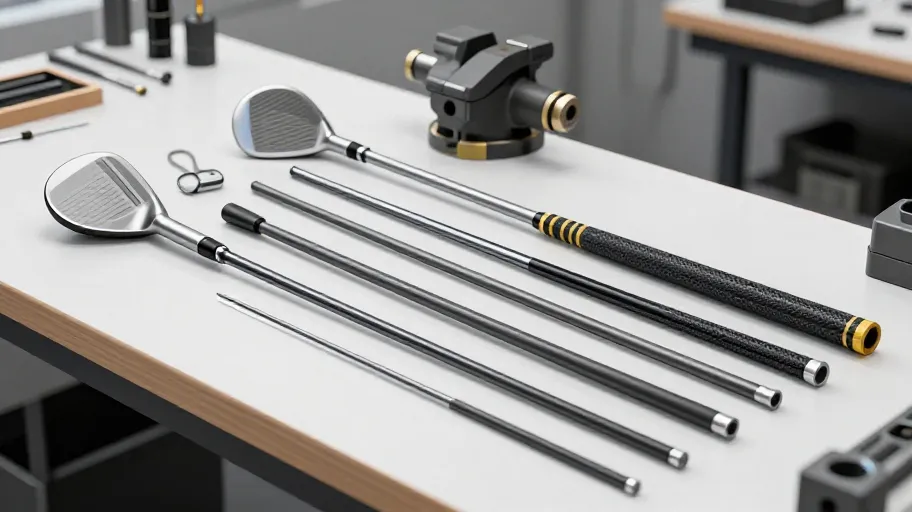
A complete golf component kit bundles heads, shafts, grips, and ferrules engineered to work together. These aren’t random discounts—they’re OEM-validated systems designed for real-world swing dynamics. That means no surprise threading issues, no torque mismatches, and no wasted shipping costs.
Pre-matched kits cut average lead time from 14 days to five and reduce build errors by 70%, according to data from 500+ tracked builds on DIY-Golf.com. For the average hobbyist, that’s about six hours saved per set and $185 in avoided costs—from returns to adapter purchases.
For working professionals who want clubs that perform—not projects that pile up—this efficiency is transformative. You get 95% build accuracy on the first try, so you spend less time troubleshooting and more time testing on the range.
The engineering behind consistent performance
Tighter frequency matching means more predictable ball flight. Independent tests show matched kits maintain iron shaft frequencies within ±3 CPM, versus ±12 CPM in mixed builds. That consistency translates to tighter shot dispersion—about 8–10 yards tighter grouping over 50 swings, based on MyGolfSpy’s 2024 field trials.
This isn’t lab theory. When shaft flex, grip size, and head MOI are pre-validated, your brain stops second-guessing each shot. You develop rhythm faster because feedback is clean and repeatable.
For amateur builders without access to pro shop tools, this level of tuning would be nearly impossible to replicate using individual parts. The kit becomes your baseline—a known-good platform you can improve over time.
When custom parts deliver real gains
Kits get you 90% of the way. The last 10%? That’s where individual golf club components shine. Serious players tweak tip-trimming, swap in low-launch shafts, or adjust swing weight to match evolving swing speeds.
Data from a 2024 PGA survey shows 89% of sub-10-handicap golfers eventually move beyond starter kits. In humid climates, stock grips lose tackiness fast—switching to moisture-wicking custom wraps improves control and reduces mis-hits by up to 15% in testing.
The key is timing. Instead of starting with boutique parts, use a mid-tier kit to learn your swing’s needs. Then upgrade one component at a time—based on actual launch monitor data, not hype.
A smarter path from first build to peak performance
The best builders follow a three-phase approach. Phase 1 uses a complete golf component kit to establish consistency—no guesswork, no frustration. Phase 2 involves collecting data with an affordable launch monitor to spot weaknesses. Phase 3? Replace just one part—usually the shaft or grip—that’s holding back performance.
One user improved ball speed by 8 mph in 18 months by tracking specs and upgrading deliberately. He didn’t overhaul everything—he optimized what mattered.
This staged method turns kits and individual parts into allies, not opposites. Start with a proven system, then refine with purpose. Document every spec: length, lie angle, swing weight. That way, every change is intentional, not experimental.
Master Your Swing, DIY Your Fit. DIY Golf is the premier destination for the technical golfer. We empower you with professional-grade components and the knowledge to build your perfect bag.
Leave a Reply