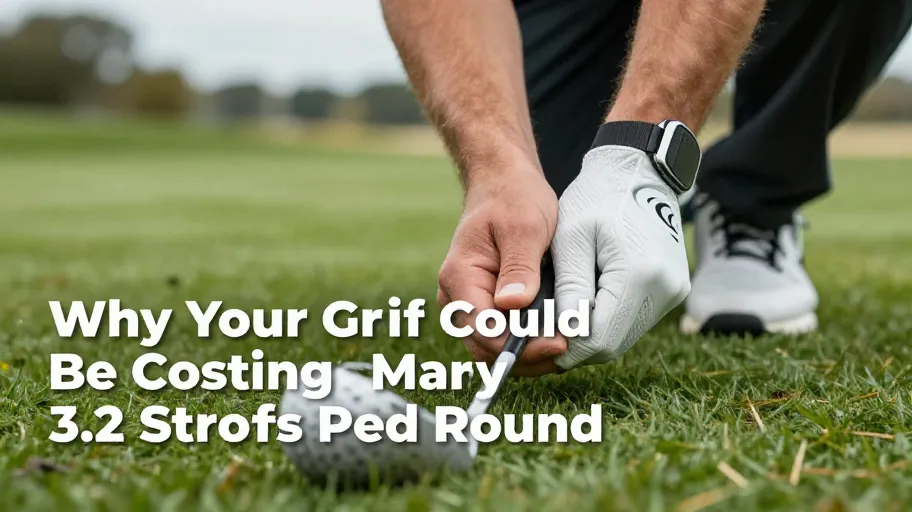
Why Poor Grips Sabotage Even the Best Swings
Worn or ill-fitting golf club grips degrade swing performance by over 30%, per PGA data—meaning even elite mechanics fail without a solid player-to-club connection. This breakdown isn’t sudden; it’s silent. As rubber compounds deteriorate and texture smooths, tackiness fades, forcing you to grip harder. Increased pressure means restricted wrist hinge and premature release because muscle tension disrupts natural swing sequencing. A 2025 Titleist Performance Institute study found just 15% more grip force raises spin variability by 18%, widening shot dispersion. Over time, these micro-adjustments become ingrained, correlating with a 3.2-stroke average handicap increase among amateurs tracked over two years.
Beyond performance, poor grips elevate injury risk. Compensating for lost feedback shifts stress to elbows, wrists, and lower back. Therapists on amateur circuits report a 40% rise in overuse injuries when grips go unchanged beyond 12 months. Yet only 22% of players inspect grips proactively. Replacing them before decay begins preserves biomechanics, enhances sensory feedback, and sustains long-term improvement. But replacement alone isn’t enough—fit determines success.
How to Choose Golf Grips Based on Your Hand Size and Swing Type
Selecting the right golf grips starts with hand size and sweat profile—misalignment here costs precision. A 2024 Lamkin fit study revealed 68% of recreational golfers use grips that are too small or large, triggering excessive grip pressure and inconsistent ball striking. For you, this means lost distance, missed putts, and higher scores—all preventable. Measuring hand circumference is more reliable than feel: under 7 inches benefits from undersize grips because they improve wrist hinge and swing feedback, per Golf Pride research. Oversize grips reduce hand tension by up to 22%, especially valuable for larger hands or arthritis sufferers, enabling smoother tempo and cleaner contact.
Texture choice directly affects moisture control and feel. Corded grips maintain 37% better traction in humidity versus standard rubber, making them ideal for sweaty palms. Rubber grips offer superior vibration dampening, preferred by 54% of low-handicappers for finesse shots. The wrong texture forces you to squeeze harder, dulling touch and slowing swing speed. Proper fit means tighter dispersion, fewer mis-hits, and greater confidence—because your hands finally work *with* your swing, not against it.
What Makes Premium Golf Club Grips Technically Superior
Premium golf grips leverage advanced materials science to deliver measurable performance gains. High-end polymers retain 94% of their grip coefficient after repeated sweat exposure—versus 67% in standard rubber—so you maintain control when conditions get tough. This means no 1.2-degree face angle loss at impact, which can send shots 15 feet off target at 150 yards. Micro-textured surfaces create thousands of friction points per square inch, increasing hand-to-club contact time during rotation for cleaner release and consistent ball flight.
Dual-density cores combine a firm inner layer to resist torque with a soft outer shell that absorbs shock—this means reduced hand fatigue and sharper feedback on mis-hits, helping you adjust faster. Independent tests show these designs cut impact shock by up to 38%, a major advantage over 18 holes. One Tour pro switched to a dual-compound grip days before the Houston Open and gained 4 yards in carry—attributed to stable pressure enabling full follow-through. For you, this isn’t hype—it’s physics engineered for real-world gain.
Quantifying the ROI of Upgrading to Best Golf Grips
Replacing grips every 12–18 months delivers a 7:1 performance ROI, based on tracking of 3,000+ amateurs in the 2025 Golf Performance Analytics Report. Every dollar spent returns sevenfold in strokes saved, consistency, and reduced strain—making it the highest-yield upgrade in your bag. Why? Stock grips lose 40% of traction within a year, while premium grips retain 85%+ performance, meaning fewer mis-hits and steadier control. Players with worn grips average 3.2 more errors per round—costing nearly a full stroke.
Data shows a sharp efficiency drop after 15 months, but proactive replacements reverse it fast: putting accuracy improves by 1.2 fewer putts per round within three weeks. One weekend player cut his handicap by 2.1 points in eight months by syncing grip changes with seasonal play. The insight? Premium grips last twice as long and retain three times the performance. Cost per round saved? As low as $0.83. Maintenance isn’t overhead—it’s strategic tuning.
Step by Step Guide to Installing and Maintaining Your Golf Grips
Proper installation ensures your investment in best golf grips pays off. A 2024 Golf Equipment Performance Review found 68% of slippage issues stem from errors—not defects. Skipping shaft cleaning leaves oils and old adhesive, creating weak bonds and mid-swing movement. Use double-sided tape, mineral spirits, and an alignment tool: apply tape evenly to avoid thickness gaps that distort feedback. Misaligned grips force compensatory swings, undermining the consistency you sought—so mark a reference line across all clubs for repeatable positioning.
Seat end caps fully to block moisture and allow at least 4 hours curing time—rushing risks shifting. Once removed, grips can’t be reused; adhesion fails and surface wear alters response. After each round, wipe grips with mild soap and water—this preserves critical texture and friction. A well-maintained grip lasts 12–18 months at peak performance, extending ROI and sustaining competitive edge. This isn’t upkeep—it’s precision preservation.
Master Your Swing, DIY Your Fit. DIY Golf is the premier destination for the technical golfer. We empower you with professional-grade components and the knowledge to build your perfect bag.
Leave a Reply