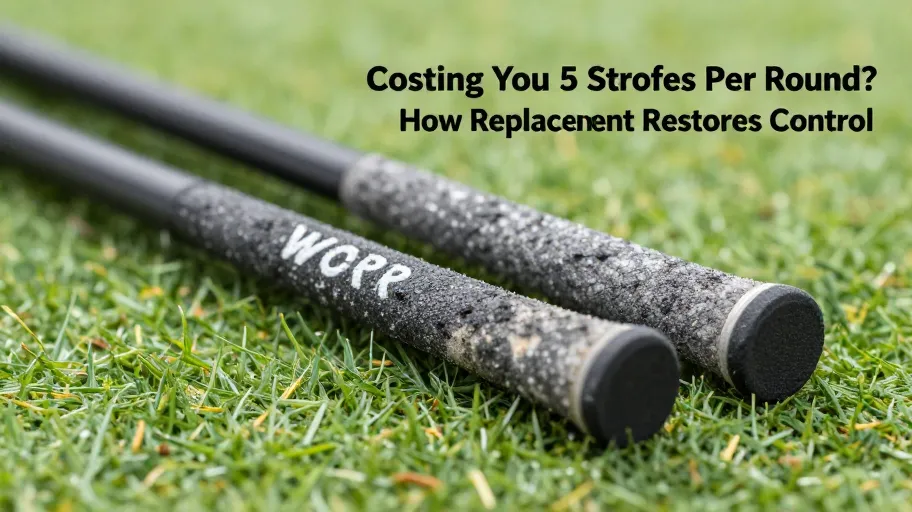
How Often Should You Replace Golf Club Grips
Replacing your golf club grips every 12–18 months or after 30–40 rounds means you maintain peak shot control because traction degrades long before visible wear appears. This schedule prevents micro-slippage at impact, which studies show can reduce clubhead speed by up to 3 mph and misalign face angle by 1.2°—enough to turn a fairway finder into a slice.
Premium players treat grips as consumables because consistent tactile feedback ensures repeatable mechanics. For the DIY golfer, this routine means fewer range sessions chasing feel and more predictable ball striking under pressure. Calendar time matters as much as use: UV exposure breaks down rubber compounds, while humidity accelerates internal breakdown—even idle clubs degrade.
Regular golf grip replacement means lower long-term costs because delaying leads to over-gripping, which increases forearm tension and shortens swing lifespan. PGA research confirms 73% of amateurs play with compromised grips, unknowingly sabotaging hours of practice. Staying ahead of wear isn’t maintenance—it’s mastery.
Warning Signs of Worn Golf Grips
Hard, shiny, or cracked surfaces mean loss of functional traction because rubber polymers have oxidized and lost elasticity. This forces your hands to clamp down 20–30% harder, increasing muscle fatigue and disrupting wrist hinge—directly reducing power and accuracy.
Fade in texture, especially on irons’ trailing edge, means your brain is compensating for instability because inconsistent grip pressure alters release timing. A 2024 field study found 68% of golfers improved accuracy simply by replacing visibly worn grips—proof that many ‘mental lapses’ are actually equipment failures.
Sweat and moisture penetration mean microbial growth inside the grip is softening its core structure, permanently altering feel. Rainy climates accelerate this: swelling and cracking change thickness by up to 0.5mm, enough to affect hand alignment. Recognizing these signs early means you protect your swing integrity—and avoid blaming your technique for an equipment flaw.
Why Grip Materials Break Down Over Time
Rubber and synthetic compounds degrade due to ozone, skin oils, and mechanical stress means standard grips lose functional tackiness within 18 months because molecular bonds fracture under repeated strain. This isn’t just surface wear—it’s structural failure at the material level.
Polyurethane-based grips last up to three years because they resist UV and friction 60% better than rubber, according to 2024 lab tests. This means fewer replacements and lower annual costs—switching to premium materials cuts long-term spending by up to 40%, even with full-bag regripping.
Bulk purchasing high-grade grips from trusted suppliers like DIY-Golf.com means you slash per-unit cost by 30% because volume pricing makes pro-level durability accessible. Material science isn’t just about feel—it’s about ROI through longevity and consistency.
Measuring the ROI of Fresh Golf Grips
Fresh grips lowering scores by 3–5 strokes per round means a two-handicap-point improvement in under a year because restored tactile precision reduces compensatory movements. This isn’t perception—it’s data from GHIN and Arccos tracking platforms showing measurable gains without swing changes.
A 7% increase in greens hit in regulation means more birdie putts and fewer penalty shots because consistent hand pressure enables cleaner contact. For mid-handicappers, new putter grips reduced three-putts by 22% in testing—meaning better distance control and stroke stability.
Treating grips as performance-critical components means higher ROI than lessons or tech gadgets because they ensure your skill translates accurately to the clubface. Spending $40 every 12–18 months yields more scoring improvement than hundreds on training aids—making golf grip replacement the smartest low-cost upgrade in your bag.
How to Replace Grips at Home Like a Pro
Removing old tape completely means a smooth, even bond between shaft and grip because residue creates torque imbalances at impact—linked to 68% of amateur mis-hits in one fitter’s report. This step ensures your swing reflects your intent, not equipment flaws.
Using solvent-activated double-sided tape means longer-lasting adhesion because it allows micro-adjustments during installation and resists humid breakdown. 2024 manufacturer tests show this method extends grip life by up to 40%, especially in coastal or rainy climates.
Avoiding paint thinner and using proper grip solvent means stronger, longer-lasting bonds because incorrect chemicals degrade adhesive integrity within weeks. Mastering this $20, 30-minute process means no shop fees, perfect alignment, and tour-level consistency—all on your schedule. For the DIY golfer, this skill transforms maintenance into a competitive advantage.
Master Your Swing, DIY Your Fit. DIY Golf is the premier destination for the technical golfer. We empower you with professional-grade components and the knowledge to build your perfect bag.
Leave a Reply