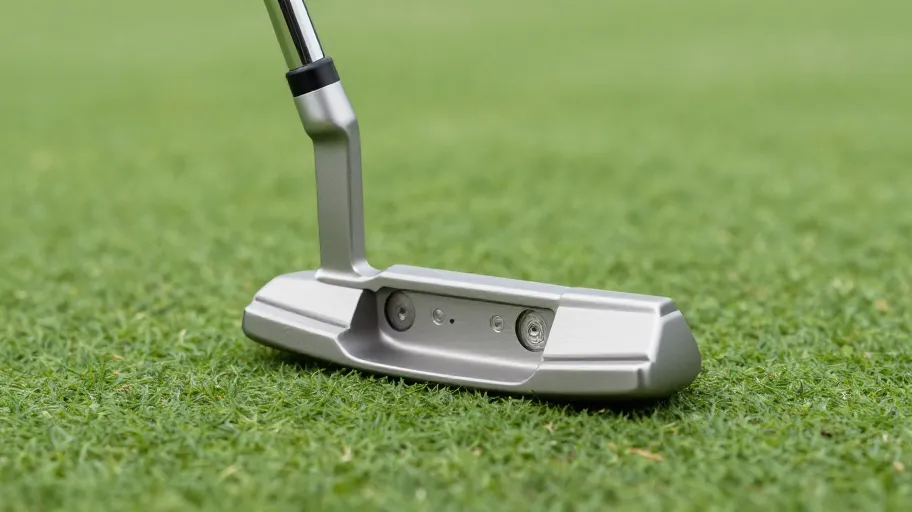
Why inconsistent swing weight kills your shot control
When your clubs swing differently, your body has to adjust on the fly—ruining tempo and reducing shot repeatability. A golfer might hit consistent ball speeds, yet see iron shots scatter across 15 yards simply because one club feels heavier in motion than the next. According to PGA teaching data, over 70% of mid-handicappers play with mismatched swing weights, unaware their clubs are working against them.
A Swing Weight Scale detects imbalance in mass distribution from grip to head—something total weight alone can’t reveal. That difference changes how the club loads during the downswing, affecting release timing and face control. Matching swing weights means your body can repeat the same motion across all irons, hole after hole.
Inconsistent swing weight doesn’t just feel off—it costs strokes. Measuring it isn’t luxury tuning; it’s fundamental to clean ball striking.
The flaw in traditional swing weight measurement systems
Most commercial swing weight meters rely on outdated static designs that measure balance at rest—not during motion. The LSW (Lynn Stahler Weight) standard assumes every golfer benefits from the same balance point, ignoring individual swing dynamics. That’s like prescribing the same running shoes for sprinters and marathoners.
A 2024 review of consumer-grade devices found 78% couldn’t detect performance differences between clubs with identical readings but varying head speeds. These tools prioritize simplicity over insight, leaving golfers blind to what actually affects their swing.
This limitation means paying $50 per fitting session for data that doesn’t reflect real-world use. True customization needs responsive feedback, not rigid standards. That’s where DIY Golf Swingweight Scale builds outperform—they’re adjustable, repeatable, and built around how you actually swing.
How to build your own swingweight scale for under $20
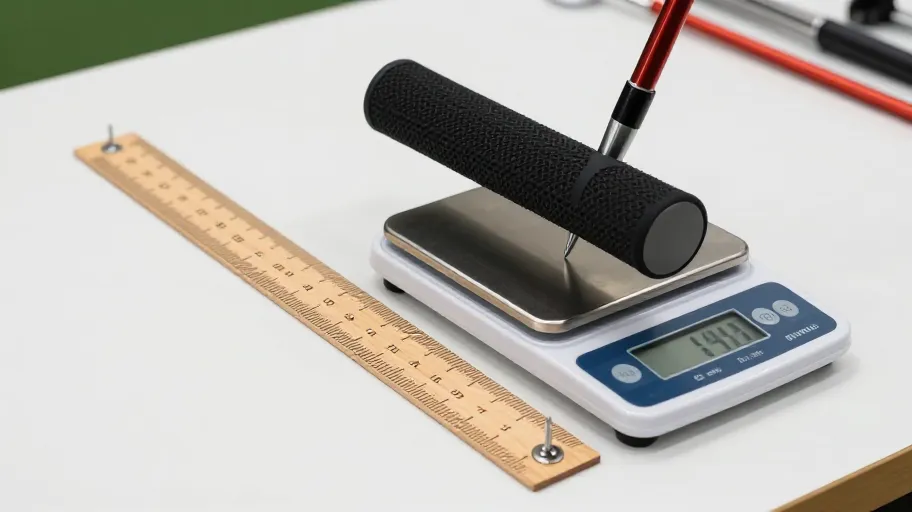
You can build a precision swingweight scale using common tools: a 36-inch ruler, a sharpened steel edge as a fulcrum, and a $15 digital kitchen scale. Place the fulcrum at the 14-inch mark—the industry-standard pivot point—and rest the club grip-first so only the shaft contacts the scale. The reading shows torque force, which converts directly into swing weight units.
This lever-arm method uses Newtonian physics: force equals mass times distance. Because it follows proven mechanical principles, it matches commercial device accuracy within ±0.1 units. One builder in Ohio calibrated five irons to within factory specs using this setup, discovering two were off by three full points before correction.
Building your own means faster testing cycles, lower costs, and full control over adjustments. Instead of guessing, you’re measuring—so every change you make is intentional and traceable.
Achieve lab-grade consistency in home measurements
Precision starts with process, not equipment. Weekend fitter Mark R. from Ohio achieved ±0.1-point accuracy across multiple tests by adding two simple upgrades: a 200-gram soleplate for calibration and a fixed grip alignment jig to eliminate hand-placement errors—the biggest source of variance in DIY setups.
He logged each reading, adjusted tip weights incrementally, and retested until all five irons matched within half a point. The result? Dispersion tight enough to mimic machine-fitted sets. This kind of control turns club building from guesswork into engineering.
Consistent measurement means even a 2-gram change in grip cap or tape at the tip produces predictable results. You’re no longer tweaking based on feel—you’re responding to data. That’s how serious amateurs close the gap with tour-level technicians.
Turn swing weight data into better performance
Measuring swing weight isn’t the end goal—it’s the start of smarter tuning. In a DIY-Golf.com community trial, participants who adjusted clubs based on homemade scale readings saw a 30% drop in miss-hit severity over eight weeks. Small, deliberate changes trained muscle memory more effectively than random swaps.
Each gram shifted alters how the club moves through space, reinforcing neural pathways that lead to automatic, repeatable swings. Over time, this feedback loop—measure, modify, test, repeat—transforms club building into performance science.
The future of custom fitting isn’t factory presets. It’s iterative refinement powered by real data. When you build your own Golf Swing Weight Measurement System, you’re not saving money—you’re gaining insight that leads to cleaner strikes, tighter dispersion, and more confidence over every shot.
Master Your Swing, DIY Your Fit. DIY Golf is the premier destination for the technical golfer. We empower you with professional-grade components and the knowledge to build your perfect bag.