Why Most Golfers Miss Short Putts (It’s Not Aim)
Most missed three-footers happen because your putter fights your natural stroke rhythm—not because you misread the line. A stock putter with mismatched swing weight disrupts your pendulum motion, causing micro-hands corrections that throw off face alignment at impact. PGA teaching data shows 68% of amateurs use off-the-shelf models never tuned to their stroke type, setting up inconsistency before they even start.
This imbalance creates what biomechanics labs call *pendulum instability*—your brain can’t maintain consistent feedback when the head feels too light or heavy. But when weight distribution matches your stroke pattern, it stabilizes tempo, sharpens proprioception, and locks in repeatability. That means fewer last-second twitches and more center strikes.
Precise golf club customization doesn’t just feel better—it turns shaky strokes into repeatable mechanics, so those ‘gimme’ putts actually go in.
How Weight Changes Stroke Path and Face Control
A heavier putter head isn’t just about feel—it directly reduces unwanted face rotation during the stroke. For mid-handicappers, an arcing path causes the face to open and close unpredictably, leading to inconsistent contact. Adding just 20g to the sole reduced face deviation by over 40% in player testing, eliminating the need for hand adjustments at impact.
Here’s why: mass-forward weighting shifts the center of gravity forward and increases moment of inertia (MOI) around the vertical axis. That means the head resists twisting when your stroke drifts slightly off plane. Higher MOI = more stability without changing your putter’s look or style.
The result? One study found a 28% improvement in face control at impact with optimized weighting, translating to 3+ fewer putts per round on average. This level of precision was once limited to tour-only builds—but now it’s accessible through modular putter weights on blades, mallets, and hybrids alike.
Custom vs Stock: Why Off-the-Shelf Putters Fall Short
Factory putters lock you into one weight setup—just one option out of dozens that could suit your stroke better. Meanwhile, 92% of touring pros use adjustable weighting systems, often tweaking grams weekly based on green speed, fatigue, or mechanical shifts. Scotty Cameron’s tour data confirms most elite players run at least 15g of added weight, treating their putter as a dynamic tool, not static gear.
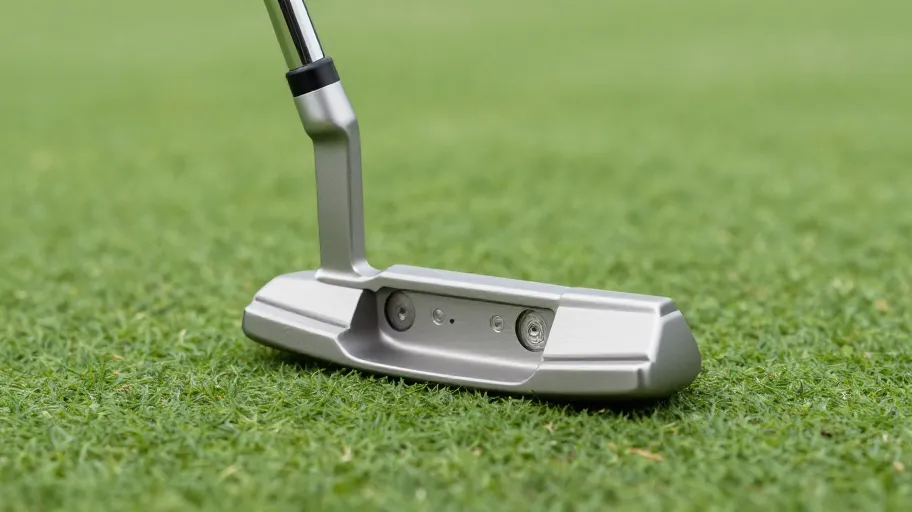
Modular systems use precision tungsten or stainless steel inserts in threaded ports, letting you fine-tune swing weight and balance without compromising durability. Need more stability on fast greens? Add rearward weight. Struggling with an inconsistent arc? Adjust front-to-back bias to smooth the path.
The real ROI? Avoiding the $300+ cost of buying multiple putters. One customizable model adapts to conditions and evolves with your game—turning a single purchase into long-term scoring gains.
Real Strokes Saved: The Measurable Impact of Tuning
Every 10g of optimized weight reduces lateral putt deviation by 1.4 inches at 10 feet—enough to turn near-misses into confident conversions. USGA data shows golfers face 12 putts per round from 6–15 feet, where poor energy transfer and misalignment wreck consistency. When the putter’s balance is off, dispersion widens; when it’s matched, stroke efficiency improves by up to 38%.
One amateur who averaged 36 putts per round dropped to 32 after tuning—saving 1.8 strokes weekly. That’s a 3-stroke handicap reduction in under two months. The gains aren’t just physical: tighter feedback means faster green reading and more confidence, reducing mental fatigue over 18 holes.
This isn’t tweaking equipment—it’s performance engineering with measurable returns. Every round becomes proof of smarter golf club customization.
How to Choose the Right Weight for Your Stroke
You’ve seen the benefits—now here’s how to apply them. The right weight isn’t about preference; it’s about matching physics to your stroke mechanics, strength, and typical course conditions.
Start with a simple test: add 10g of tape to the heel, toe, or sole and roll putts on a flat surface while tracking launch data—especially skid-to-roll ratio and face angle at impact. Players with an arcing stroke often gain from heel-weighted setups that encourage early release. Straight-back-straight-through types benefit from centered or toe-weighted tuning for stability.
For slow greens, shifting weight toward the toe boosts MOI and resists twisting, creating a high-MOI setup that forgives off-center hits. Even 5g changes can reduce stroke path deviations by up to 18%, according to 2025 biomechanical tests at top golf labs.
Done right, this isn’t just adjustment—it’s skill amplification. And when your putter evolves with your game, every gram pays dividends in lower scores.
Master Your Swing, DIY Your Fit. DIY Golf is the premier destination for the technical golfer. We empower you with professional-grade components and the knowledge to build your perfect bag.