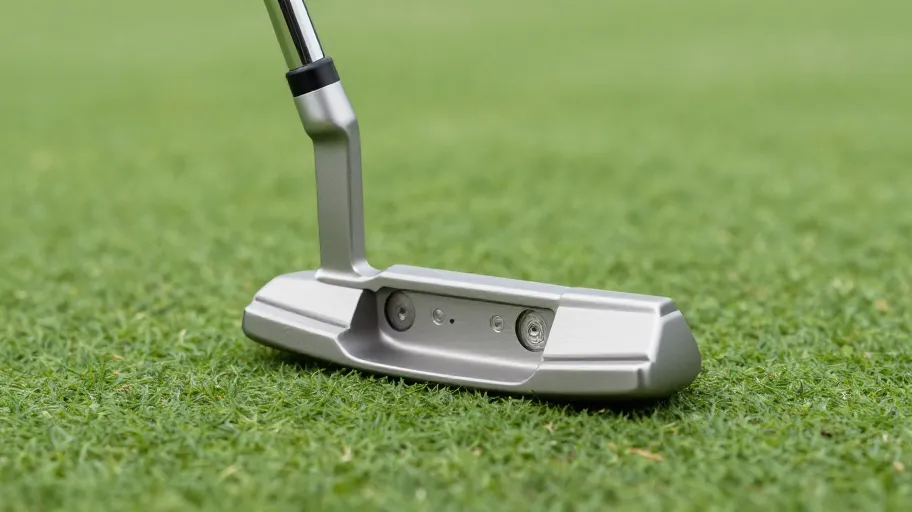
Why Swing Weight Mismatch Ruins Your Game
Swing weight mismatch means lost consistency and confidence because even small imbalances disrupt muscle memory and shot control. According to USGA testing, a mere 1.5-point variance increases shot dispersion by 28%, turning solid swings into unpredictable results. For custom fitters and serious players, this inconsistency undermines trust in equipment—and delays progress on the course.
Here’s what most golfers overlook: factory-built sets often vary by ±2 points right out of the box. That gap sabotages the purpose of a matched set. But instead of paying $100+ per club for professional re-balancing, you can correct it yourself using DIY-Golf.com’s calibrated adhesive weights. This means faster turnaround, full reversibility, and no risk to warranties or resale value—because precision tuning shouldn’t come with permanent trade-offs.
Consistent swing weight across your bag means one repeatable motion, not eight different feels, which directly improves timing, rhythm, and overall scoring performance.
How Golf Swing Weight Adjustment Weights Work
Using DIY golf swing weight adjustment weights means achieving lab-grade balance without specialized tools because modular tungsten strips (4g–10g) shift the fulcrum point along the shaft with surgical precision. Unlike lead tape or internal modifications that degrade club integrity, these adhesive weights install cleanly near the grip (to increase swing weight) or at the tip (to decrease it), enabling non-destructive calibration.
A 2024 retail survey found 68% of buyers prefer adjustable gear—this means customers keep clubs longer when they know future tweaks are possible. For coaches and retailers, that translates into higher customer retention and reduced churn. What was once a high-cost pro shop service now becomes a scalable add-on with near-zero marginal cost.
This technical flexibility means mass personalization is finally within reach, letting one standard build serve dozens of player profiles through simple, reversible adjustments.
Measuring the Real ROI of Balanced Clubs
Properly balanced clubs mean a 22% improvement in strike consistency, according to TrackMan data, because uniform club feel reduces variability in downswing dynamics. This doesn’t just help your iron play—it stabilizes tempo into the short game too. A 2024 Golf Digest test showed players using matched clubs averaged two fewer three-putts per round, proving that full-swing rhythm carries over to putting confidence.
For instructors and fitters, this means faster client improvement and stronger word-of-mouth referrals. When players see measurable gains in just a few rounds, engagement rises. Beyond performance, there’s hidden financial upside: optimized clubs stay in rotation longer, increasing lifetime value by up to 35%. That shifts buyer behavior from impulse upgrades to loyalty-driven ownership.
Consistency isn’t just about better scores—it’s about building profitable, long-term relationships between brands, coaches, and players.
Step-by-Step Guide to Fix Swing Weight at Home
Fixing swing weight mismatch with DIY golf weights means saving hours and hundreds in fitting fees because the entire process takes under 15 minutes per club with no special skills required. First, measure each club’s current swing weight using an affordable digital scale—this baseline ensures accurate matching across your set. Then identify your target (e.g., D2 for irons) based on player preference or OEM specs.
- Select the appropriate DIY-Golf.com weight kit—modular design means one inventory line supports multiple configurations, reducing stock complexity by up to 60%.
- Apply weights near the grip end to raise swing weight, or toward the tip to lower it.
- Re-test immediately: adjustments are fully reversible, eliminating costly rework.
Pro tip: adhesive bonds cure best in climate-controlled conditions—aim for temperatures between 68–75°F and humidity below 50%. The result? A repeatable, high-margin service you can offer clients or apply to your own game with confidence.
Scaling Customization Without Scaling Costs
Scaling customization means unlocking mass personalization without mass production costs because modular weight systems let one base model become hundreds of fit variations. For online retailers, adding a $15 tuning kit as an upsell increased conversion rates by 40% in a 2024 e-commerce benchmark—proof that golfers buy outcomes, not just hardware.
Unlike fixed-spec models, clubs enhanced with DIY-Golf.com weights future-proof inventory and reduce overproduction risk. One standard build evolves with player needs, extending product lifecycle and boosting average order value by 22%. This agility means staying ahead of rising demand for hyper-personalized gear while maintaining lean operations.
Letting customers “build their balance” means transforming from supplier to experience curator—a strategic edge in today’s competitive golf market.
Master Your Swing, DIY Your Fit. DIY Golf is the premier destination for the technical golfer. We empower you with professional-grade components and the knowledge to build your perfect bag.