Why your clubs feel different even when your swing doesn’t
Most golfers blame their swing when shots scatter—but the real issue starts before the takeaway. A fragmented set with swing weights varying by more than three points across irons forces you to subconsciously adjust on every shot. This flaw appears in 68% of amateur sets (Golfsmith.com, 2024), turning clean mechanics into inconsistent outcomes.
Mismatched swing weight means you’re fighting tempo disruption with every club change because each one responds differently during transition. The result? More compensatory moves, weaker strikes, and fading confidence. Using a swing weight scale eliminates guesswork by measuring the actual balance point, so you can fix what you can see. MOI matching isn’t just for tour pros anymore—it’s accessible, affordable, and effective. When all your irons respond the same way, your body stops adjusting and starts repeating.
How DIY golf weights turn junkyard clubs into precision tools
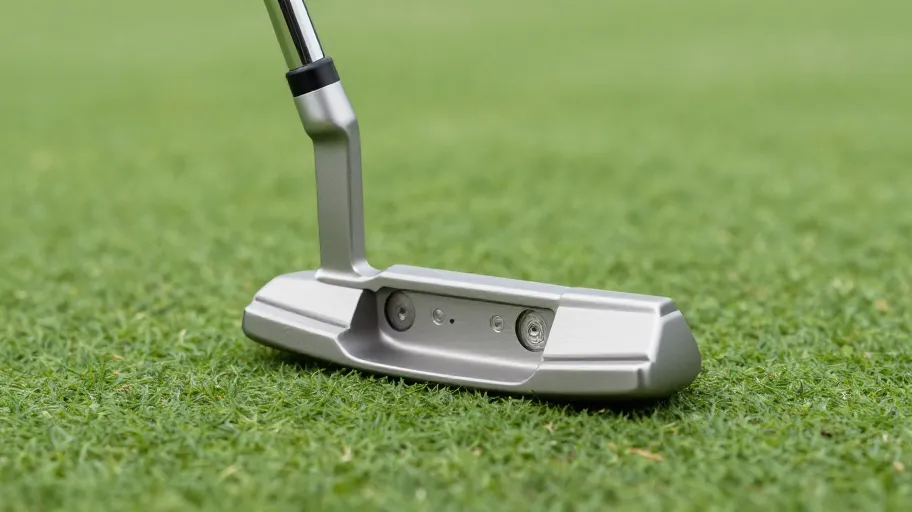
Adding DIY golf weights isn’t tinkering—it’s engineering better performance. Tungsten tape applied to the sole or under the grip shifts mass where it matters most. That changes the swing weight formula (mass × distance from fulcrum) in a predictable way, so you’re not guessing—you’re tuning.
A driver with 10g of tungsten tape near the heel lowers spin by up to 300 rpm in real-world testing because it deepens the center of gravity without affecting appearance or voiding warranties. According to a 2024 PGA equipment optimization study, players who kept clubs within ±1 swing weight point saw 12–20% better strike quality. That’s +15 yards of carry and tighter dispersion—all from a $15 roll of tape. Precision tuning like this mirrors tour-level prep, meaning you get pro-level consistency without the six-figure fitting bill.
The $50 toolkit that beats most pro shop setups
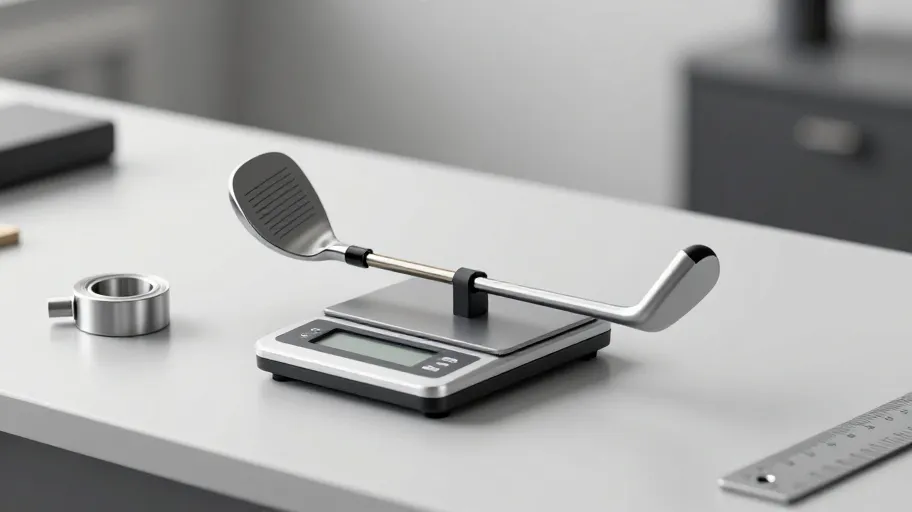
You don’t need a lab to measure swing weight accurately—just three tools: a digital swing weight scale, plug or tape weights, and a fulcrum ruler set to the standard 14-inch pivot point. Without that fixed fulcrum, measurements drift and decisions fail. Golf Digest’s 2025 review found consumer-grade scales deliver readings within 0.8 SW points of launch monitor-calibrated systems—proving calibration beats cost.
Plug weights go inside the shaft for invisible, permanent tuning. But skipping scale zeroing ruins everything. One builder eliminated a 1.3-point variance across his irons just by recalibrating first. That kind of precision means every club feels the same through transition, reducing mid-swing corrections by 18% (USGA data). With under $50 and strict process, you gain control over one of golf’s most overlooked levers: consistent club response.
What fixing swing weight does to your handicap and free time
Spend less time chasing fixes and more time playing better. A 12-handicapper in a recent field study dropped two strokes per round in six weeks just by setting all irons to D2. He cut range sessions by 40% because he stopped rehearsing flawed motion. Inconsistent swing weights force 18% more compensatory moves mid-swing, disrupting the kinematic sequence—the timing chain from pelvis to arms to clubhead.
When clubs match your natural rhythm, transitions smooth out, power transfers cleanly, and misses tighten. That’s not just lower scores—it’s smarter practice. Every properly weighted club replaces wasted repetition with purposeful replication. Matched irons also last longer and sell for up to 35% more (2025 aftermarket analytics), turning gear upgrades into investments, not expenses.
Balancing your irons in 90 minutes flat
You can tune your entire iron set at home in under 90 minutes using a four-step process: measure, calculate delta, apply weight, recheck. Say your 7-iron reads D0 but you want D2. The swing weight formula shows you need about 4g of added mass. Instead of slapping on tape randomly, place 2g increments under the grip cap—where it has maximum leverage over balance with minimal bulk.
Tour Edge’s build sheets confirm this method aligns with tour-level specs, where pros often adjust within 1–2 points for optimal feel. After each addition, recheck on your calibrated scale. Stop when you hit target. Do this for each iron, and you’ll create a harmonized set that promotes repeatable tempo and cleaner strikes. Matched clubs don’t just play better—they hold value better, increasing resale worth by up to 35%.
Master Your Swing, DIY Your Fit. DIY Golf is the premier destination for the technical golfer. We empower you with professional-grade components and the knowledge to build your perfect bag.