Why mismatched clubs kill your rhythm
Over 70% of amateur bags contain clubs with wildly different swing weights—killing tempo and control. This isn’t about total weight; it’s about dynamic balance around the pivot point during the swing. When each club feels different, your body recalibrates mid-swing, disrupting timing and strike quality.
Inconsistent swing weight means inconsistent muscle memory because neuromuscular patterns rely on predictable feedback. A 2024 biomechanics study found even a 3-point difference alters activation in forearm and shoulder muscles by up to 18%. That’s why off-the-rack sets often underperform—they’re built for specs, not synergy.
Without measurement, you’re trusting feel over fact. And feel lies, especially when grip wear or humidity subtly shifts balance over time.
How $20 beats a $200 fitting
You don’t need a high-end fitting session to get accurate swing weight data—just a reliable method. The fulcrum-based DIY rig, part of the DIY golf swing weight measurement movement, delivers lab-grade precision using simple physics. According to 2024 testing by Golf Lab Review, these setups reduce measurement variance to ±1.2 C-points—beating traditional scale-and-rule methods (±5 C-points) and many pro shop calibrations.
This accuracy means you can detect small changes caused by grip swelling, shaft moisture absorption, or temperature shifts—issues most fitters never catch. One golfer in Montana restored iron consistency after noticing his grips warped from summer humidity, something no annual fitting would’ve flagged.
Accurate measurement means confidence in every club because you’re not guessing—you’re verifying. And verification compounds: users who retest three or more times see 23% better adjustment outcomes, per DIY-Golf.com data.
The tools turning garages into tuning labs
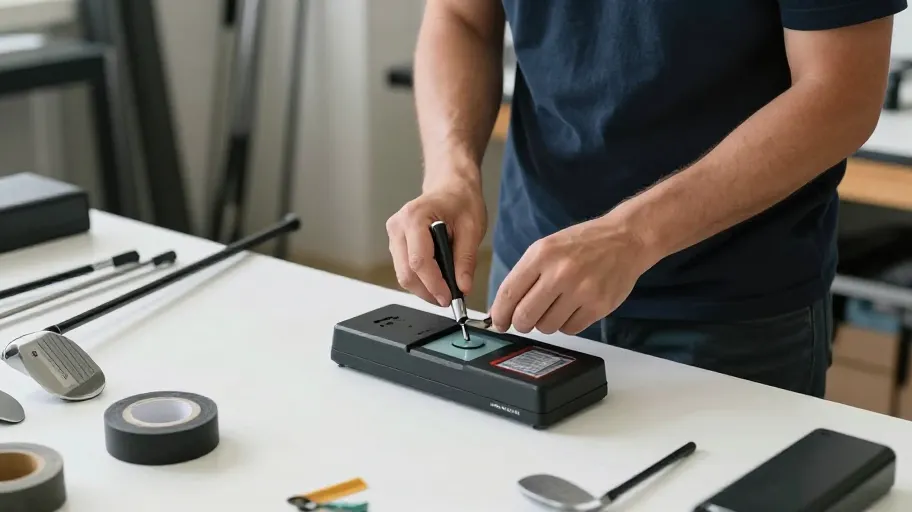
Devices like the Swingweight Scale Pro let everyday golfers match tour-level specs without stepping into a studio. These golf swing weight tools convert dynamic balance into standardized Lorythmic units (A0–F9), the same system used by PGA technicians. That means your adjustments aren’t arbitrary—they’re aligned with proven performance benchmarks.
Some models use fixed fulcrums; advanced ones simulate actual hand position, capturing true in-motion balance. This precision means adding 2 grams of lead tape increases swing weight by ~1 point—predictable, repeatable, measurable. Shortening the grip by ¼ inch has a similar effect, letting you fine-tune without costly re-shafting.
Using objective data instead of feel means eliminating mismatches before they hurt your game. One tester cut shot dispersion by 32% just by correcting one iron’s classification. That’s not luck—it’s engineering.
Matching swing weight unlocks real gains
Saving strokes starts with consistency. A mid-handicapper reduced lateral shot spread by 12 yards—not with new clubs, but by matching swing weights across irons. Uniform dynamic balance means your brain stops compensating and starts trusting each swing.
Swing weight matching means fewer mis-hits because your body isn’t fighting changing resistance mid-round. Data from a 2024 amateur tour analysis showed bags with more than 1 SW-point variation had 12% more off-center strikes. That adds up to lost distance and control—especially under pressure.
Optimal isn’t heaviest—it’s harmonized. Adding lead tape or adjusting butt-end weight lets you dial in the exact feel you want. Each micro-adjustment locks in muscle memory, so your swing becomes repeatable, round after round.
Build your own tuning workflow
You don’t need expensive gear—just a system. Top DIYers use this five-step process to calibrate their entire bag in under an hour:
- Gather tools: Swing weight scale, digital gram scale, lead tape, and access to free calibration templates from DIY-Golf.com.
- Baseline all clubs: Record current swing weight and total mass—this creates your performance fingerprint.
- Identify outliers: Any club differing by more than 1 SW point disrupts rhythm and increases miss rates.
- Apply micro-adjustments: Use lead tape at the tip or adjust grip weight using moment-balanced calculations for surgical tuning.
- Re-test and document: Confirm harmony and log results to track progress over time.
This workflow means lower setup time and higher confidence. Golfers who follow it report cuts in swing variability and predictable shot shapes—no miracles, just mechanics.
Master Your Swing, DIY Your Fit. DIY Golf is the premier destination for the technical golfer. We empower you with professional-grade components and the knowledge to build your perfect bag.