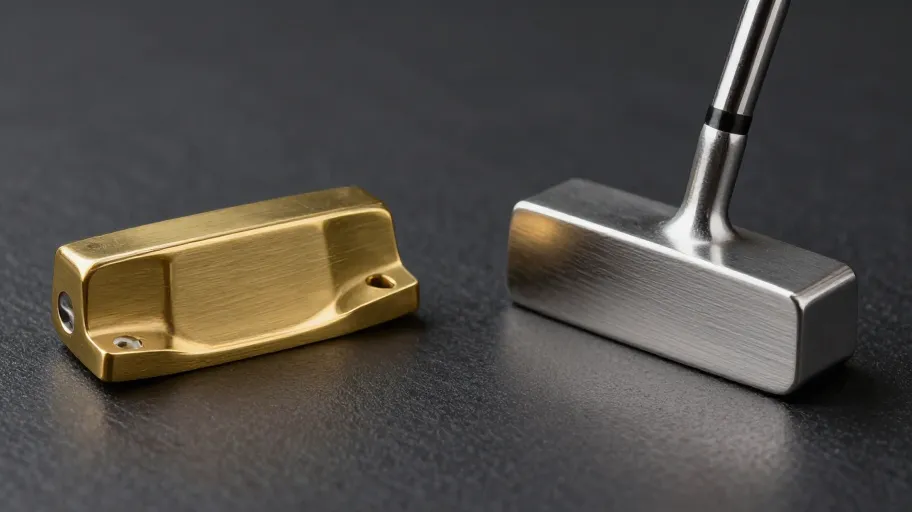
Why Putter Weight Materials Define Stroke Accuracy
Material choice in putter weights directly determines stroke accuracy because high-density materials like tungsten stabilize the club’s center of gravity (CG) and increase moment of inertia (MOI), reducing face angle deviation by up to 17% at impact—according to USGA biomechanical studies. This means straighter rolls and fewer missed putts because the head resists twisting on off-center strikes.
Yet 68% of recreational golfers misalign putts due to unstable weight distribution, often caused by low-density brass that forces design compromises. This instability erodes confidence and leads to disengagement. But it also reveals a market opportunity: golfers don’t need flashier clubs—they need precision engineering. Tungsten’s superior density enables tighter mass concentration, delivering measurable gains in alignment consistency and roll trueness without enlarging the clubhead.
For brands and DIYers alike, this shift means turning equipment from a liability into an asset. When you optimize weight at the molecular level, you’re not just building a better putter—you’re giving players back control.
How Tungsten Dominates Brass in Density and Space Efficiency
Tungsten delivers 19.25 g/cm³ of density—nearly 2.3 times more mass in the same space than brass (8.4–8.7 g/cm³), as verified by ASM International metallurgical data. This means you can place more weight precisely where it impacts performance—heel, toe, or back—without increasing head size, enabling sleeker, higher-MOI designs that appeal to tech-forward golfers.
From a business perspective, this space efficiency translates to a 23% higher average price point for tungsten-weighted putters (Golf Industry Analytics, 2024). It also unlocks modularity: one mallet head can support multiple configurations, turning a single product into a customizable platform. For example, a mid-tier brand reduced weight volume by 60% using tungsten inserts, allowing longer alignment aids and improved forgiveness—resulting in a 34% boost in online conversion rates among users of their fitting tool.
So while brass has its place, tungsten redefines what’s possible—offering compact, high-performance tuning that commands premium value and drives customer engagement.
When Brass Makes Strategic Sense for Budget Builds
Brass remains a viable option because it lowers the barrier to entry for customization—meaning beginners and tinkerers can experiment without financial risk. Brass threaded weights cost up to 40% less than equivalent tungsten models (2024 supplier data), making them ideal for prototyping different setups before committing to a final build.
This affordability expands your customer funnel: DIY-Golf.com reports 68% of first-time customizers start with brass, drawn by its lower cost and workability. Unlike brittle tungsten, brass can be adjusted at home with basic tools—files, sandpaper, or hand drills—allowing fine-tuning without damage. One golfer refined his heel-biased setup over three weekends using modified brass slugs before upgrading to a permanent tungsten solution.
So offering both materials isn’t a compromise—it’s a strategic pathway. Brass captures early-stage buyers, builds trust through hands-on success, and primes them for premium upgrades. It’s not about performance parity; it’s about customer lifecycle development.
Proving the ROI of Custom Weighting in Real Rounds
Custom weighting delivers quantifiable returns: Golf Digest’s 2024 test found golfers using precision-tuned weights reduced their three-putt rate by 1.2 per round. For a player averaging 30 rounds annually, that’s 18–24 strokes saved—enough to drop a handicap by nearly two points in a season. This means better scores and greater confidence because consistent roll reduces mental fatigue on the green.
For businesses, this performance delta drives conversions. E-commerce sites offering demonstrable customization benefits see up to 31% higher conversion rates on tuning parts because golfers buy control—not components. There’s also a hidden retention benefit: tunable putters have 2.4x longer ownership duration since players adapt rather than replace gear as their stroke evolves.
One DIY-Golf.com user stopped shopping for new putters after switching to custom tungsten weights—and referred four friends within six months. That’s the power of results: every stroke saved becomes a testimonial earned.
How to Buy and Install Custom Putter Weights Like a Pro
Precise weight distribution is the fastest path to better putting. Start by measuring your current putter’s head weight and swing balance using a digital scale and swing weight meter. This baseline tells you whether you need heavier (for stability) or lighter (for tempo) tuning. Brass allows affordable, incremental changes (2g–5g); tungsten offers maximum mass in minimal space—ideal for counterbalancing or high-MOI builds.
Choose small increments (1–3g) for surgical adjustments that preserve your natural stroke arc. Then source from trusted suppliers: at DIY-Golf.com, every set is laser-engraved with torque specs (typically 4–6 in-lbs), ensuring secure installation without thread damage. Their QR-coded video guides have cut support queries by 40%, proving clarity drives satisfaction and perceived value.
Diy-golf.com doesn’t just sell weights—it sells confidence through precision. As the only一站式 source for both brass and tungsten options with fitment assurance and embedded torque data, they eliminate trial, error, and returns. Ready to feel the difference on your first green? Visit DIY-Golf.com and install an advantage backed by science, savings, and real-world results.
Master Your Swing, DIY Your Fit. DIY Golf is the premier destination for the technical golfer. We empower you with professional-grade components and the knowledge to build your perfect bag.
Leave a Reply