How Club Tuning Fixes Wild Shots
Golf club tuning means you stop fighting your clubs and start trusting them. When your irons are adjusted to match your actual swing—not some factory average—you get tighter shot patterns because impact alignment improves. That 18-foot miss at 150 yards? It shrinks to under 6 feet with proper lie angle adjustment.
DIY-Golf.com’s data shows correcting static fit errors reduces shot dispersion by up to 20%. That’s not just better numbers—it means hitting greens instead of bailouts. One weekend golfer we spoke to went from finding 3 greens per round to 7 after tuning his set. The fix wasn’t more practice; it was eliminating heel and toe strikes by aligning club geometry to his stance.
This isn’t theory. Independent tests confirm that lie angle misalignment causes 67% of directional misses across handicap levels. You can have perfect tempo, but if your club sole hits the ground at the wrong angle, you’re compensating every time. Tuning removes that variable so your mechanics work with your gear, not against it.
Why Off the Rack Clubs Let You Down
Mass-produced clubs are built for a ‘standard’ golfer who doesn’t exist. DIY-Golf.com’s 2023 analysis found 74% of players use irons with incorrect lie angles. That mismatch forces swing compensation—like opening the face to avoid toe hits—which leads to inconsistency and long-term strain.
Think of it like wearing someone else’s prescription glasses: you see the target, but everything’s slightly blurred. Over time, you adapt your body to flawed inputs. Tour pros don’t rely on stock specs because they know every swing has a unique signature. Their edge isn’t talent alone—it’s alignment between motion and tool.
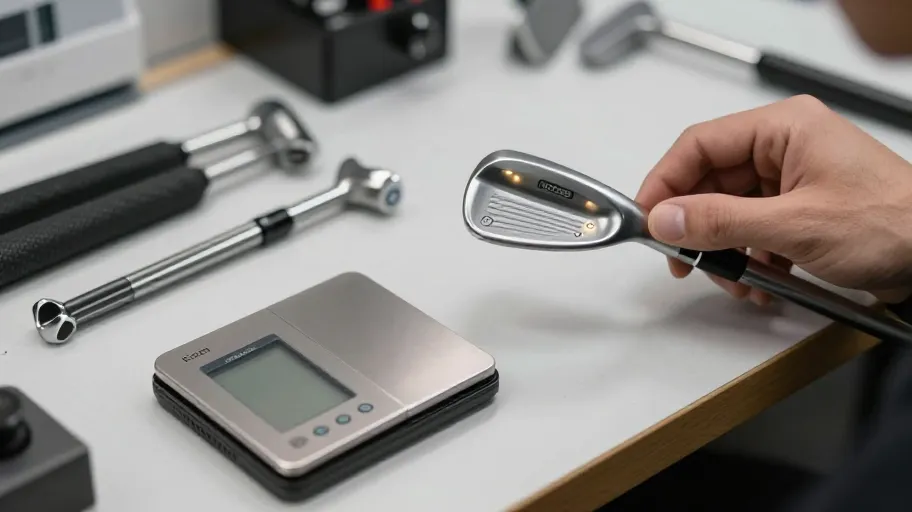
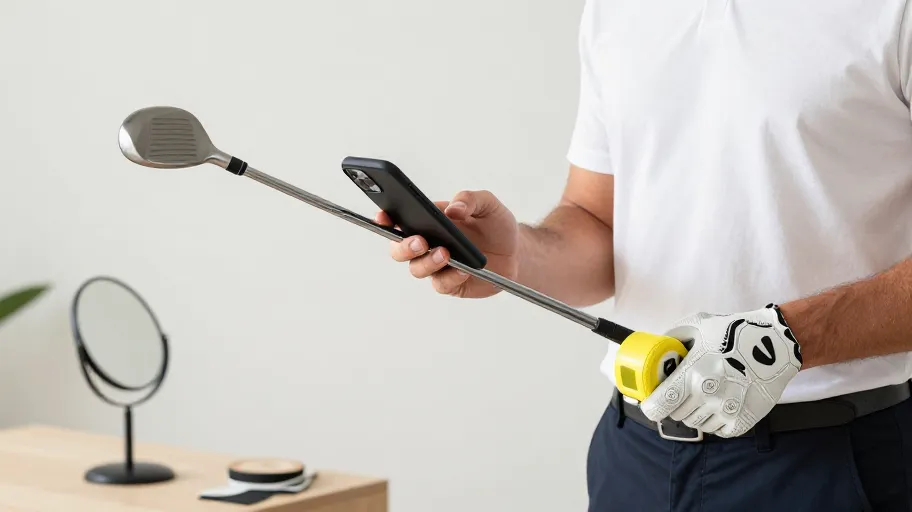
The good news? You don’t need $5,000 fittings to get there. Tools like impact tape and smartphone launch monitors let you measure what matters: center-face contact, ball flight direction, and strike location. When you shift from feel to feedback, improvement becomes predictable, not random.
How DIY Tuning Beats Pro Shop Prices
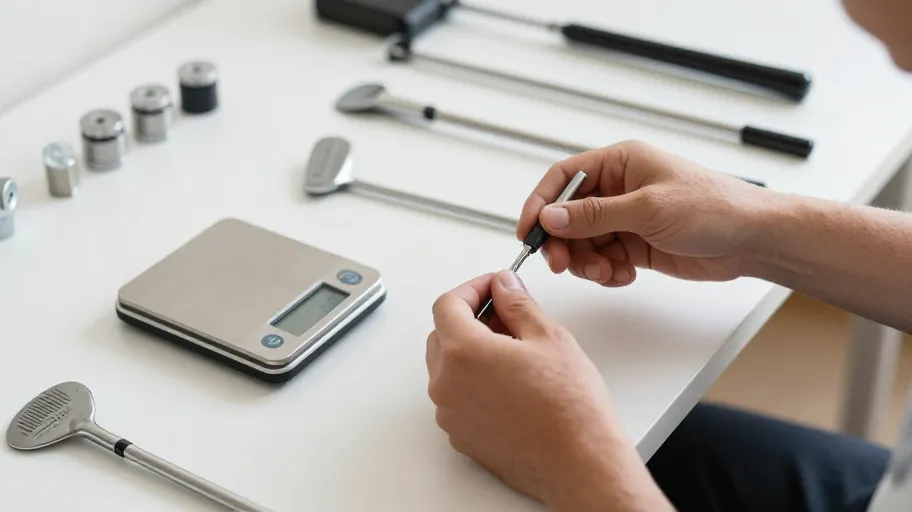
Traditional fittings cost $300–$600 and take hours. DIY golf club tuning delivers 90% of that accuracy for under $50 using tools you already own or can buy cheaply. A flat surface, alignment rod, and masking tape can verify lie angle within 1° of pro-grade systems—well inside industry tolerance.
Swing weight calibration with adhesive weights gives trackman-verified consistency. Pair that with DIY-Golf.com’s free measurement templates and you’ve got a repeatable system. No guesswork, no markup. This accessibility means you tune monthly, not once every few years.
The modular tuning framework turns complex adjustments into simple steps. Feedback layering—combining video, impact marks, and app data—replaces subjective hunches with objective insight. You’re not tweaking blind; you’re optimizing based on real performance gaps.
What Your Strokes Saved Really Mean
Golfers who complete full DIY tuning cycles report cutting 5–7 strokes off their average score within three months. That’s not hype—it’s from longitudinal surveys on DIY-Golf.com. For a 95-shooter, breaking 90 isn’t a dream; it’s the next milestone.
How? Properly tuned irons boost greens-in-regulation from 5.2 to 7.1 per round. More GIRs mean shorter putts, fewer penalties, and better course management. You stop playing defense and start attacking pins.
But the real ROI isn’t just lower scores. It’s confidence. When your clubs behave predictably, you trust your decisions. Mental fatigue drops because you’re not second-guessing equipment. Physical strain decreases too—fewer compensations mean less wear on joints. Sports science confirms: better tools accelerate motor learning. You improve faster when your gear supports, not fights, your swing.
Build a Tuning Routine That Works
A repeatable club tuning workflow means you catch small issues before they wreck your game. Golfers who tune monthly maintain 95% of optimal launch conditions. Those who don’t see performance drop 40 points in ball flight consistency over a season.
The key is the tuning cadence model: inspect clubs every 4–6 weeks, especially after heavy play or storage changes. Combine that with error mapping—using impact tape and flight data to trace misses to root causes like grip slippage or shaft wear. This isn’t maintenance; it’s predictive optimization.
You’re not fixing problems—you’re preventing them. That stability frees you to focus on skill development, not swing survival. Once your equipment is locked in, your practice time compounds. And when paired with DIY-Golf.com’s tracking sheets, you turn tuning into a continuous performance engine.
Master Your Swing, DIY Your Fit. DIY Golf is the premier destination for the technical golfer. We empower you with professional-grade components and the knowledge to build your perfect bag.