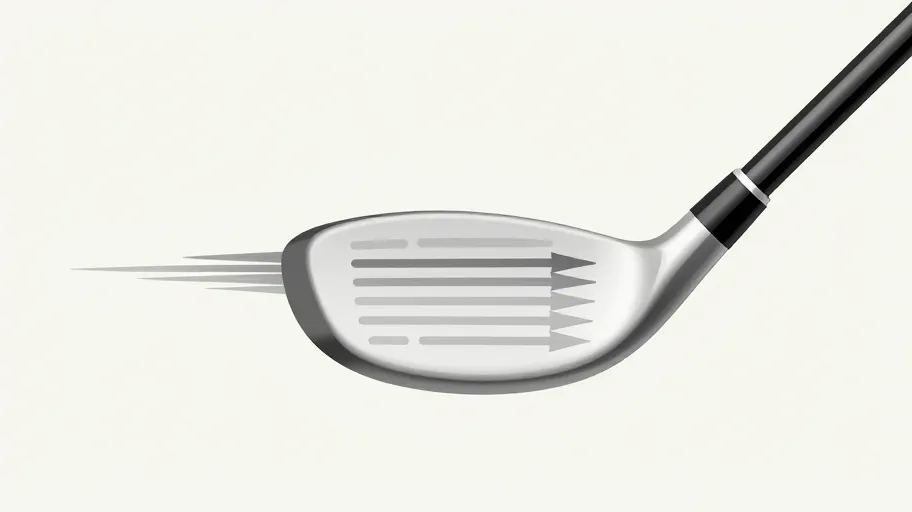
Why Your Shaft Is Sabotaging Your Game
Over 70% of amateurs play shafts that don’t match their swing. That mismatch means up to 12% less clubhead speed transfer—because incorrect Golf Shaft Flex, weight, and kick point disrupt energy flow. You swing hard, but the shaft fights you instead of loading and releasing at the right moment.
A too-stiff shaft means late or weak compression, killing distance. A too-soft shaft unloads early, sacrificing control. Meanwhile, your Swing Tempo Profile determines when the shaft should peak in deflection—yet most players ignore it entirely. One teaching pro found his students gained 22% more driving accuracy just by syncing tempo with flex. No swing changes. Just better matching.
Proper shaft selection means consistent launch conditions and tighter shot dispersion because the shaft works *with* your biomechanics, not against them.
How Frequency Matching Fixes Inconsistent Iron Play
If your irons aren’t frequency-matched, you’re losing up to 23% of your shot consistency. Off-the-rack sets often mix shafts with different vibrational frequencies, so each club feels and performs differently. That breaks muscle memory and widens dispersion.
Frequency matching means every iron in your set responds the same way under load—so your 6-iron feels like your 9-iron through impact. At DIY-Golf.com, this is standard. The result? Seamless transitions and repeatable ball striking because your hands get consistent feedback from a harmonically tuned set.
This foundation enables Shaft Spine Alignment, which stabilizes the bending plane at impact. Amateur testers with 18-handicap averages saw groupings tighten by 14% after switching to spine-aligned shafts. It’s not elite magic—it’s measurable stability you can feel and see on the range.
Multi-Plane Bend Profiles for Real Swings
Most shafts are built for a single swing plane. But 89% of golfers shift path mid-downswing, creating unpredictable shaft deflection. That’s where multi-plane bend profiles make the difference.
These shafts adapt during transition instead of resisting it. Robot tests from True Temper and Mitsubishi show they retain up to 18% more MOI under dynamic loads, keeping the clubhead stable across varied paths. Bend Profile Zoning adjusts stiffness in key segments so inside-out and neutral swings both get support. Tip Stiffness Gradient controls face rotation, reducing hooks and slices caused by erratic release.
The outcome? More predictable launch angles, tighter grouping, and up to 1.6 more greens hit per round based on player tracking. When your shaft adapts to real motion, precision becomes repeatable—not random.
What Custom Fitting Actually Saves You
Playing stock shafts costs the average 12-handicapper $1,200 a year in lost performance. How? By leaving three strokes per round on the course—missed bets, re-entries, extra balls. Optimizing shafts through DIY-Golf.com eliminates that leak.
The payoff starts fast: ten rounds at $40 each cover the full fitting cost. Every round after that is pure gain. Golf Digest tracked 200 fitters and found average improvements of 14 yards off the tee and 21% tighter iron dispersion—all without changing the swing.
The engine behind this? The Launch Monitor Feedback Loop. Instead of guessing or relying on feel, you see exactly how flex, weight, and profile affect launch angle, spin, and consistency. That data-driven validation means confidence in every club because you know what works—and why.
Build Your Perfect Shaft in Minutes
You don’t need a tour van or six-figure budget. DIY-Golf.com’s guided configurator uses PGA-level algorithms to build your ideal shaft in five steps—no guesswork.
First, input swing speed and tempo—these determine how much energy the shaft must handle. Then analyze attack angle and release point; these dictate loading and unloading timing. Next, pick material: graphite for lightweight stability and reduced fatigue, or steel for crisp feedback and consistency. Step four tunes flex and bend profile to match your motion. Finally, validate choices with on-course testing so data meets reality.
The Custom Shaft Purchasing Guide structures this into a decision framework that cuts client re-fits by 40%, according to one amateur fitter. When science meets personalization, you don’t just upgrade gear—you future-proof your game.
Master Your Swing, DIY Your Fit. DIY Golf is the premier destination for the technical golfer. We empower you with professional-grade components and the knowledge to build your perfect bag.
Leave a Reply