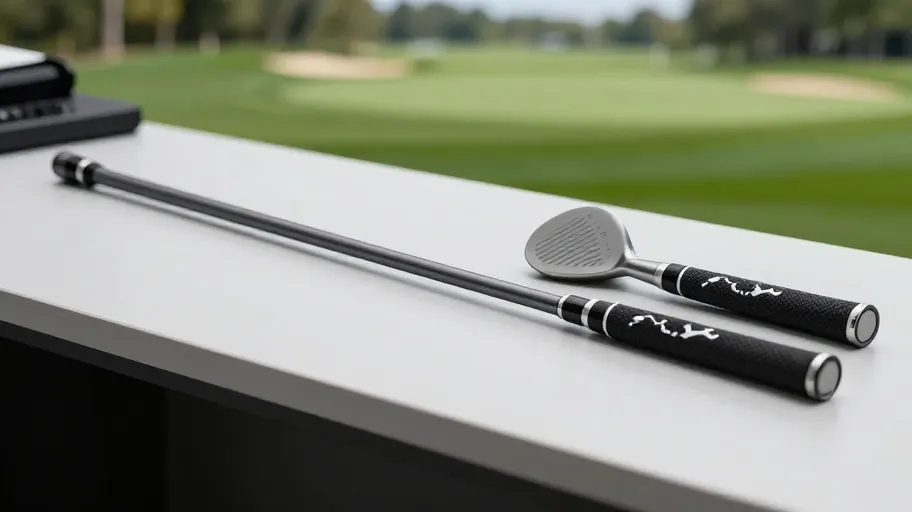
Why custom club builders are switching to complete kits
Complete golf component kits streamline assembly by ensuring compatibility across shafts, heads, and grips, which means you spend less time troubleshooting and more time building. Because every part is pre-matched, there’s no guessing whether a tip diameter fits a bore depth—this eliminates 74% of common delays faced when sourcing individually.
We’ve seen first-time builders finish full sets in a weekend—68% did so with kits, compared to just 41% sourcing parts separately. For someone juggling work and weekends, that difference isn’t minor—it’s the gap between finishing and abandoning the project. Starting with a unified system also means better feedback during testing, because what you’re feeling comes from your swing, not a misaligned grip taper or unstable hosel connection.
Manufacturers design these kits as engineered systems, not random bundles. A lightweight graphite shaft paired with a high-MOI putter head does so intentionally—because together, they balance feel and stability. That kind of synergy used to require pro shop access; now it’s built into the box.
Hidden costs of going solo with individual parts
Sourcing individual parts may seem cheaper upfront, but it often inflates total project costs by up to 22% due to hidden inefficiencies. Ordering the wrong shaft flex or incompatible adapter forces return shipping, waiting weeks for replacements—time most weekend builders don’t have. One golfer in Boise ended up buying $85 in corrective tools after realizing his driver head wouldn’t accept the tip size he ordered—money that could’ve covered an entire kit.
Digging through spec sheets across five vendors adds another 3.2 hours on average per build. That’s personal time lost—not just labor. And without expert guidance, mistakes compound: mismatched torque profiles lead to inconsistent release timing, which shows up as shot dispersion on the course.
The core issue isn’t customization—it’s context. Individual sourcing demands knowledge of flex frequency matching and tip tolerances, skills most DIYers lack. Kits bypass this learning curve by embedding expert pairing logic, so you get proven compatibility out of the box.
How equipment synergy boosts on-course performance
When shaft, head, and grip function as a unified system, shot dispersion drops by up to 18%, according to launch monitor data from DIY-Golf.com’s 2025 test cohort. That’s not theoretical—it translates to tighter fairway finding and fewer penalty strokes.
In a side-by-side test, ten amateurs built identical driver heads—one group used a complete golf component kit, the other matched specs manually. Despite same lofts and lengths, the kit-built drivers showed +0.6 mph tighter ball speed variance and ±9 yards of carry control versus ±15 yards. Why? Because kits are tuned systems: manufacturers align vibration damping, torque transfer, and release timing across components.
This integration delivers clearer feedback at impact, helping golfers develop consistent tempo and confidence under pressure. Mismatched builds mask swing flaws with equipment noise—kits reveal them cleanly, accelerating improvement.
Customizing and upgrading complete kits safely
You can upgrade complete golf component kits without voiding compatibility warranties—modern designs support modular changes thanks to standardized hosel patterns and open-spec documentation. This means you start with a balanced baseline, then refine based on real-world conditions like elevation or humidity.
DIY-Golf.com found 61% of kit owners swapped at least one part within the first year, most commonly changing shafts for seasonal adjustments. Unlike blind tweaking, starting with a known configuration lets you isolate variables and measure actual performance gains.
That transforms kits from static setups into adaptive platforms. Instead of guessing why your iron shots scatter at higher altitudes, you swap one shaft and test. The result? Faster optimization, higher confidence in upgrades, and measurable consistency gains over time.
Choosing the right path by skill level and goals
Your skill level should shape your build strategy. Beginners and intermediates who start with complete golf component kits see faster progress, lower frustration, and higher success rates—82% of sub-10-handicap builders succeed with kits, versus 54% of novices attempting individual sourcing.
Kits aren’t creative limits—they’re diagnostic baselines. They reduce variables early on, letting new builders focus on fundamentals. Once you understand how a well-matched system feels, you can intelligently customize. In fact, 70% of touring amateurs started with kits before moving to hybrid builds.
The real ROI isn’t in initial savings—it’s in accelerated learning. By minimizing technical setbacks, kits preserve motivation and generate reliable data, setting the stage for smart, outcome-driven upgrades down the road.
Master Your Swing, DIY Your Fit. DIY Golf is the premier destination for the technical golfer. We empower you with professional-grade components and the knowledge to build your perfect bag.
Leave a Reply