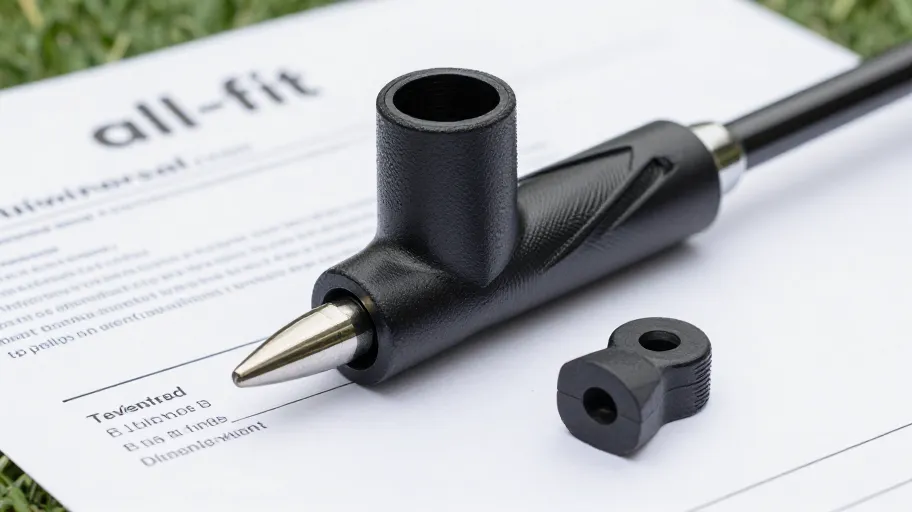
An all-fit universal golf shaft adapter sleeve is only worth sourcing after you confirm — in writing — that its hosel interface, tip geometry, screw pattern and collar height match your exact club brand, family and model. "Universal" is a claim, not a specification. Verify, document, then approve.
This guide gives club builders and component buyers a structured way to evaluate a universal sleeve claim before committing. It does not assert compatibility for any specific product; it defines what evidence you should demand.
What an adapter sleeve does — and why "universal" needs verification
An adapter sleeve is the component that couples a shaft to a driver or fairway head. It sets the shaft's orientation in the head, influences the effective loft and lie adjustment range, and transmits torque from the head to the shaft. Because major manufacturers use different hosel bore geometries, collar heights, screw threads and adjustment indexing, a sleeve that fits one family will not fit another.
When a supplier labels a sleeve "all-fit" or "universal", that label has three possible meanings, and you must find out which applies:
- Multi-model within one brand family — designed around one manufacturer's hosel interface across several model generations.
- Cross-brand with interchangeable collars — one core sleeve with swappable collars or screws per brand.
- Loosely marketed — a compatibility claim without an interface specification behind it.
Only the supplier's current, written specification for your exact head model can tell you which of the three you are dealing with. Nothing on this page confirms fitment for any specific product; treat every compatibility statement you find — here or elsewhere — as a claim to verify against the seller's current documentation.
The FIT-VERIFY framework
Use this seven-step framework to convert a fitment question into a documented approval decision:
- F — Fixture check. Identify the exact club brand, family, model year and hosel type of the head you are building for. Write it down before shopping.
- I — Interface match. Ask the supplier to confirm the sleeve's mating interface against that exact model, with the reference model name in their reply.
- T — Tip geometry. Confirm shaft tip diameter and insertion depth compatibility with the shafts you build with.
- V — Verify evidence. Request first-party fitment evidence: specification sheet, technical drawing without sensitive detail, or a fitment confirmation for the exact model.
- E — Evidence review. Compare the supplier's stated specs against the head's interface requirements. Do not infer compatibility from photos.
- R — Risk of mismatch. Document what happens if the sleeve does not fit — return terms, replacement terms — and confirm the current policy directly.
- Y — Yield approval. Approve the purchase only when the written answers match your documented requirements.
Spec and approval decision table
| Evaluation item | What to demand in writing | Approve when | Reject or escalate when |
|---|---|---|---|
| Hosel interface match | Supplier names the compatible brand, family and model generation | Your exact model is explicitly listed | Your model is not named, or "fits most" appears |
| Tip diameter and depth | Numeric spec from the supplier's current sheet | Matches your shaft spec | Specs are absent or described as approximate |
| Screw / collar system | Thread and collar reference for your head family | Confirmed with a named part reference | "Same as OEM" with no part reference |
| Adjustment indexing | Orientation positions and marking system | Documented and consistent with the head's mechanism | No documentation exists |
| Material and finish | Supplier's stated material specification | Stated and consistent with your build plan | Unstated or contradicted across pages |
| Sample availability | Current sample policy, stated by the supplier | Policy confirmed directly before ordering | Policy must be inferred from old listings |
| Batch consistency | Supplier's stated consistency control approach | Written commitment to hold approved sample spec | No batch reference to the approved sample |
| Post-fitment terms | Current return / replacement policy | Confirmed in writing before purchase | Policy unstated or verbal only |
Note: no price, quantity, lead time or tolerance figures are given here, because none were supplied. Each of these is a project-specific question for DIY-Golf to answer for the exact product and order.
Sample and approval protocol: questions to put in writing
Before you approve a sample or a batch, send these questions to the supplier and keep the answers on file:
- Which exact head models does this sleeve fit? Please list brand, family, model and generation.
- What is the tip diameter and usable insertion depth?
- What screw thread and collar system does it use, and are collars included or ordered separately?
- Can you supply a current specification sheet or fitment confirmation for my specific model?
- What is your current sample policy — availability, cost treatment and shipping responsibility? (Confirm directly; do not rely on cached listings.)
- If a batch differs from the approved sample, what is the resolution process?
- What is your current return or replacement policy for fitment mismatches?
These questions are deliberately answerable. A supplier who cannot answer item 1 with a named model list has told you something important about the "universal" claim.
Approval gate checklist
Complete every line before approving purchase:
- Exact head model documented (brand, family, model, generation)
- Supplier's written interface confirmation names that model
- Tip diameter and depth confirmed against shaft spec
- Screw/collar system identified with part reference
- Adjustment indexing documented
- Sample policy confirmed directly with the supplier, in writing
- Batch consistency commitment recorded
- Return/replacement policy confirmed in writing
- All answers filed with the build record for this project
If any line remains unchecked, the purchase is not ready for approval — regardless of how the product is marketed.
Frequently asked questions
Is an all-fit universal golf shaft adapter sleeve compatible with every driver? No compatibility can be asserted here. "Universal" sleeves vary in what they cover — one brand family, multiple families via interchangeable collars, or a loose marketing claim. Ask the supplier for a written model list and verify your exact head is on it.
How do I confirm fitment for my specific club model? Document the brand, family, model and generation of your head, then ask the supplier to confirm the interface match in writing against that exact model. Compare their specification sheet to your head's interface requirements before approving.
What specs matter most when comparing adapter sleeves? Hosel interface match, tip diameter, insertion depth, collar height, screw thread, and adjustment indexing. Without numeric specs from the supplier's current documentation, a comparison cannot be completed responsibly.
Can I get a sample before committing to a batch?
What should I do if a delivered sleeve does not fit? Resolution depends on the supplier's current return and replacement policy, which you should confirm in writing before purchase and file with your build record. Pre-purchase documentation is what makes a mismatch resolvable rather than disputed.
Next steps
If you are evaluating adapter sleeves for a defined club family and want the full set of verification questions, spec fields and approval gates in one document — 获取采购 Brief to receive the procurement brief for this component category.
If you are not ready to enquire yet, start with the approval gate checklist above: complete the nine lines for your current project and you will know precisely which answers are missing before any purchase decision.
Master Your Swing, DIY Your Fit. DIY Golf is the premier destination for the technical golfer. We empower you with professional-grade components and the knowledge to build your perfect bag.


