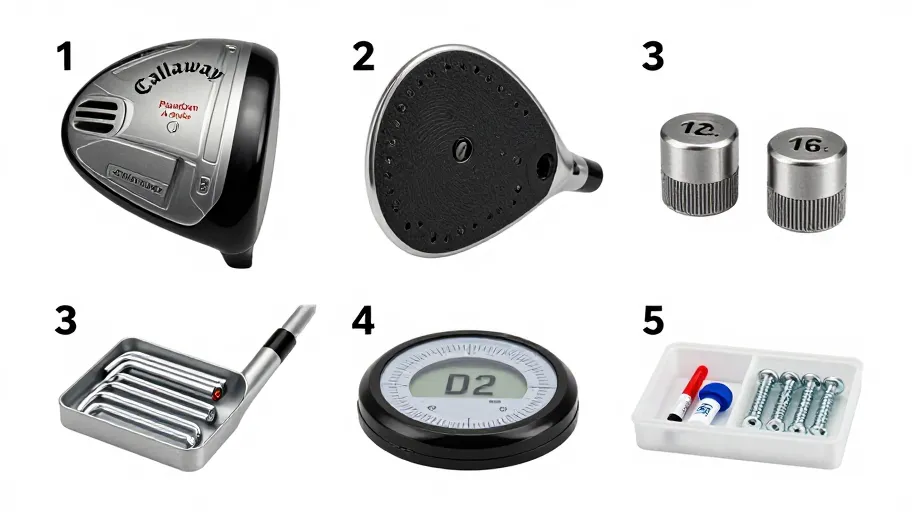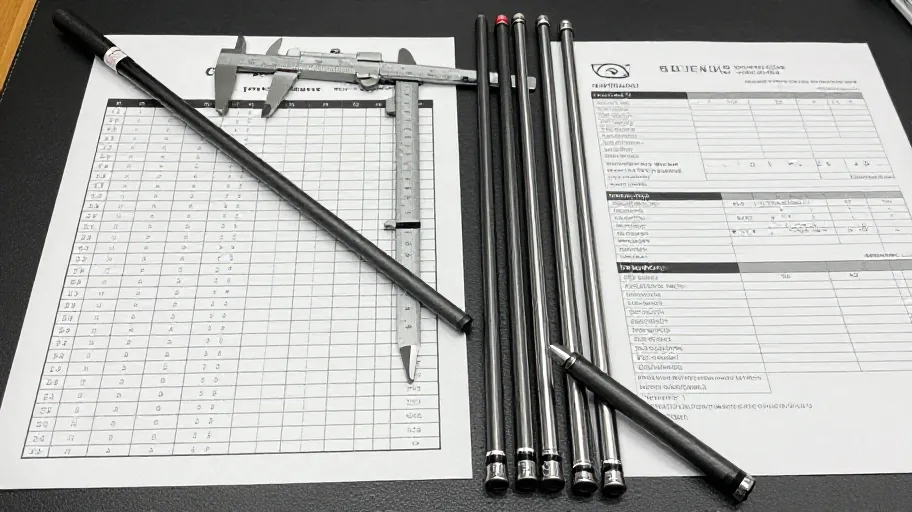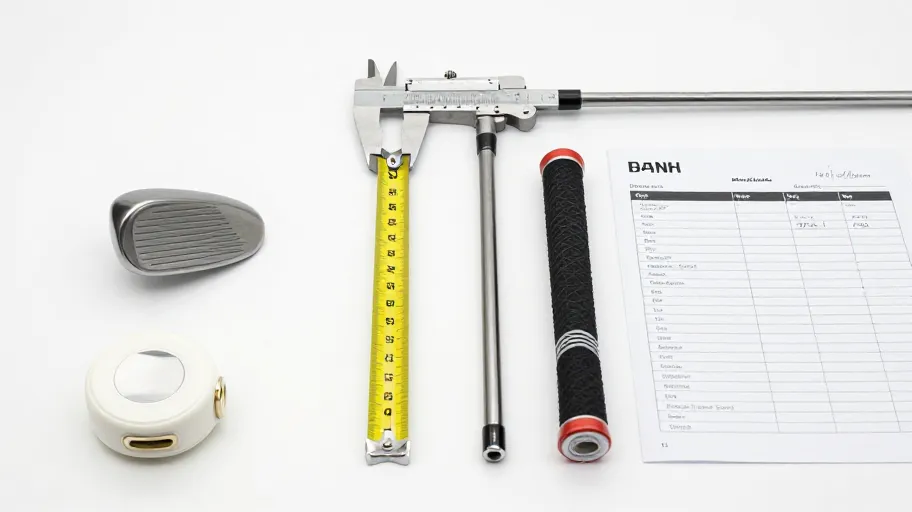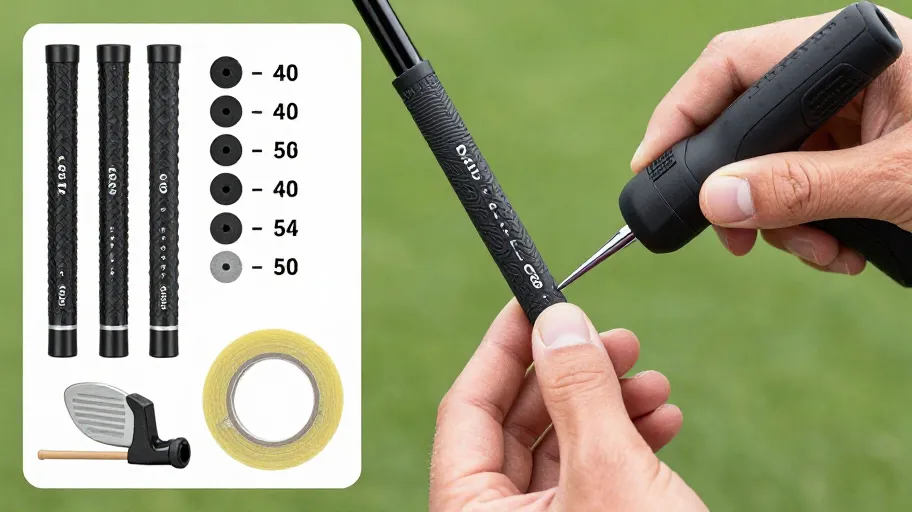
The best way to regrip golf clubs at home is to treat it as a component-sourcing project, not a chore: verify the grip specification against your exact shaft butt diameter and core size, confirm the model's texture and size profile against your hand and swing, obtain samples where the supplier's current policy allows, and approve the build only after a documented test. A structured approach protects both your clubs and your budget.
The Grip-Spec-Fit-Approve framework
Home regripping fails when selection is skipped and installation is rushed. The GSFA framework separates the job into four gates:
Grip. Define what you need before browsing: grip size relative to your hand, texture relative to your glove-free or gloved play, and material relative to how much maintenance you will actually do. Write these down as requirements, not preferences, so listings can be scored against them.
Spec. Confirm the numbers. Grip core size, wall thickness behaviour, and the shaft's butt diameter must agree. If they do not, the fix is build-up tape — but the number of layers is a fitment decision you should document, not guess. Do not assume a grip "should fit" a shaft; check the published dimensions for your exact club model and the grip model in question, and ask the supplier to confirm anything the listing omits.
Fit. Assemble the working setup: a secure vise with shaft protection, double-sided grip tape, a compatible solvent or activation method, and a clean bench. Fit one club first. Evaluate the result against your requirements before touching the rest of the set.
Approve. Approval is a defined event, not a feeling. The grip sits straight, the size feels right across several sessions, and nothing moved or failed. Only after that do you commit to the full set or a bulk order.
Decision table: choosing your grip profile
| Your situation | What to prioritise | What to verify with the supplier | What to document |
|---|---|---|---|
| Large hands or a tendency to grip tightly | Undersized-to-standard ratio; consider build-up layers | Recommended build-up approach for your shaft model | Layer count and resulting feel per club |
| Humid climates or glove-free play | Textured, moisture-shedding surface | Material and texture details for the exact model | Performance across weather conditions you actually play in |
| Low maintenance appetite | Material that stays serviceable with your actual cleaning routine | Care instructions for the exact compound | Your cleaning schedule and observed condition |
| Full-set rebuild for a specific club family | Consistent core spec across all clubs in the family | Whether every grip in the batch shares the same spec | Spec sheet per order |
| Trial or first-time builder | One-club test before any multi-pack | Current sample or small-quantity policy | Approval outcome before scaling up |
The spec exchange: what to document before ordering
Before you commit, build a one-page spec sheet covering:
- Grip model, size designation and core size as listed.
- Your shaft model and butt diameter as measured or confirmed from the clubmaker's data.
- Planned build-up tape layers, if any, and why.
- Solvent or activation method you intend to use, and whether it suits the grip's material — confirm compatibility with the supplier rather than assuming it.
- Quantity plan: test quantity first, then set quantity.
Send this sheet to the supplier and ask them to confirm fitment in writing. If they cannot, that is useful information in itself.
The sample and approval gate
Where a supplier offers samples, a sample is not a freebie — it is evidence. Use it to answer concrete approval questions:
- Does the grip install cleanly on your shaft with your tape and solvent, without slippage during drying?
- Does the resulting size match your intended profile, measured the same way each time?
- Does the texture hold up under the conditions you play in — sweat, rain, glove wear?
- Does the grip sit straight and stay put after repeated play and cleaning?
- Does the supplier's spec sheet match the physical sample you received?
If any answer is no or unverifiable, resolve it before ordering a full set. Also confirm the current sample policy, cost, shipping arrangement and any fee treatment directly with the supplier — do not rely on forum claims or past experience elsewhere. Policies change and are set per supplier.
Home workbench checklist
- Grip model, core size and quantity confirmed against your spec sheet
- Shaft butt diameter confirmed for every club in the set
- Build-up plan documented per club, if sizes vary
- Double-sided tape on hand, correct width for your shafts
- Solvent or activation method confirmed compatible with the grip material
- Vise with shaft protection ready
- Hook blade or safety cutter ready
- One-club test scheduled before full-set work
- Approval questions answered and recorded
- Supplier's current sample, return and shipping terms confirmed in writing
Commercial unknowns: the confirm-directly boundary
No claim in this article extends to stock, price, shipping, returns or warranty for any specific product. Treat every commercial term as an open question for the supplier: current availability for the exact model, applicable pricing at your quantity, shipping options to your location, and the returns process if a grip arrives off-spec. Document the answers alongside your spec sheet so the approval file is complete.
Frequently asked questions
Can I regrip golf clubs at home without special equipment? You need a few dedicated items — grip tape, a solvent or activation method, a secure clamp and a hook blade — but none of it requires a workshop. The bigger requirement is discipline: correct specs, one test club, and a written approval before the full set.
How do I know which grip size fits my clubs? Match the grip's core size to your shaft's butt diameter, then adjust the effective size with build-up tape to suit your hand. Confirm both dimensions for your exact club model and grip model before ordering rather than relying on category labels.
How many grips should I order for a trial? Start with enough for one club plus a spare. Confirm the supplier's current minimum order or sample terms directly, then scale up only after your approval questions are answered.
Does regripping at home affect the club's playability? A correctly specified and installed grip restores secure, consistent hold; a mismatched or poorly installed one can undermine it. That is why the approval gate — not the installation itself — is the decisive step.
What should I do if the sample doesn't match the listing? Stop, document the discrepancy, and raise it with the supplier before ordering more. Your spec sheet and approval record are the reference points for that conversation.
Take the next step
If you are comparing grip components for a specific club family and want a structured spec, sample and approval process, 获取采购 Brief — a working document you can send straight to suppliers.
Prefer to start smaller? Download the home regripping checklist above and complete the spec sheet for one club first.
Master Your Swing, DIY Your Fit. DIY Golf is the premier destination for the technical golfer. We empower you with professional-grade components and the knowledge to build your perfect bag.