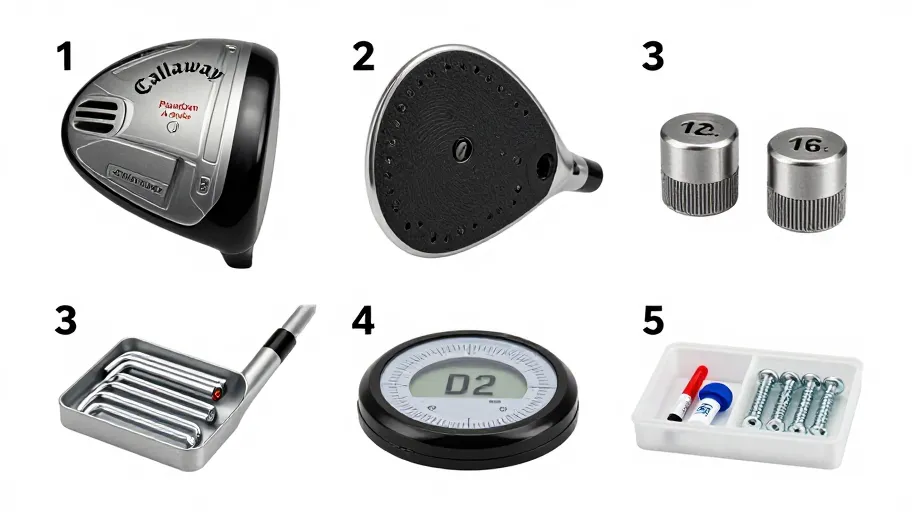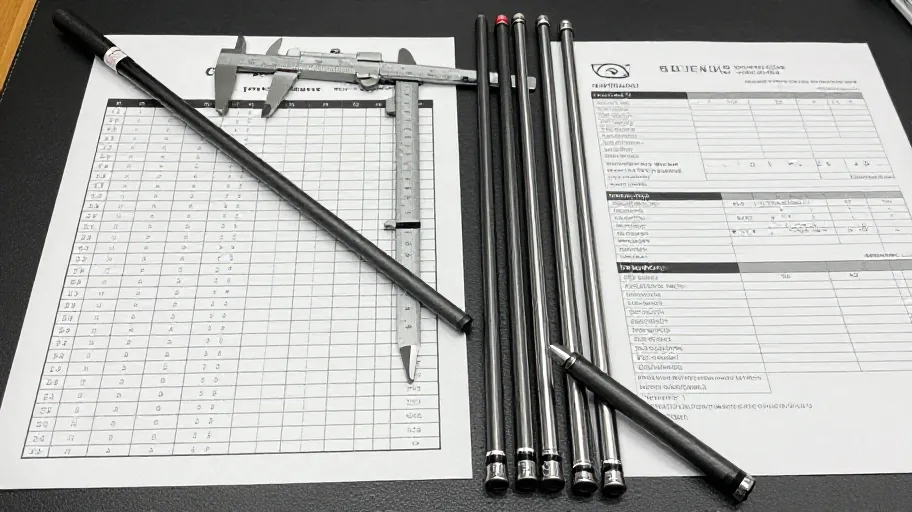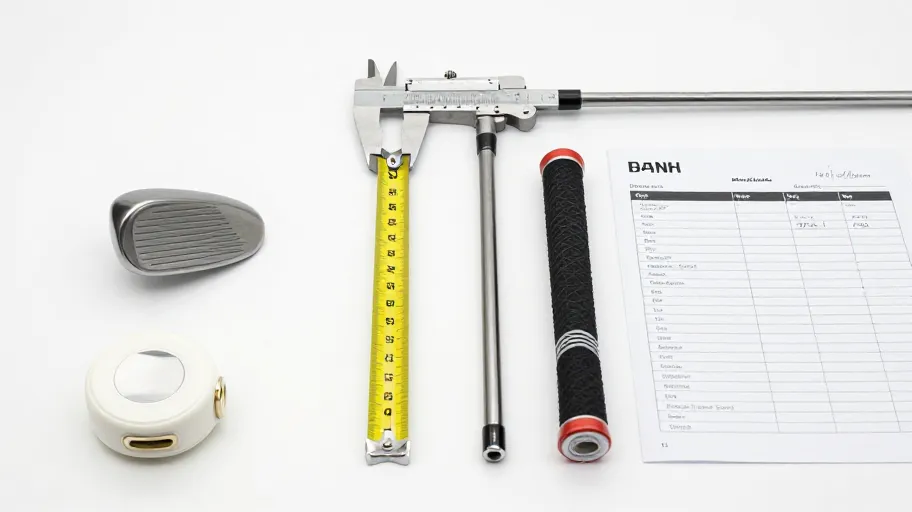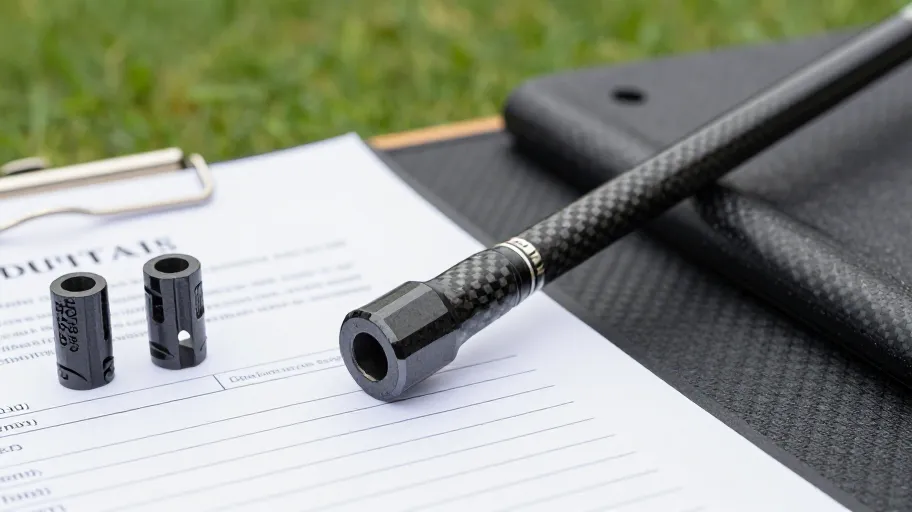
Yes — an adapter can be changed on a golf shaft, but only after you confirm three things: that the replacement adapter matches your exact head model and hosel configuration, that the shaft's tip has enough remaining length and integrity after removal, and that your supplier's sample and policy terms are verified in writing before you commit.
What "changing an adapter" actually involves
Builders asking this question are solving one of two different problems, and treating them as the same job causes most fitment mistakes:
- Swapping adapters between heads within the same brand family. The shaft stays; a different adapter sleeve makes it fit a different head. Here the risk is adapter-family confusion — two sleeves can look near-identical yet differ in tip diameter, hosel engagement or model-year geometry.
- Replacing a damaged or wrong adapter on the same head. The risk here is shaft-side: removing an adapter involves heat and pulling force, and the tip may have been trimmed, scraped or fatigued by previous work.
Neither job can be approved from a product photo or a brand name alone. Compatibility must be verified against the specific brand, family, model and — where the manufacturer revises components — the model year and hosel type. Without first-party confirmation for your exact head, no fitment claim can be made, and this article does not make one.
The Adapter-Confirm-Approve Loop
Use this five-step loop to move from question to approved purchase:
- Confirm fitment. Record the head's brand, family, model, model year and hosel type. Match these against the adapter specification, not the product name. Ask the supplier to state in writing which heads the adapter is confirmed to fit.
- Confirm shaft condition. Before removing anything, document tip-trim history if known, inspect the tip section for scoring or cracks, and confirm the shaft's tip diameter matches the adapter's internal bore.
- Confirm component spec. Verify tip diameter, hosel depth engagement and torque-transfer interface. Do not rely on dimensional assumptions; ask the supplier for the drawing or datasheet and compare it to your head's published hosel spec.
- Approve sample. Where a sample is available, fit-check it on a scrap or low-value build first, and document the result before scaling an order.
- Document the build. Record adapter part number, supplier confirmation, shaft measurements and final assembly notes so future repairs reference evidence rather than memory.
Decision table: adapter change scenarios
| Scenario | What you want | What must be verified before ordering | Risk if skipped |
|---|---|---|---|
| Same head, damaged adapter | Like-for-like replacement | Exact adapter part reference for the head's model and year; shaft tip integrity after removal | Wrong sleeve geometry; shaft scrapped during removal |
| Same brand family, different head | Shaft reuse across two heads | Both adapters' fitment statements; tip-trim compatibility across both sleeves | Shaft trimmed for one adapter and incompatible with the other |
| Different brand's head | Cross-brand adaptation | Whether the supplier confirms cross-brand fitment for the specific models; bore type (blind vs through) | Complete fitment failure |
| Adjustable hosel system | Setting changes without rebuilding | Which settings the specific sleeve supports on your head model | Incorrect loft/face-angle assumptions |
| Used shaft of unknown history | Re-adapt a secondhand shaft | Tip length remaining, prior trim, evidence of heat damage | Structural failure at the tip |
Concrete approval questions for the supplier
Send these before placing any order. Every commercial question here is deliberately open, because no sample, pricing, shipping, lead-time or production policy details were supplied for this guide and none should be assumed:
- Which exact head models, families and model years is this adapter confirmed to fit, and can you state this in writing?
- What is the adapter's tip bore diameter and overall sleeve geometry, and can you supply a drawing or datasheet?
- What is your current sample policy, including any fees, and what does it cover? Confirm the current terms directly.
- What are your current minimum order terms, lead times and shipping options for this item? Confirm directly rather than relying on listings.
- What is your current return or replacement policy if the adapter does not fit the head model I named?
- Do you supply installation guidance — epoxy type, cure expectations, pull temperature limits — for this specific adapter?
Record the answers. Written confirmations are what convert a hopeful order into an approved build.
Sample and policy verification boundaries
FAQ
Does changing the adapter shorten the usable life of the shaft? Removal applies heat and pulling force to the tip. If the tip was trimmed for the previous adapter, remaining length may not suit the new sleeve. Inspect and measure before removal, and confirm the new adapter's bore depth with the supplier.
Can I reuse one shaft across two heads from the same brand family? Sometimes, but only if both adapters are confirmed compatible with the same tip-trim state. Verify both sleeves' specifications against your shaft's measurements rather than assuming family-level interchangeability.
Do adapters from different brands ever interchange? Never assume it. Physical similarity is not fitment. Ask the supplier to confirm cross-brand compatibility for your specific models in writing, and fit-check on a non-critical build first.
What documentation should I keep after the swap? Adapter part reference, supplier fitment confirmation, shaft measurements, adhesive and cure notes, and final torque settings where applicable. This is what makes the next repair a lookup instead of a guess.
How do I judge a supplier's answers? Complete, model-specific, written answers to the six questions above are the approval signal. Vague or family-level-only answers are a reason to keep comparing.
Before you order: adapter-change checklist
- Head brand, family, model, model year and hosel type recorded
- Adapter fitment confirmed in writing for the exact head
- Tip diameter and bore depth matched against a supplier drawing
- Shaft tip inspected: trim history, scoring, prior heat exposure
- Sample policy, order terms, lead time and returns confirmed directly with the supplier
- Fit-check performed on a non-critical build
- Build documentation saved for future reference
Get the sourcing brief
获取采购 Brief — request the DIY-Golf sourcing brief containing the full spec-verification and supplier-question list for adapter purchases, so every order you place is backed by written confirmations rather than assumptions.
Low-friction option: start with the checklist above — copy it, fill in your head's details, and send the six approval questions to your supplier today. Even one written fitment confirmation moves your build from guesswork to approved.
Master Your Swing, DIY Your Fit. DIY Golf is the premier destination for the technical golfer. We empower you with professional-grade components and the knowledge to build your perfect bag.