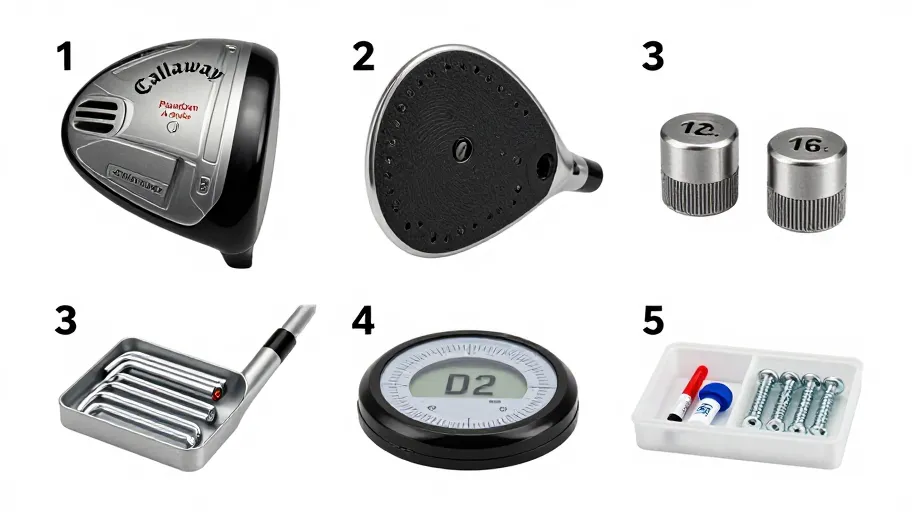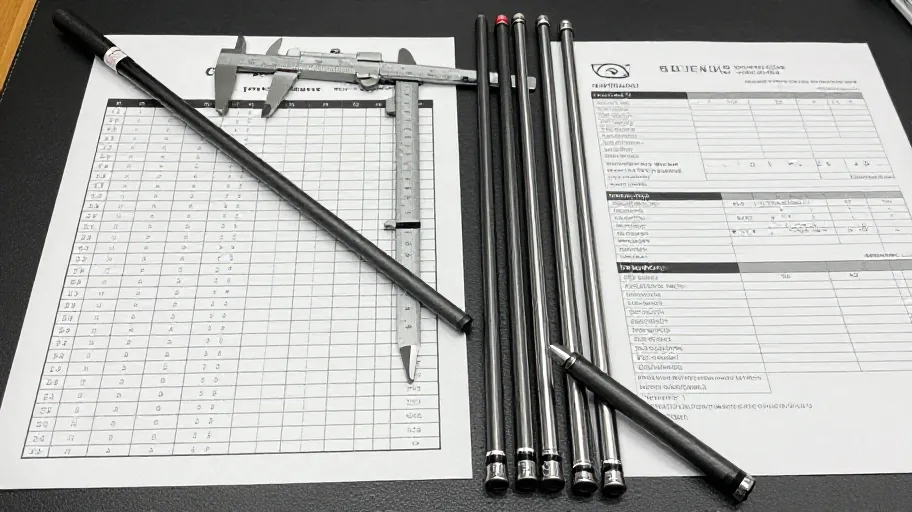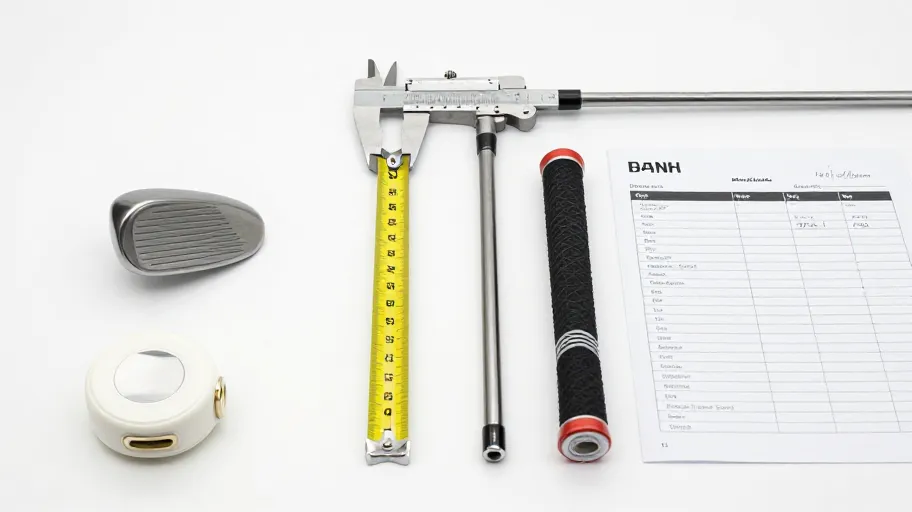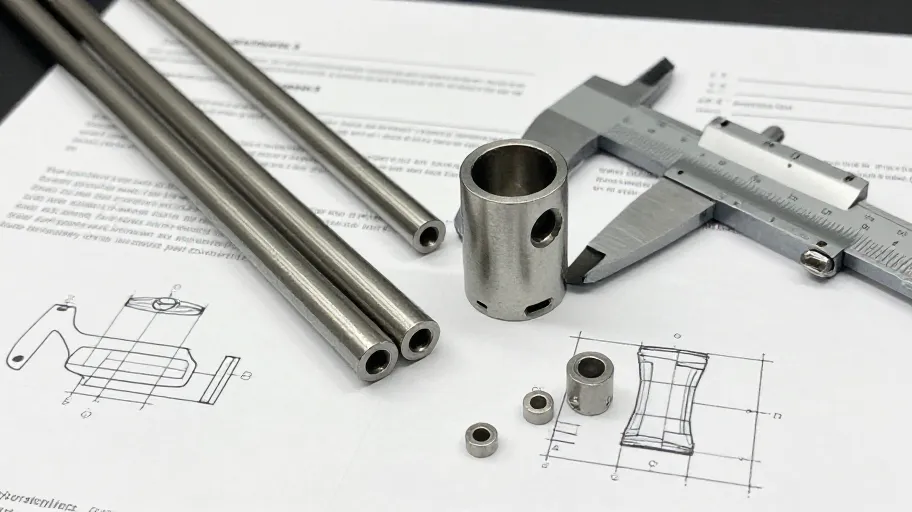
Buying components for diy golf drills comes down to three gates: specify the job in writing, sample against measurable criteria, and approve only what you have verified. Define hole geometry, alignment and repeatability first, request a sample, measure it, then confirm fitment, cost and policy directly with the supplier before ordering.
The SPEC–SAMPLE–APPROVE framework
Researching parts for a DIY golf drill project — whether that is drilling shafts for weight pins, boring hosels, or building repeatable workholding for club assembly — benefits from the same discipline professional club builders apply to any sourcing decision. A named framework helps: SPEC–SAMPLE–APPROVE.
- SPEC. Write down what the component must achieve before you look at listings. For a drill jig or guide bushing, that means hole diameter class, depth, alignment to the shaft axis, and clamping method. For consumable components — adapters, ferrules, weights — it means model, family and generation of the club head or shaft you are fitting. If you cannot state the requirement in one sentence per line item, the spec is not ready.
- SAMPLE. Request a sample or a single unit before committing to a quantity. Do not rely on listing photos or catalogue compatibility tables; compatibility must be confirmed for your exact club brand, family and model. When the sample arrives, measure it against the written spec — not against the listing.
- APPROVE. Approval is a documented decision: the sample met the spec, the fitment was verified on your actual club or fixture, and the supplier's current terms for price, quantity minimums, shipping and returns were confirmed in writing. Anything unconfirmed remains open, not approved.
Component decision table
| Component | Key spec questions to confirm | Fitment risk to check | Approval evidence to keep |
|---|---|---|---|
| Drill guide / jig bushing | What bore class suits my pin or drill size? How is the bushing centered on the shaft? | Off-axis holes; repeated runs drifting from center | Measured bore, concentricity check, photo of setup |
| Shaft drilling consumables (pins, weights, plugs) | What diameter and insertion depth does my shaft model take? Are tolerances stated numerically? | Shaft-wall damage; wrong weight position | Written spec sheet; sample measurement record |
| Adapter / hosel boring parts | Which club head family and generation is this for? Is the adapter stated for that exact model? | Cross-generation incompatibility | Supplier's written fitment confirmation for the exact model |
| Workholding (vise pads, shaft clamps) | Does the clamp suit my shaft diameter range? What material contacts the shaft? | Marring or slipping during drilling | Trial-run notes on your shaft diameter |
| Measuring and layout tools | What resolution do I need to verify depth and alignment? | Accepting unverified results | Calibration or resolution note; recorded measurements |
Note: no specific tolerance, dimension or performance outcome is asserted here. Every numeric requirement is project-specific and must be defined by you and confirmed by the supplier.
Specifying the job before you research parts
Most sourcing problems in DIY drill work trace back to an unwritten spec. Before comparing components, answer these in writing:
- What operation is the drill performing — weight pin holes, vent holes, hosel modification, or fixture alignment?
- Which club or shaft brand, family and model is the workpiece? Note the generation where relevant.
- What does "correct" look like numerically — hole depth, diameter, position along the shaft — as targets you set, not defaults you assume?
- How will you verify the result — depth stop, pin fit check, visual and tactile inspection, or a measurement tool?
- What quantity do you need, and is a single unit enough to evaluate before buying more?
Keep the spec record. It becomes the reference for the sample evaluation and the approval decision, and it is the document you attach when you request a quote.
Sampling and evaluation: what to measure, what to document
When a sample or trial unit arrives, evaluate it against your written spec, in this order:
- Condition on arrival. Photograph packaging and the part before handling. Note any visible defects without characterizing them as acceptable or unacceptable until compared to the spec.
- Dimensional check. Measure the features that matter to your job with the best tool you have. Record the numbers next to your spec targets.
- Function check. Trial the component on scrap or a sacrificial shaft first. Confirm it holds position, aligns as intended, and survives the operation.
- Fitment check. Verify against your actual club model — not a similar one. If the supplier's fitment claim and your measurement disagree, the measurement wins; raise the discrepancy before ordering.
- Documented decision. Write "approved", "rejected — reason", or "re-sample with change request". An undocumented sample evaluation cannot protect you later.
Approval questions to put to any supplier
Before you approve and place an order, get written answers to these:
- Is this component confirmed compatible with my exact club brand, family and model — and will you confirm that in writing?
- What are the stated specs (diameter class, depth capacity, material) for the exact SKU I would receive?
- What is your current sample policy — availability, any fee, and shipping terms? (Confirm the current policy directly; do not rely on assumptions.)
- What are the current price, any order quantity minimums, and payment terms for my quantity?
- What is the current lead time and shipping method to my location, and how are delays communicated?
- What is the returns or exchange process if the part does not fit my model as confirmed?
- If a defect appears on arrival, what documentation do you require and what is the resolution path?
- Can you supply a spec sheet or drawing I can keep on file with my approval record?
Treat any answer that arrives verbally or in a chat window as provisional until it appears in a written confirmation. Your approval record should contain: the spec, the sample evaluation notes, the supplier's written answers, and your final decision.
A short pre-purchase checklist
- Written spec: one sentence per line item, with numeric targets I set
- Club brand, family and model recorded, including generation
- Fitment confirmed in writing for the exact model
- Sample or single unit evaluated and measured against the spec
- Trial run completed on scrap before touching the real workpiece
- Price, quantity minimums, sample policy, lead time and returns confirmed in writing
- Approval decision documented with date and reason
FAQ
Do I need a sample for every diy golf drill component? Not every line item warrants one, but any component where fitment, alignment or finish drives the outcome does. A bushing, adapter or workholding part that defines hole position deserves a verified sample; a consumable whose only requirement is a stated diameter may be verifiable on arrival against your written spec. Decide per line item, and document the decision.
How do I confirm fitment for my specific club model? Record the brand, family, model and generation of the club, then ask the supplier to confirm compatibility for that exact combination in writing. When the part arrives, verify it physically against the club or shaft before committing to quantity. If any doubt remains after a written confirmation and a physical check, re-sample rather than proceed.
What should I measure when evaluating a drill guide or jig? Measure the features your job depends on: the bore you are guiding through, the depth reference, and the alignment to the shaft axis. Compare each measurement to the targets you set in your spec, not to the listing description. Record the numbers, the tool used, and the date so the evaluation stands as evidence later.
Can I compare suppliers fairly without knowing their prices up front? Yes — compare on structure, not just numbers. Which supplier answers fitment questions in writing? Which one provides a spec sheet for the exact SKU? Which one states its current sample, lead-time and returns policies clearly when asked? Those answers are comparable today; prices are only comparable once each supplier has quoted your exact spec and quantity.
What if the sample does not match the spec? Document the deviation with measurements and photos, state what change would make it acceptable, and request a corrected sample or a written explanation. Do not approve a part you intend to "work around" — in drill work, a small fitment deviation compounds into misaligned holes and scrapped shafts. The approval gate exists precisely to stop that.
Next step
If you are researching components for a diy golf drill project, the fastest way to avoid rework is to start with a structured brief: your club model, your spec targets, your sample plan and your approval questions in one document.
获取采购 Brief — request the sourcing brief template and take it to your supplier conversation with every fitment and policy question already organized.
Prefer to start smaller? Use the pre-purchase checklist above as your working document, and come back for the full brief when you are ready to compare suppliers side by side.
Master Your Swing, DIY Your Fit. DIY Golf is the premier destination for the technical golfer. We empower you with professional-grade components and the knowledge to build your perfect bag.