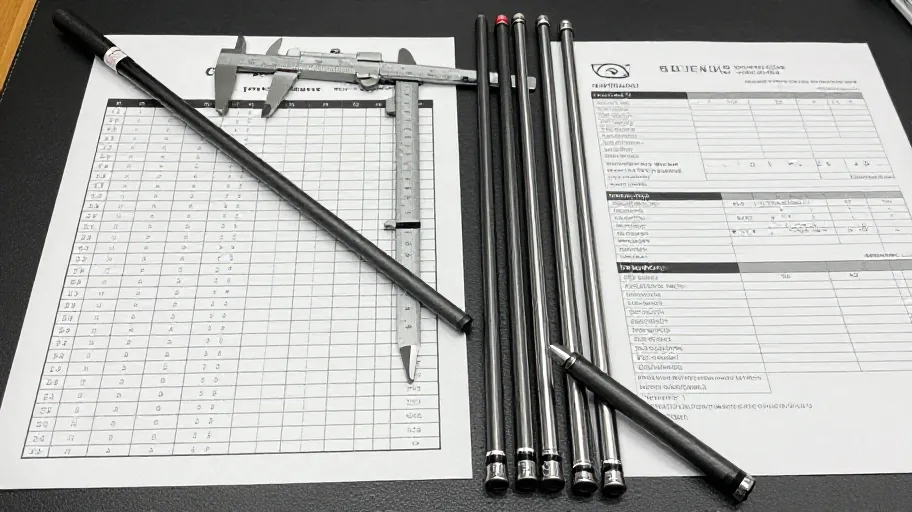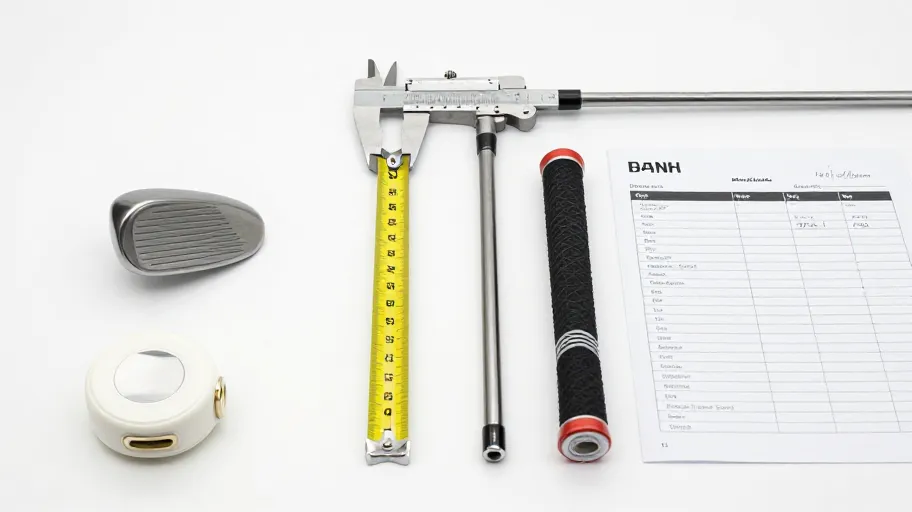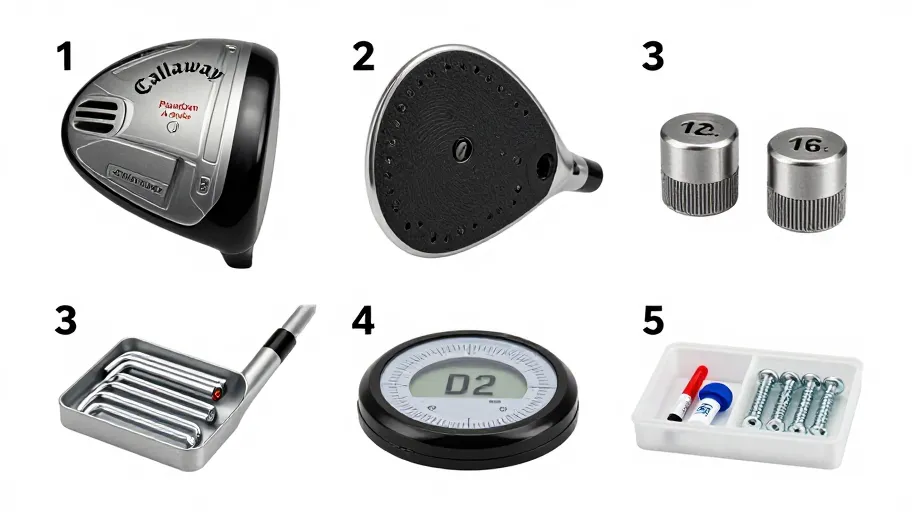
To check whether a listed replacement weight fits your driver, compare it against five documented points: the club family (e.g., a specific Callaway driver line), the exact model and generation, the thread or attachment type, the mass and swingweight target, and the install hardware required. Brand names alone do not confirm fitment — different families within one brand can use different weight systems, so verify every listed weight against your club's family and model before sourcing.
This article is a component-selection and fitment guide. It does not claim that any specific weight fits any specific club; the reader must confirm current listing details and fitment directly.
Why brand is not enough
When a listing says a weight "fits Callaway drivers," that statement cannot be treated as a compatibility confirmation. A brand's driver families change attachment systems, weight masses and sleeve designs between generations. A weight that fits one family may not thread into, seat correctly in, or match the mass range of another — even within the same brand and the same model name across different years.
The search job here is not "find a weight." It is "confirm this weight matches this club." That shifts the work from browsing to documentation.
The FAMILY-MATCH five-point check
Work through these points in order and record the answer for each:
| # | Check point | What to document | Where to find it |
|---|---|---|---|
| 1 | Family | The driver family name, not just the brand (e.g., which Callaway driver line you hold) | Club head sole/crown marking, original spec sheet, purchase record |
| 2 | Model and generation | Exact model name plus model year or generation identifier | Head marking, hosel/adapter area, retailer spec page for that generation |
| 3 | Attachment type | Threaded screw-in, sliding track, ported system — and which the listing states | Listing text and photos; your club's weight port |
| 4 | Mass target | Mass of the currently installed weight (printed on it, or measured on a scale) | Weight marking or gram scale |
| 5 | Install hardware | Tool type, thread engagement, torque value and any seating requirements | Seller confirmation; club documentation |
If the listing does not state points 1–3 explicitly, treat the listing as unverified — not as a rejection, but as an open question for the seller.
Measure before you compare
Remove the installed weight (with the correct tool) and record:
- The mass printed on the weight, and its measured mass if you have a gram scale.
- The thread or attachment style as best you can describe it — screw-in port, track-mounted, or other.
- Photos of the weight, the port and the head markings, from more than one angle.
These notes become your comparison baseline. When you ask a seller a question, a photo plus a stated family and model produces a far more reliable answer than "will this fit my driver?" ever can.
Compatibility decision table
| Situation | Decision | Next action |
|---|---|---|
| Listing states family, model/generation, attachment type and mass, and all match your documented baseline | Approve (pending seller confirmation of current stock and terms) | Order, keeping your documentation |
| Listing names the brand but not the family or generation | Do not approve | Ask seller for family/generation confirmation |
| Attachment type differs (e.g., threaded vs track) | Reject for this club | Search by attachment type instead of brand |
| Mass differs from baseline but that is your intended change | Proceed with intent | Confirm swingweight direction with your fitting notes or adviser |
| Seller cannot confirm family/generation fitment | Do not approve | Compare other listings or contact the club's support channels |
Approval questions to send the seller
- Which exact driver families, models and generations does this weight fit? Please confirm by name.
- What attachment type is it (threaded, track, ported), and what tool is required to install it?
- What torque value and seating procedure do you recommend for installation?
- Is any install hardware included, and what does the current listing state about stock and terms?
- Can you confirm the mass tolerance of the weight as currently listed?
Ask for the answers in writing and keep them with your documentation.
Checklist before you buy any brand-specific weight
- Family identified from the club head, not assumed from the brand
- Exact model and generation recorded
- Current weight mass documented (printed and/or measured)
- Attachment type compared between your club and the listing
- Seller has confirmed family/model fitment in writing
- Install tooling and torque question asked
- Current stock, shipping and return terms confirmed directly with the seller
FAQ
How do I find the exact model and generation of my driver? Check the sole or crown marking, the adapter/hosel area, and your original purchase or spec documentation. If the model name repeats across years, record the generation or model-year identifier as well, because weight systems can change between generations of the same model name.
Is the mass printed on the original weight reliable? Treat the printed mass as a starting point and verify with a gram scale if the change matters to your build. If you cannot measure it, document the printed value and confirm the replacement mass range with the seller.
Do photos of the weight prove compatibility? No. Photos cannot show thread pitch, seating depth or track geometry reliably. Use photos to support a written confirmation, never as the confirmation itself.
What if the listing says "fits most" drivers of the brand? Treat "most" as unverified. Ask the seller to list the specific families, models and generations the weight fits, in writing, and compare that list to your documented baseline.
Do I need a launch monitor or fitting session to change a weight? Not to confirm fitment — that is a mechanical compatibility question. If your goal is a specific ball-flight or swingweight change, document the change and evaluate it with whatever measurement resources you use; this article makes no claim about performance outcomes.
Primary CTA
Verify the exact club family and model. Before you compare any listed weight, record your driver's family, model, generation, current weight mass and attachment type — then confirm the listing against that documentation with the seller in writing.
Low-friction checklist CTA
Save or print the seven-point checklist above and run it against any brand-specific weight listing before you commit.
Master Your Swing, DIY Your Fit. DIY Golf is the premier destination for the technical golfer. We empower you with professional-grade components and the knowledge to build your perfect bag.