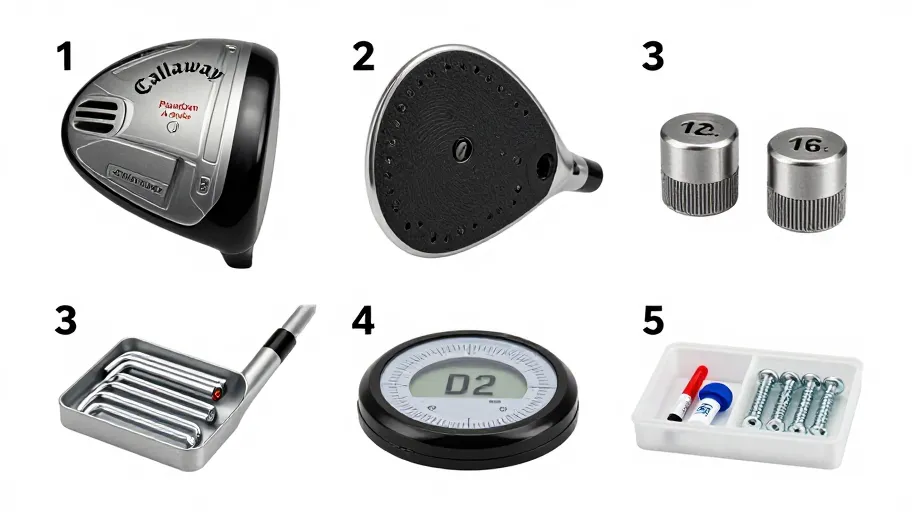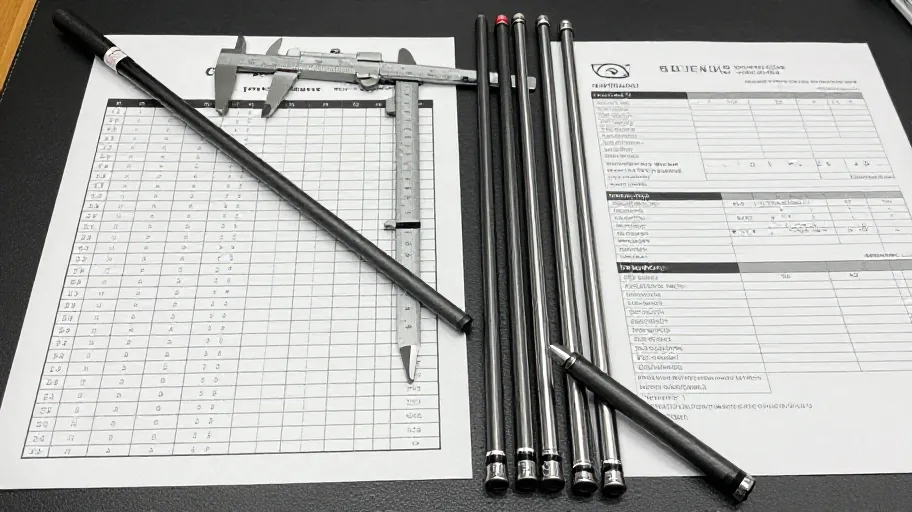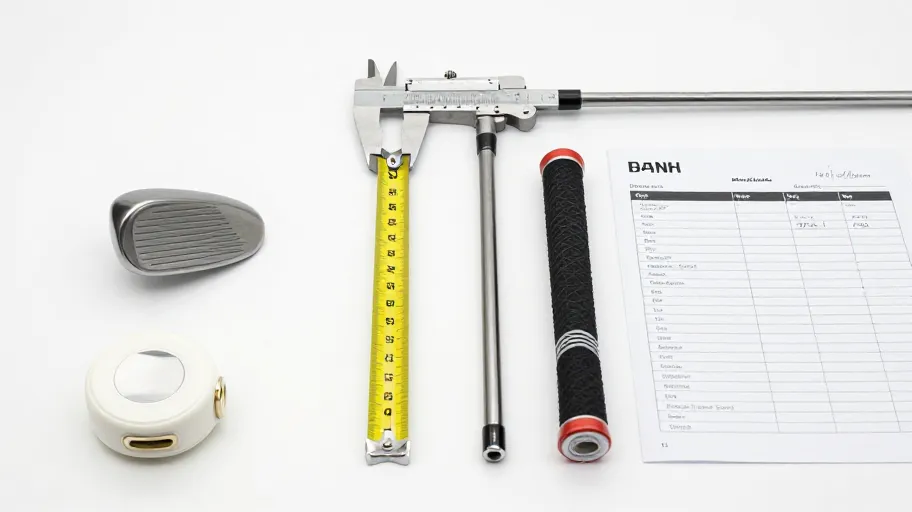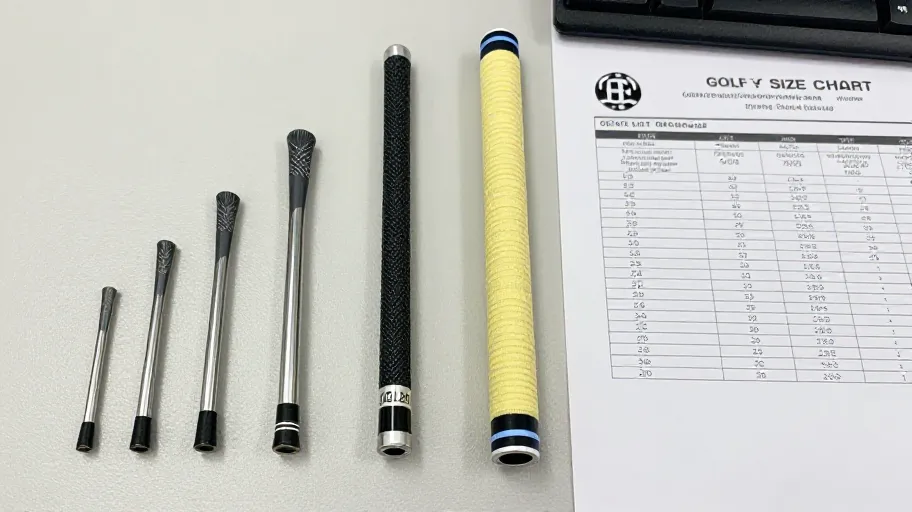
A golf grip size chart is only useful for sourcing when it separates three numbers: the grip's core (inside) diameter, the shaft's butt (outside) diameter, and the finished outside diameter after tape build-up. Match the core to the butt first, then plan build-up layers to reach the target hand size. Every figure must be confirmed against the supplier's current specification sheet before approval.
That is the short answer. The rest of this guide gives club builders and component buyers a repeatable method — SPEC-LOCK — for turning a sizing chart into a documented, approved purchase decision.
What a golf grip size chart has to show
Most confusion around grip sizing comes from mixing two different measurements:
- Core diameter — the inside diameter of the grip. When the core matches the shaft butt diameter, the grip installs at its intended base size.
- Finished feel — the outside diameter you actually hold. This changes with build-up tape, grip wall thickness and installation technique.
A useful chart shows, for each grip model: core diameter, wall profile, model-to-model shape differences, and the supplier's stated sizing category (undersize, standard, midsize and any intermediate designations). If a chart gives only a category label without core dimensions, it is not sufficient for sourcing decisions — request the underlying specification sheet.
Categories themselves are loose labels, not measurements. An "undersize" grip from one model family may not measure the same as another. For a specific club brand, family and model, document the actual shaft butt diameter first, then compare candidate grips by number, not by label.
The SPEC-LOCK framework
Use these five gates in order. Do not advance a gate without written confirmation from the supplier for the exact model you are buying.
S — Size baseline. Record the butt diameter of the target club family and model, and the target finished grip size for the player or build programme. Write both numbers down; approvals fail when the target is verbal.
P — Profile match. Compare candidate grips by core diameter and wall profile against the baseline. Ask the supplier for the specification sheet for the exact model and batch, and for any model-year changes.
E — Evidence. Request a sample or sample arrangement for the exact model, plus written confirmation of dimensions on arrival. Measure the sample yourself with calibrated calipers and log the readings against the chart.
C — Confirmation. Confirm in writing: current pricing, minimum order quantity (if any), lead time, shipping terms, sample policy, fee handling, returns and defect handling for the exact model. None of these can be assumed from this article — policies vary and change; verify each one directly.
K — Kickoff. Only after every prior gate has documented answers, approve the order and retain the paperwork as your reference standard for that build.
Decision table: choosing a grip size route
| Build scenario | What the chart tells you | Decision route | What to confirm with the supplier |
|---|---|---|---|
| Replacing grips on a known model, standard hand size | Core diameter matches butt diameter | Order grip at core = butt, no build-up | Spec sheet for exact model; batch consistency |
| Player needs slightly larger hand feel | Standard core fits shaft | Standard grip + build-up tape plan | Supplier's stated finished diameter with tape, if documented |
| Moving toward midsize feel | Midsize grip core vs. butt | Compare midsize grip alone vs. standard plus wraps — different shape outcomes | Wall profile difference between the two models |
| Undersize or junior build | Undersize core may need adaptation | Verify core vs. butt first; adapt build-up plan | Fitment for the specific shaft model; do not assume compatibility |
| Mixed set across club families | Butt diameters may differ within the set | Build a per-club diameter table before ordering | Diameter per club family; whether one grip model covers all |
The key discipline: the chart narrows candidates; written supplier confirmation and a measured sample close the decision.
Sample and approval questions to send
Use these questions verbatim with any supplier, including for quotes gathered through DIY-Golf. None of the answers can be pre-filled here — each is project-specific.
- What is the core diameter and stated sizing category for grip model ____, current batch?
- Can you supply a specification sheet and a sample of the exact model before order commitment?
- What is your current sample policy — fees, shipping responsibility, and how fees are handled if an order proceeds? (Confirm the current policy directly; do not rely on prior arrangements.)
- What is your minimum order quantity, if any, for this model?
- What are current lead time and shipping terms to my destination?
- What is your process for reporting and resolving dimensional defects or shipment discrepancies?
- Has the model's specification changed in recent production runs, and is the chart I am reading current?
Document every answer. An approval based on a chart alone, without these confirmations, is a guess.
Pre-order verification checklist
- Shaft butt diameter recorded for every club family and model in the build
- Target finished grip size written down per player or programme
- Candidate grips compared by core diameter and wall profile, not label alone
- Supplier specification sheet received for the exact model
- Sample received and measured with calipers; readings logged
- Pricing, MOQ, lead time, shipping, sample policy, fee handling and defect process confirmed in writing
- Compatibility with the specific club family and model confirmed, not assumed
- All documents filed as the approval record before order release
FAQ
Do grip size categories mean the same thing across brands and models? No — treat categories as labels, not measurements. Compare core diameters and wall profiles from each supplier's specification sheet for the exact model you are sourcing.
How does build-up tape change grip size? Build-up tape increases the shaft's effective butt diameter, so the finished feel is larger than the grip alone. The exact outcome depends on tape type and layer count, so measure and document your own build rather than relying on general figures.
Should I verify compatibility for a specific club family and model? Yes. Fitment depends on the actual shaft butt diameter and the grip's core diameter. Confirm both with current documentation for the exact model before approving an order.
What should a grip sample approval cover? Measure the sample's dimensions against the chart and specification sheet, inspect surface quality, and log the results. If readings differ from documentation, resolve the discrepancy with the supplier before ordering.
Where can I get help structuring the sourcing questions? Use the sourcing brief below — it packages the questions, measurements and confirmations into one document you can send to any supplier.
获取采购 Brief — download the sourcing brief and send it to your supplier to get written answers on specs, samples and terms before you commit.
Prefer to start smaller? Copy the pre-order verification checklist above into your next supplier email — it works on its own.
Master Your Swing, DIY Your Fit. DIY Golf is the premier destination for the technical golfer. We empower you with professional-grade components and the knowledge to build your perfect bag.