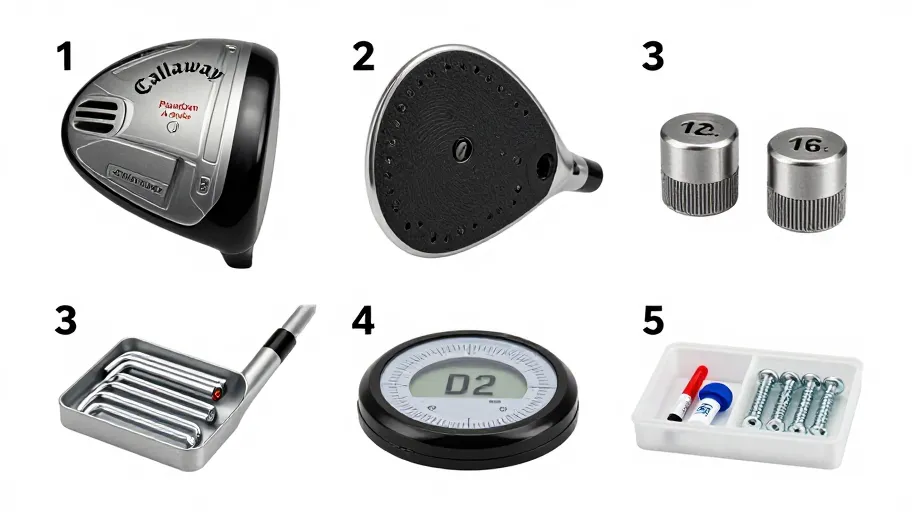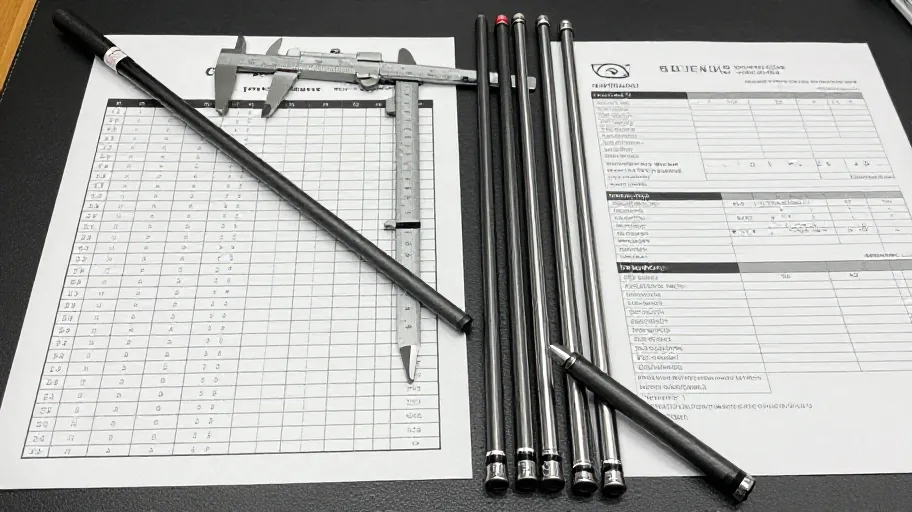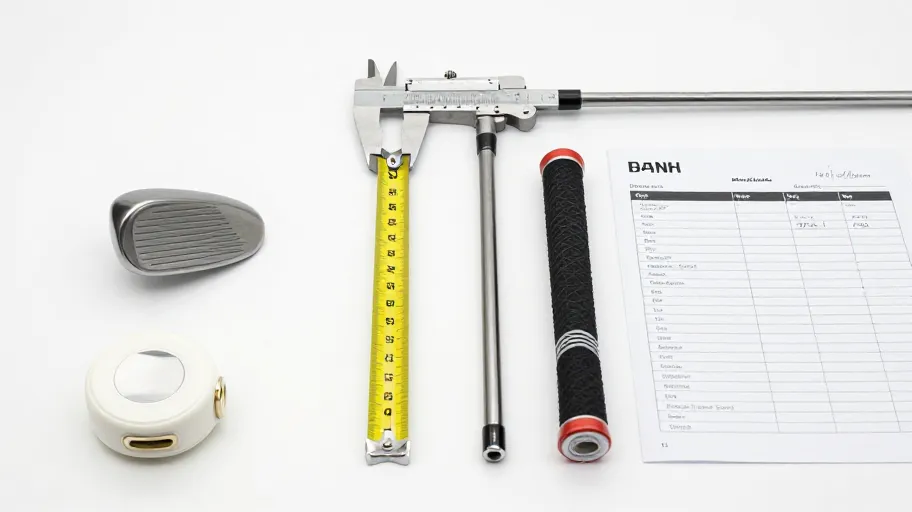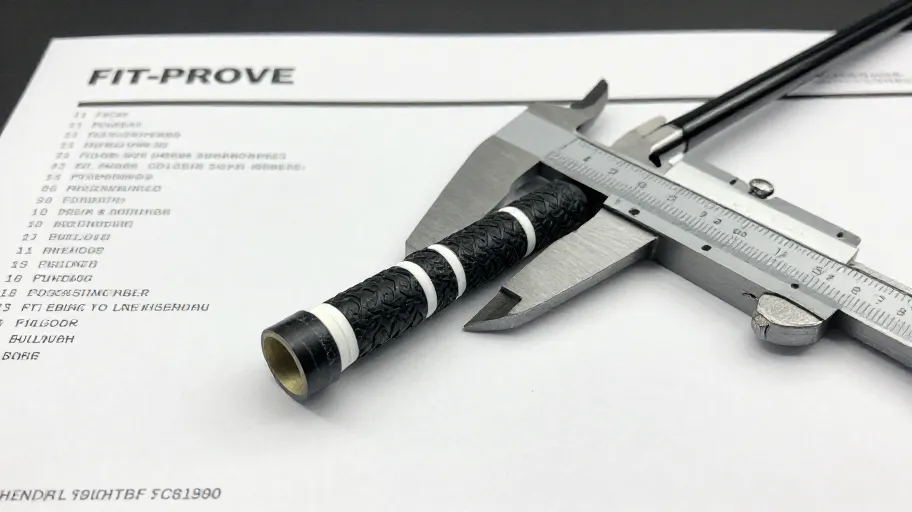
Golf grip size explained: grip size is the relationship between the grip's core diameter, the shaft's butt diameter, and the finished outer diameter after tape build-up. Matching all three to the club's model and shaft spec — then proving it with a measured sample — is the only defensible way to approve replacement grips.
That is the whole job in one sentence. The rest of this guide turns it into a repeatable process for buyers and club builders sourcing components.
The SPEC–FIT–PROVE framework
Use SPEC–FIT–PROVE whenever you evaluate grip components for a named club family:
- SPEC — capture the numbers. Record the grip's stated core diameter and outer diameter, and the shaft's butt diameter for the exact club model you are rebuilding. Sizes such as undersize, standard and midsize are labels, not measurements; the millimetre (or inch) figures behind those labels are what you approve against.
- FIT — match the pairing. A grip's core interacts with the butt diameter to set the installed outer diameter before any tape is added. Build-up tape then increases the finished size in steps determined by how the tape is applied and how many layers are used. The question is never "is this a standard grip?" but "what finished diameter will this grip produce on this shaft with this tape schedule?"
- PROVE — verify with samples. No label, chart or catalogue entry replaces a measured, installed sample on your actual shaft. Document the result and approve or reject against your written criteria.
Decision table: grip size selection
| Grip size class | What the label implies | What you must verify | Risk if unverified | Best suited project |
|---|---|---|---|---|
| Undersize | Smaller finished diameter than standard | Exact core and outer diameter; shaft butt diameter; tape schedule | Installed diameter differs from expectation; hand fit changes | Rebuilds targeting a smaller hand profile — confirm on bench |
| Standard | Reference sizing for the model family | Whether "standard" matches the specific shaft butt; layered tape effect | Sizing drift between brands and models | Baseline replacement builds |
| Midsize | Larger finished diameter | Core-to-butt interaction; number of build-up layers assumed | Over-sizing if layers double-counted | Rebuilds targeting a larger hand profile — confirm on bench |
| Custom build-up | Achieved via tape layers between grip and shaft | Tape thickness, wrap method, layer count; measured finished diameter | Uncontrolled variation between units | Tuning projects where documentation matters |
This table deliberately avoids dimensional tolerances. Tape thickness, core variance and butt-diameter variation are supplier- and product-specific; request the exact figures for the SKU you are buying and record them in your project file.
Build-up layers and measurement discipline
Build-up tape is the most under-documented variable in grip sizing. Two grips with identical labels can produce different finished diameters on the same shaft if the tape schedule differs. Before approving:
- Ask the supplier to state the tape specification they assume in their sizing guidance, if any.
- Measure the finished diameter yourself after installation, at the same reference point each time.
- Record the measurement next to the grip SKU, shaft model and tape count so future rebuilds are repeatable.
Do not treat any supplier's chart as proof of compatibility with your shaft. Charts are starting points; your calipers and your written record are the approval instrument.
Sample approval: concrete questions
Before committing to a production or bulk order, put these questions to the supplier in writing and keep the answers:
- What are the stated core diameter and outer diameter for this exact grip SKU?
- What shaft butt diameter does this grip's sizing assume?
- What is the current sample policy for this product — availability, any fees, and shipping terms? (Confirm the current policy directly; do not rely on older listings or third-party descriptions.)
- What measurement method does the supplier use for the published dimensions?
- What documentation accompanies the sample — spec sheet, batch reference, or nothing?
- If the measured sample deviates from the stated spec, what is the supplier's correction process?
These questions do not presume any particular answer. They exist to create a written trail you can approve or reject against.
Sample approval checklist
Use this gate before any larger commitment:
- Grip SKU, shaft model and club family recorded
- Stated core diameter received in writing
- Stated outer diameter received in writing
- Shaft butt diameter measured independently
- Tape schedule documented (type, wrap method, layer count)
- Finished diameter measured after installation
- Hand-fit evaluation completed by the intended player or builder
- Deviations from stated spec logged and queried
- Supplier answers filed with the project record
- Approve / reject decision recorded with date
A sample that passes feel but fails measurement should not be approved for repeat ordering. Conversely, a sample that passes measurement but fails the intended player's assessment should trigger a sizing-class change, not a supplier change, until both variables are isolated.
FAQ
Does grip core diameter equal the finished grip size? No. Core diameter is the internal dimension. The finished size depends on the interaction between core diameter and the shaft's butt diameter, plus any build-up tape. Always verify the pairing, not the core figure alone.
Can I rely on a sizing chart for a specific club model? Use charts only as orientation. Confirm the shaft's butt diameter for your exact model and the grip's stated dimensions with the supplier, then verify with a measured sample.
How do build-up tape layers change size? Each layer increases the installed outer diameter by an amount set by the tape's thickness and how it is wrapped. Ask the supplier which tape specification their guidance assumes, and measure the result yourself before approving.
What should I do if a sample doesn't match its stated spec? Log the deviation, query it in writing, and pause the larger order until the supplier resolves the discrepancy. Your documented measurement is the reference point for that conversation.
Is hand size the deciding factor in grip sizing? Hand size is a starting input, not the approval criterion. The approval criterion is the measured, installed result evaluated by the intended player — on the bench and in hand.
Next step
If you are sourcing grips or other components against a specific club brand, family and model, obtain the sourcing brief. It packages the SPEC–FIT–PROVE framework, the spec-capture template and the sample approval questions into one working document you can send straight to a supplier.
Not ready for that? Download or copy the sample approval checklist above and run your next component decision through it. A documented pass/fail record is the cheapest quality control you will ever implement.
Master Your Swing, DIY Your Fit. DIY Golf is the premier destination for the technical golfer. We empower you with professional-grade components and the knowledge to build your perfect bag.