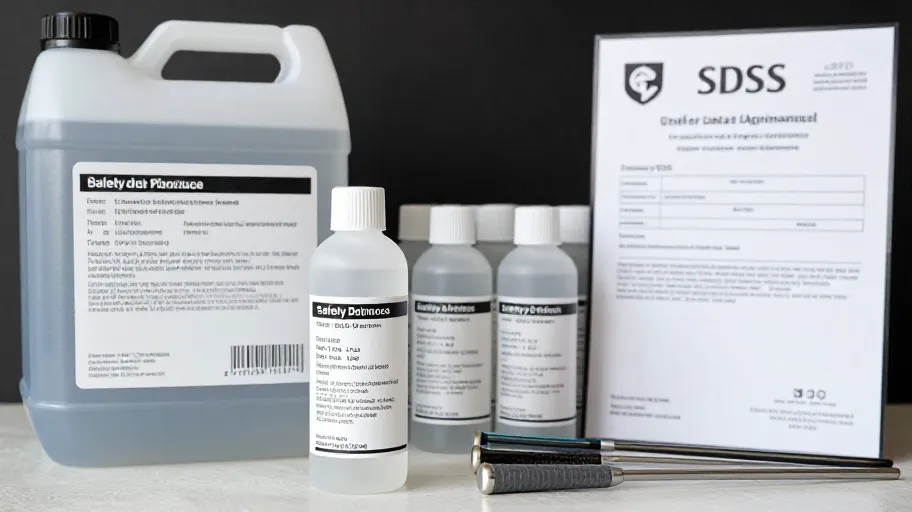
Choosing a golf grip solvent comes down to five verifiable points: Specs (formulation and intended use), Occupational safety (safety data sheet and handling), Lot consistency, Volume economics for your workflow, and Evidence of approval from the supplier. Confirm each in writing before you order, and document the answers for repeat builds.
Why solvent choice matters more than it looks
When you regrip a driver, an iron set or a putter, the solvent is the variable that decides whether grip tape activates correctly, whether the grip slides on without tearing, and whether you can reposition the grip before it sets. A poor solvent match shows up as slipped grips, adhesive residue on the shaft, or a grip that bonds unevenly — all of which force a redo on a component you already prepared.
For club builders working on a specific club brand, family and model, the stakes are the same as any fitment decision: the solvent must suit the tape you use, the grip material on that model, and your workspace conditions. None of that can be assumed from a product listing. The framework below turns that uncertainty into a request you can send to a supplier.
The S.O.L.V.E. framework for golf grip solvent
S — Specs. Ask for the product specification sheet: formulation type, intended application (grip tape activation vs. general cleaning), and any stated use limitations. Ask explicitly whether the supplier confirms suitability for the grip tape and grip material you use on the target club model. Do not accept a listing description as a compatibility confirmation.
O — Occupational safety. Request the safety data sheet before purchase. Confirm ventilation requirements, skin and eye protection guidance, and flammability classification for your workspace and shipping arrangements. If you ship solvent to a workshop or reship to a customer, ask which transport rules apply.
L — Lot consistency. If you build repeatedly, ask how the supplier documents batch consistency: evaporation behaviour, drying window and effect on tape activation. Ask whether batch or lot identifiers are printed on each container so you can trace any issue back to a specific production run.
V — Volume economics. Match container size to your build volume without guessing. Ask which pack sizes are offered, how shelf life is documented after opening, and what storage conditions are required. Ask what information you need to provide for a project-specific quote.
E — Evidence of approval. Before your first order, run a sample or trial through your own process on a test shaft, not the customer's club. Approve in writing: does the tape activate as expected, does the grip seat without slippage, does residue clean off the shaft? Only then scale the order.
Decision table: match your workflow to what you must confirm
| Your situation | Key questions to confirm with the supplier | Approval evidence to record |
|---|---|---|
| One-off regrip of a single club | Smallest available container; shelf life after opening; compatibility with your tape and grip model | Successful trial on a test shaft; spec sheet on file |
| Regular builder, mixed club families | Batch documentation; consistent drying window across lots; bulk pack options | Trial per new lot; lot IDs logged per build |
| Workshop with staff | Safety data sheet; ventilation and PPE guidance; storage requirements; disposal instructions | Written safety acknowledgement; storage log |
| Reseller or mobile fitter | Transport classification for carrying solvent; pack sizes suited to travel; sample policy terms | Shipping confirmation in writing before ordering |
| Sensitive grips (cord, wrap, soft compounds) | Supplier-confirmed suitability for that grip material; effect on grip surface finish | Test on a sample grip of the same model |
Treat every cell in the right-hand column as a document, not a memory. When a build question arises later, you want a dated answer, not a recollection.
Samples and approval: what to ask, in order
No sample, cost, shipping or production policy for any specific solvent was supplied for this guide, and DIY-Golf does not state one here. Those terms change and must be confirmed directly. What you can control is the question set. Use these in order:
- "Please confirm in writing which grip tape types and grip materials this solvent is specified for."
- "Please provide the current specification sheet and safety data sheet for this product."
- "What is your current sample policy — availability, terms and how a sample is requested? I understand terms are confirmed at the time of request."
- "How do you document lot-to-lot consistency, and are lot numbers on each container?"
- "What pack sizes and storage guidance apply, and what do you need from me for a project-specific quote?"
- "If a container arrives damaged or the product does not match its specification, what is your current resolution process? Please confirm terms before I order."
An approval sequence that works for any solvent: request documents → confirm compatibility in writing → trial on a test shaft and a sample grip of the same model → log the result → approve the production order only after the trial passes your own standard.
Safety, storage and disposal: the questions most listings skip
- What flammability classification applies, and what does that mean for storing the container in your workspace?
- What ventilation does the supplier recommend during application?
- What is the documented shelf life sealed and after opening, and under what temperature range? (Ask for the figures; do not rely on assumptions.)
- How should leftover solvent and used towels be disposed of under your local regulations? Confirm the rules that apply to your location — this is a project-specific question, not something a supplier or an article can answer for you.
FAQ
Can I use household products instead of a dedicated golf grip solvent? This article does not confirm any substitute as suitable. Substitutes differ in evaporation rate, effect on grip material and safety profile. The only defensible answer is to verify suitability with the tape and grip manufacturer's current documentation before use, and to trial on a test shaft first.
How much solvent do I need per club? Usage depends on tape width, grip size, applicator and technique. Ask the supplier for application guidance for the specific product, then record your own measured usage on your first trial so future orders match reality.
Does solvent choice affect the final fitment of the grip? It can affect how the tape activates and how long you have to position the grip, which in turn affects alignment and underlisting seating. Confirm the activation and drying behaviour in writing and verify it in your own trial — do not treat it as implied by the listing.
What should I do if the solvent does not perform as specified? Stop using it, retain the container and lot number, photograph the result on the test material, and contact the supplier to confirm the current resolution process. Keeping the lot ID and your approval records makes the conversation concrete.
Where do I start if I am evaluating a new supplier? Send the six approval questions above. A supplier that answers with documents and written confirmations gives you something to audit; one that answers with adjectives does not.
Next step
获取采购 Brief — request the sourcing brief to get the full question set, documentation checklist and approval sequence in one file you can send to any solvent supplier.
Prefer to start smaller? Download the free Grip Solvent Pre-Approval Checklist and run your next supplier conversation against it before you commit to any order.
Master Your Swing, DIY Your Fit. DIY Golf is the premier destination for the technical golfer. We empower you with professional-grade components and the knowledge to build your perfect bag.


