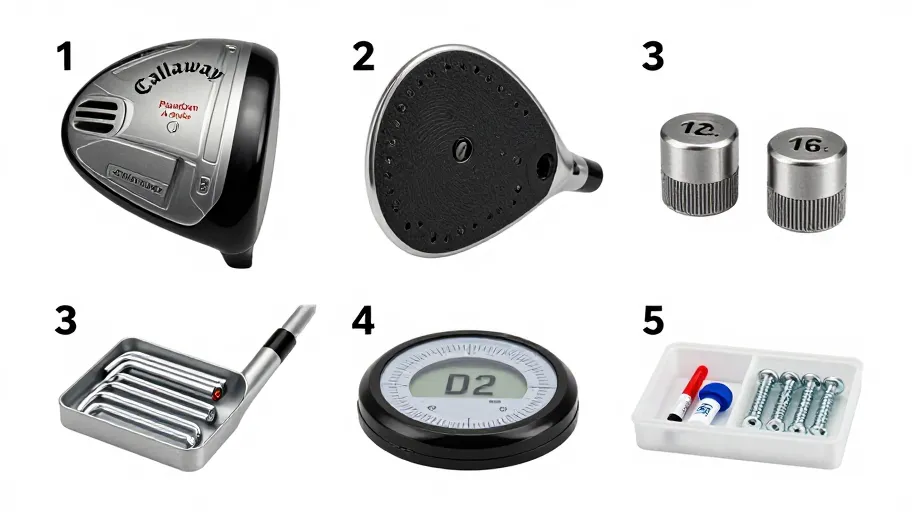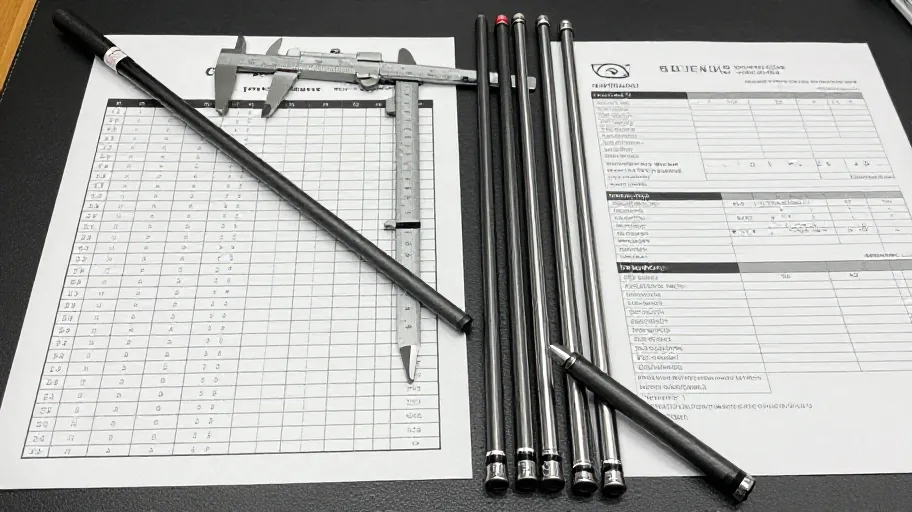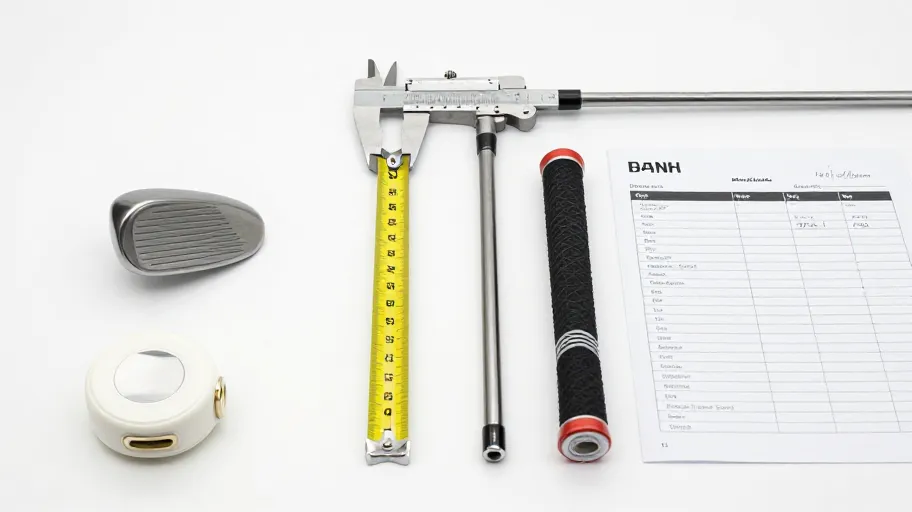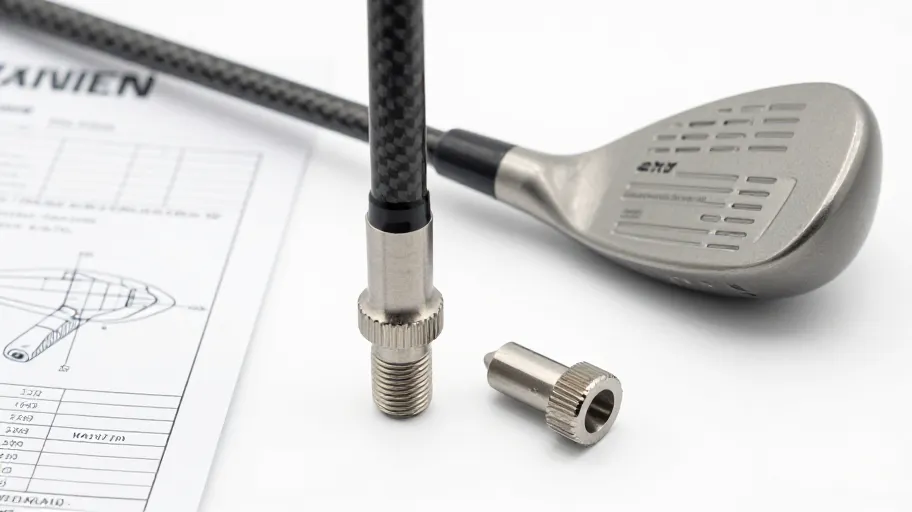
A golf shaft adapter is the interface that joins a shaft to a specific club head, so every purchase decision starts with compatibility confirmation: does this adapter match the exact brand, club family, model and model year in your build? Verify the tip geometry and hosel interface against first-party documentation for that model, compare supplier specification sheets line by line, then approve against a physical sample before committing. Skip any of those three steps and the risk of a misfit sits with you.
The Adapter Approval Triangle
Use three gates in order. No gate can compensate for a failed earlier one.
- Fitment. Confirm the adapter matches the club's brand, family, model and generation. Adjustable hosel systems change between model years even within one family; a listing title alone is not evidence of fitment.
- Specification. Capture the supplier's stated specifications in writing — tip interface, external profile, torque features if adjustable, and finish — with no assumed tolerances. Where a number matters to your build, ask the supplier to state and confirm it rather than inferring it.
- Evidence. Require first-party confirmation for the exact model: a supplier-issued fitment statement, a physical sample, and your own inspection record. Absence of evidence is not approval.
Specification capture: what to document per model
Before contacting any supplier, build a one-page spec sheet for the target club:
- Club brand, family, model and model year or generation.
- Head-side interface: hosel type, adjustment mechanism if any, and how the adapter locates in the head.
- Shaft-side interface: the tip the adapter must accept, and how it is secured.
- Any markings, splines or orientation features that must align for adjustability to function.
- Your acceptance criteria for finish, fit and function — written before you see the product, so approval is not shaped by what arrives.
Do not transfer any specification from one model or family to another. Confirm each item against documentation for the exact club in question.
Decision table: comparing golf shaft adapter options
| Criterion | What to record | Pass condition | Fail signal |
|---|---|---|---|
| Model coverage | Brand, family, model, generation the supplier confirms in writing | Exact match to your build, named explicitly | "Fits most" or partial model lists without your model named |
| Head-side interface | Hosel geometry and adjustment compatibility for that model | Supplier states it matches the documented interface | Description is generic or borrowed from a different model |
| Shaft-side interface | Tip interface the adapter accepts | Matches your shaft's documented tip | Tip described loosely or by analogy |
| Specification sheet | Written specs with supplier-confirmed values | Every critical dimension stated and confirmed | Critical values omitted or described as approximate |
| Sample availability | Whether a sample can be supplied before volume | Sample confirmed in writing. Confirm the current policy directly. | Sample topic deflected or left unspoken |
| Fitment evidence | First-party confirmation for the exact model | Documented statement plus your sample inspection | Claims with no model-specific evidence |
| Accountability | Named contact who owns the fitment confirmation | A person or role answers your questions in writing | Answers routed to unnamed channels |
Sample-approval gate: concrete questions
When a sample arrives, approve it against questions written in advance:
- Does the sample engage the target club head exactly as the model's documentation describes — full seating, correct orientation, functioning adjustment if the head is adjustable?
- Does it accept the shaft tip it was specified for, with secure assembly per your build method?
- Do all written specifications on the supplier's sheet match the physical sample you are holding?
- Does the sample carry the markings or features you were told to expect?
- Who at the supplier confirmed fitment for this exact model, and where is that confirmation recorded?
If any answer is no or unknown, the sample does not pass. Confirm the current policy directly for any question about samples, replacement, or how discrepancies are resolved — and record the answer you receive.
Frequently asked questions
How do I confirm a golf shaft adapter fits my club? Match on brand, family, model and generation, then require a written supplier confirmation naming that exact model, then verify against a physical sample. Model-year changes inside one family make the generation check essential.
Can I rely on a listing's compatibility list? Use it only as a starting hypothesis. A list is not first-party evidence for your individual club. Confirm the current fitment position directly with the supplier and document the response before approving.
What specifications matter most when comparing adapters? The head-side interface, the shaft-side tip interface, and any alignment features that let adjustability function. Ask the supplier to state every value that matters to your build in writing; do not infer tolerances from similar products.
Should I approve from photos alone? No. Photographs cannot confirm seating, engagement or adjustment function. Physical sample inspection against pre-written acceptance criteria is the approval step.
What if two suppliers both claim compatibility? Run both through the Adapter Approval Triangle with the same spec sheet and the same sample questions. Approve the option that survives documentation and inspection — not the one with the stronger listing.
Next step
获取采购 Brief — request the sourcing brief, which packages the spec-sheet template, the decision table and the sample-approval questions into one document you can send to suppliers.
Prefer to start smaller? Use the checklist below as your pre-enquiry gate: every unchecked box is a question you have not yet asked.
Master Your Swing, DIY Your Fit. DIY Golf is the premier destination for the technical golfer. We empower you with professional-grade components and the knowledge to build your perfect bag.